Researchers in the JAX Center for Aging Research apply their expertise in biology and genomics to uncover the mechanisms behind aging and age-related diseases, using a systems-wide approach to better understand the aging process.

Researchers in the JAX Center for Aging Research apply their expertise in biology and genomics to uncover the mechanisms behind aging and age-related diseases, using a systems-wide approach to better understand the aging process.
The JAX Center for Aging Research (JCAR) connects JAX researchers and external investigators to advance cross-disciplinary studies in the biology of aging. Since 2019, JCAR has been a hub for geroscience research, connecting scientists, sharing resources, and supporting high-impact studies in aging and age-related disease.
Support aging research at JAX
Gifts are directed to active research to better understand how genes, cells, and systems change throughout the lifespan.
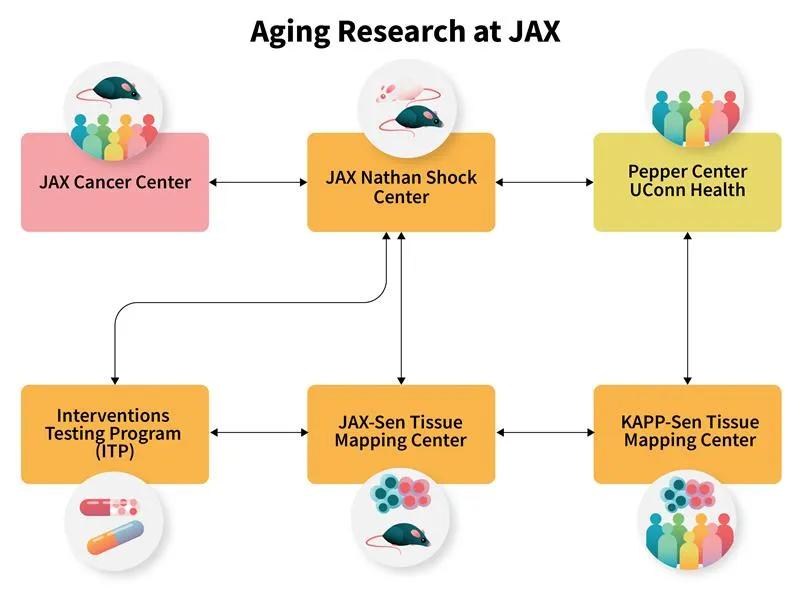
The goal of the Shock Center is to to enhance research into the basic biology of aging. In addition, it develops and provides technological and intellectual resources as well as facilitating the planning and coordination of research on aging activities.
The Interventions Testing Program (ITP) began in 2004 with sites at JAX, the University of Michigan, and the University of Texas Health Sciences Center. The program tests diets, drugs, or other interventions to see if they prevent disease and extend lifespan in mice.
The SenNet Consortium is a large-scale national effort to study the biology and potential deleterious effects of senescent cells. Senescent cells stop dividing over time and in response to stress, but they are not eliminated from the body.
Co-led by Ryan Tewhey, the LC Cross Species and Evolutionary Biology Project is pursuing an unprecedented integration across methodologies, and extending to human studies, to evaluate cross-species differences in specific biologic and genetic factors influencing species’ lifespan.
Understanding aging is one of the most complex challenges in biology. Genetics, environment, lifestyle and countless molecular processes all shape how the body changes over time. At JAX, scientists are working to uncover the biological drivers of healthy aging and translate those into strategies that help people remain vibrant and independent well into old age.

In the United States alone, nearly a quarter of the population will be 65 or older by 2040. Aging is inevitable, but the pace at which it unfolds and the diseases that accompany it are not. That’s why JAX has been at the forefront of aging research for decades — working to understand why some individuals remain healthier longer while others develop age-related diseases earlier in life.
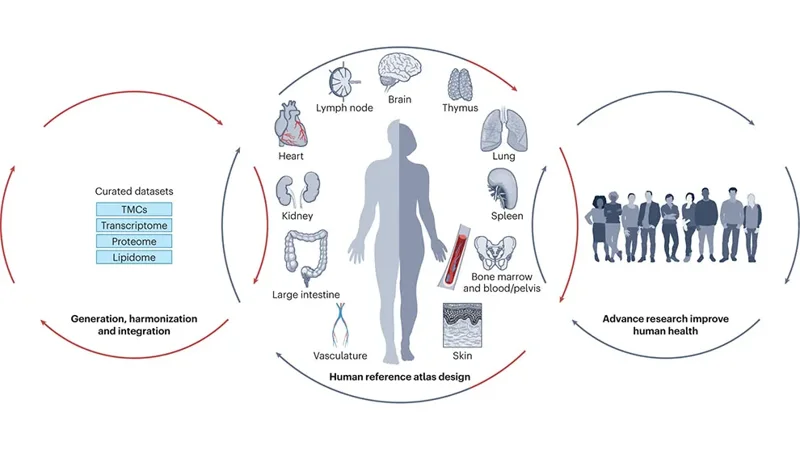
An ambitious multi-institutional research program is studying senescent cells—cells that have stopped dividing in response to stressors—and their effect on aging and human health at the single-cell level. JAX is playing a major role to bridge experimental mouse and human data and reveal the biology of senescent cells. The researchers will also investigate if therapeutics that target senescent cells may be able to delay age-related diseases and extend our health span.
View moreMembers of the JAX Aging Center
Scientists at The Jackson Laboratory, University of Connecticut, and University of Arizona are working together to better understand the immune system changes that occur as a consequence of aging.
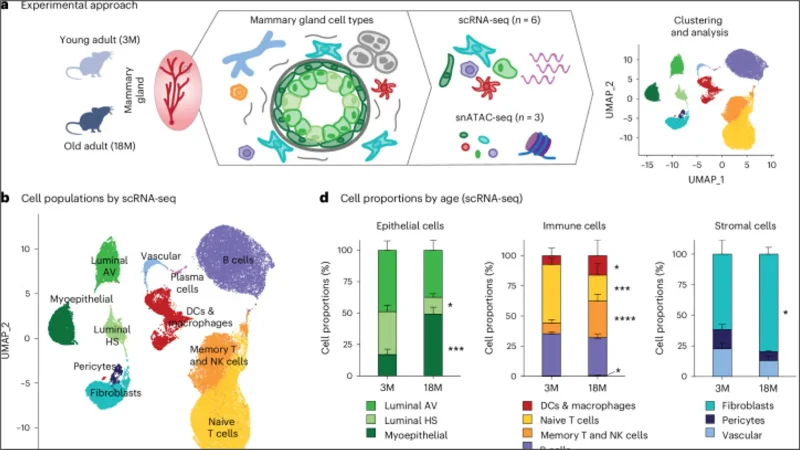
Single-cell and spatial analyses reveal aging-driven molecular rewiring linked to breast cancer risk.
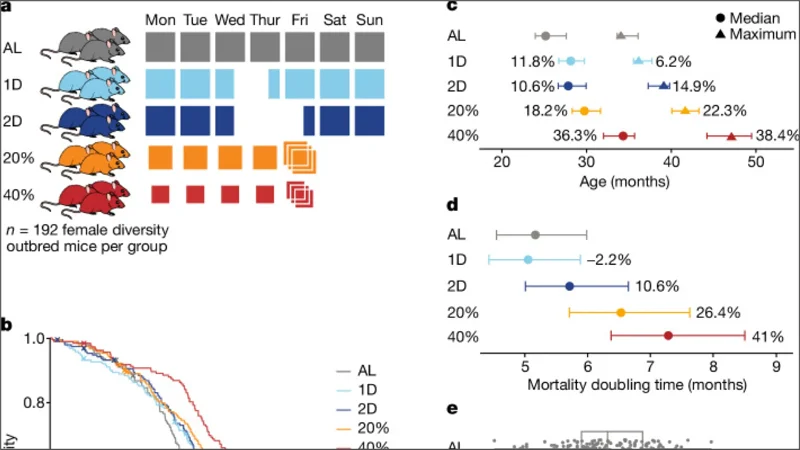
Caloric restriction and intermittent fasting extend lifespan in mice, with genetics outweighing dietary effects.
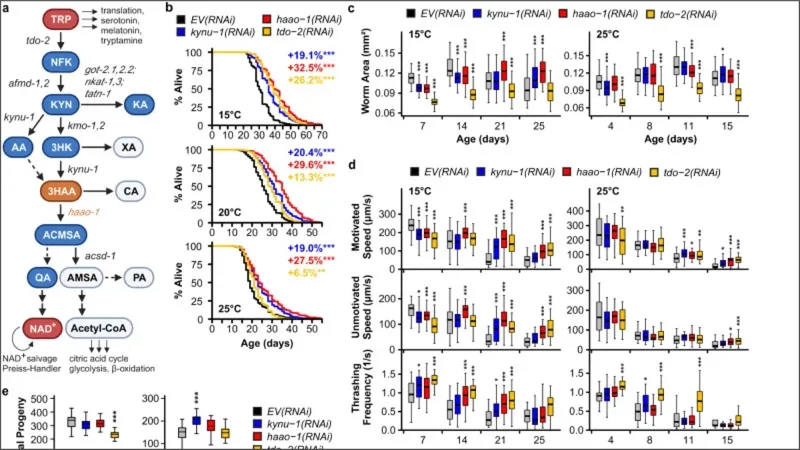
Blocking a key enzyme in tryptophan metabolism extends lifespan in worms and mice.
AGE Presents is a video lecture series produced by the American Aging Association (AGE), with support of the Nathan Shock Centers of Excellence in the Basic Biology of Aging at the University of Washington and The Jackson Laboratory, that focuses on the foundational topics of geroscience and aging biology. The series is designed for an audience with a basic understanding of biology, such as undergraduate students. Individual lectures cover key topics like genomic instability, telomere attrition, and epigenetics, with additional resources provided to AGE members.
View a list of tissues available from a cross sectional DO study
Access a database features aging-related phenotypes of 32 inbred mouse strains
View a list of tissues available from a Cross Sectional Study of Collaborative Cross (CC) strains

Learn more about the Pilot Award Program
The JAX Nathan Shock Center is not currently accepting applications.
In the most recent round, the Pilot Award Program utilized available aged male and female C57BL6/J and UM-HET3 mice (6-24 months of age).