Our dedicated in vivo preclinical neuroscience team executes studies for global pharmaceutical companies, emerging biotechs, and academic leaders to support critical early-stage decisions. Drawing on decades of unmatched knowledge in disease progression across key JAX neurological mouse models, we generate reliable data spanning natural history, therapeutic proof-of-concept, biodistribution, lead selection, dose response, efficacy, safety/toxicity, and go/no-go milestones.
The team has extensive experience evaluating multiple therapeutic modalities, including small molecule and biologic assets, using a variety of routes of administration. Our standard neuroscience assays and capabilities have been rigorously validated in multiple disease models to minimize variability and enable clearer interpretation of clinically relevant endpoints—helping drug developers reduce development risk and advance the most promising programs with confidence.
Our capabilities extend across neurodegeneration, neuromuscular disease, neurodevelopmental disorders, and rare disease models, supported by deep phenotyping and large-scale tissue analysis. With precise dosing routes, longitudinal monitoring, and both in-life and post-mortem assessments, we generate reproducible, high-impact data reflecting disease mechanisms and functional outcomes. Whether evaluating gene therapies, ASOs, protein replacement strategies, or small molecules, our integrated assay portfolio empowers you to de-risk decisions, quantify meaningful biological change, and advance neurotherapeutic programs with confidence.






JAX Preclinical Services are managed by experienced study directors and staff dedicated to helping you obtain the critical data needed for your research. See the sample study below—custom studies are also available. For more details and additional examples, click to see more Neuroscience research data.
C57BL/10ScSn-Dmdmdx/J Strain #001801
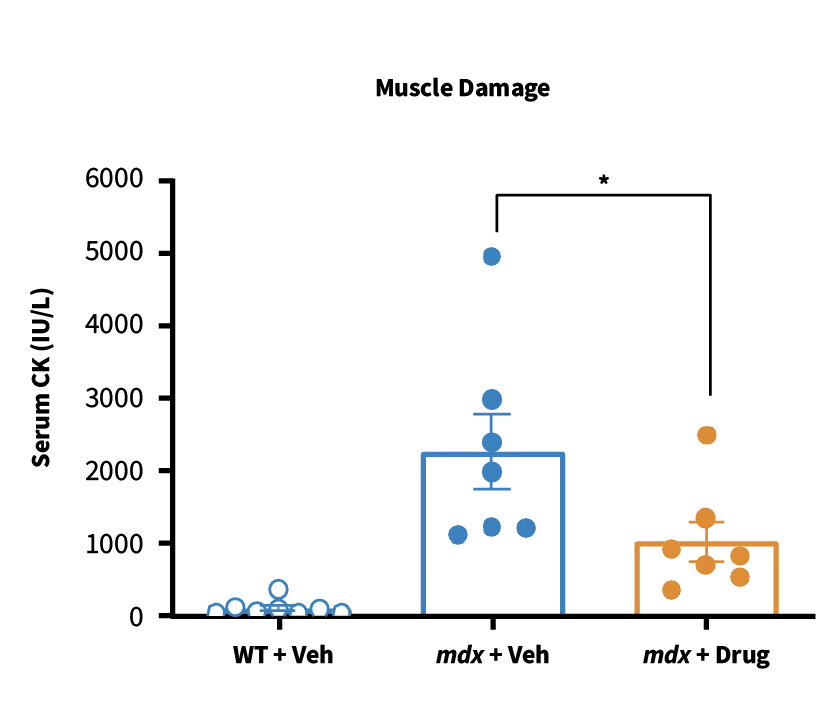
Serum CK to evaluate drug efficacy in decreasing muscle damage. Serum CK levels are reduced in B10.mdx mice after drug treatment, compared to vehicle-treated B10.mdx mice.
C57BL/10ScSn-Dmdmdx/J Strain #001801
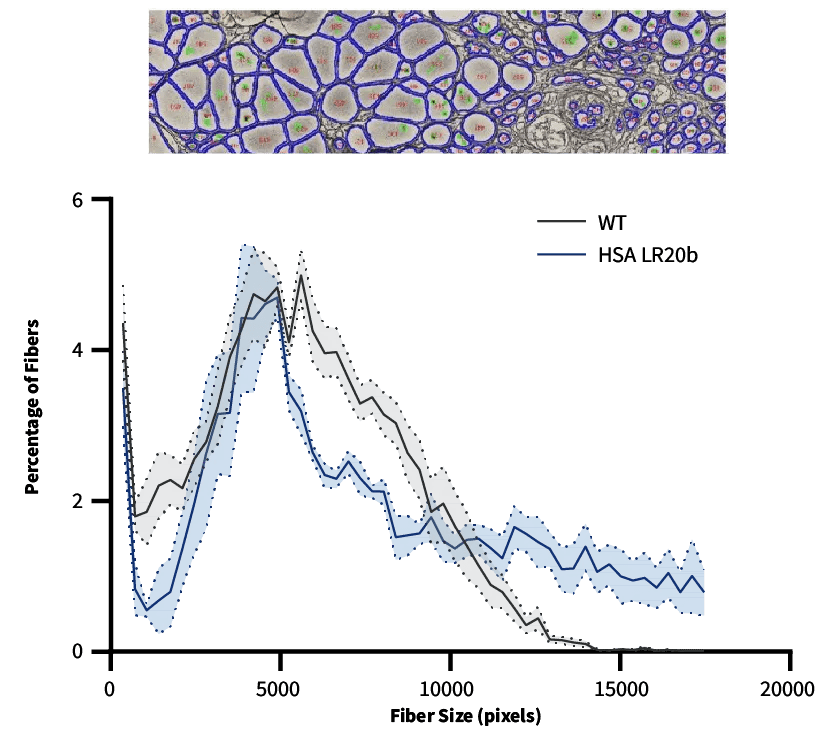
Quadriceps morphometry to evaluate drug efficacy in restoring muscle fibers. Muscle fiber size distribution in the quadriceps of B10.mdx mice was quantified using automated morphometry measurements in histology cross-sections.
C57BL/10ScSn-Dmdmdx/J Strain #001801
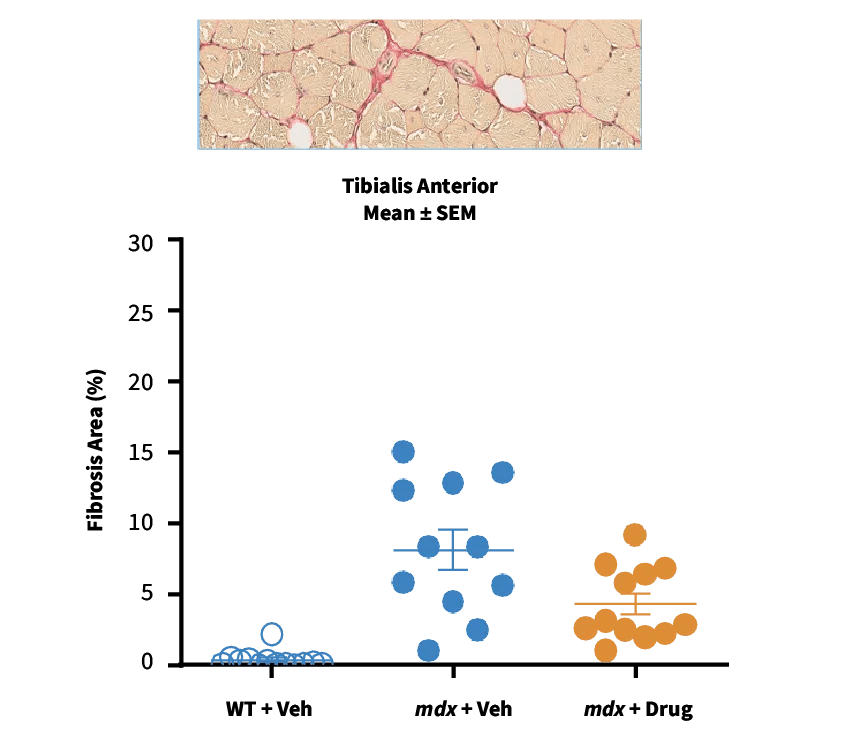
Staining of tibialis anterior to evaluate drug efficacy on fibrosis in skeletal muscle. Fibrosis area in the tibialis anterior of experimental and control mice was quantified using sirius red staining in histological slides.
Developing gene therapies for neurodevelopmental and neurodegenerative disorders presents unique challenges that vary by disease. JAX maintains the world's largest portfolio of genetically humanized neuro mouse models and has extensive expertise in conducting FDA-aligned studies of biodistribution, efficacy, and safety testing using these models.
In this webinar, JAX's In Vivo Preclinical Neuro Services team will share case studies demonstrating how JAX's models and services have successfully supported gene therapy programs from early discovery through IND-supporting studies.