
The Jackson Laboratory

Systems Immunology

Decoding the human immune system to predict health, disease, and therapeutic response

By studying the immune system as an integrated system, JAX researchers are uncovering the mechanisms that drive immune health and disease — advancing precision approaches for cancer, infectious diseases, autoimmune disorders, and healthy aging.

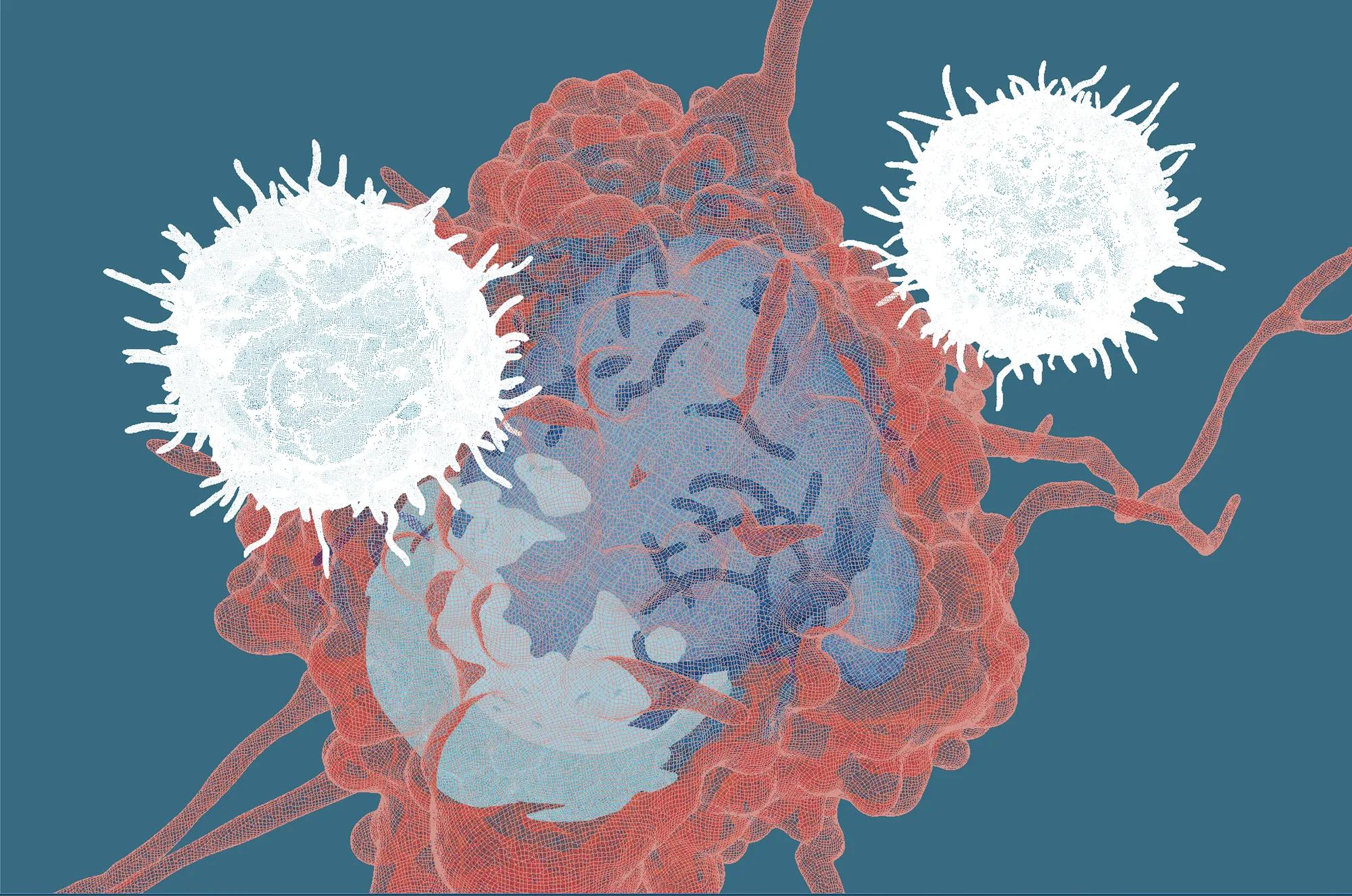
An artist’s rendering of a tumor cell being attacked by two cytotoxic T cells —  the specialized white blood cells that form the backbone of the body's adaptive immune system
An artist’s rendering of a tumor cell being attacked by two cytotoxic T cells — the specialized white blood cells that form the backbone of the body's adaptive immune system

The immune system influences nearly every aspect of human health, from resistance to infection and cancer to healthy aging and tissue repair. Yet immune responses vary dramatically from one person to another, shaped by genetics, environment, diet, metabolism, age, and prior immune experience.

At The Jackson Laboratory, researchers are developing a systems-level understanding of immunity by integrating immunology with genomics, computational biology, and advanced mouse and cellular models. JAX scientists investigate the molecular and cellular mechanisms that shape immune resilience and immune dysfunction, enabling the discovery of biomarkers, therapeutic targets, and precision medicine strategies for cancer, infectious diseases, autoimmune disorders, and age-related immune decline.


Systems immunology by the numbers

80+

distinct immune cell types

100+

known immune-related diseases

75+

systems immunology researchers at JAX

273

publications in 5 years

18

agencies funding JAX immunology research

Sources: Mayo Clinic, UCLA Health, Nakamura et al. PLOS (2024)

Systems immunology research at JAX 

JAX researchers combine immunology, single-cell genomics, and computational modeling to understand how immune systems vary across individuals and how those differences influence health and disease outcomes.

Our work spans:

  • Immune aging and longevity — defining how immune systems change across the lifespan and identifying mechanisms that promote healthy aging.
  • Cancer immunotherapy — uncovering cellular programs that determine anti-tumor immune responses and developing strategies to improve immunotherapies.
  • Infectious diseases and vaccines — understanding why individuals respond differently to pathogens and vaccination.
  • Immunometabolism — revealing how metabolic pathways regulate immune cell function and disease susceptibility.
  • Immunogenomics and systems biology — leveraging multi-omics, machine learning, and advanced computational approaches to decode immune complexity.
  • Immune monitoring and precision immunology — developing biomarkers and predictive tools to guide personalized treatment and prevention strategies.
  • Sex and immune dimorphism — decoding how biological sex shapes immune systems in health and disease.
  • Neuroinflammation — investigating how the immune system drives neurological disease and pain sensitization.
  • Humanized mouse models — creating tools that allow tissue engraftment and translational studies of human disease.
  • Host-microbiome interactions — bioengineering tools to understand host-microbe mutualism in inflammatory and autoimmune conditions.

By integrating biological discovery with data science, JAX researchers are building a predictive understanding of the immune system that will transform the prevention, diagnosis, and treatment of disease.

"JAX is uniquely positioned to lead the field of systems immunology through its unparalleled integration of human cohort studies, world-class mouse genetics, humanized mouse models, advanced cellular engineering, single-cell and spatial multi-omics, and cutting-edge computational and data science capabilities. By combining mechanistic studies in model systems with deep profiling of human health and disease, JAX researchers uncover fundamental principles of immune function, predict immune responses, and accelerate the development of precision interventions that improve human health."

- Duygu Ucar, Ph.D. | Chair of Systems Immunology, JAX Florine Deschenes Roux Endowed Chair
Meet the scientists

Featured stories

Target behind cancer drug shown to help fight influenza in mice - Page tile

Target behind cancer drug shown to help fight influenza in mice

Protein known for suppressing immunity in cancer instead strengthens antiviral defenses

View more

*Differing immune responses in infants may explain increased severity of RSV over SARS-CoV-2 - page tile

Differing immune responses in infants may explain increased severity of RSV over SARS-CoV-2

Study finds infants’ immune systems respond very differently to the two viruses, with important treatment implications.

View more

*Aging & systems immunology: Uncovering biomarkers of healthy aging - page tile

Aging & systems immunology: Uncovering biomarkers of healthy aging

Why do some people stay healthy and resilient as they age while others become more vulnerable to disease?

View more
Science in action


1 in 10: The endometriosis challenge

With JAX at its center, Connecticut is building a first-in-the-nation model to accelerate endometriosis research and care. Through EndoRISE (Endometriosis Research, Innovation, Support, and Education), Connecticut has become the first state in the nation to launch a comprehensive, state-funded effort to address endometriosis. At its core is a centralized biorepository housed at The Jackson Laboratory (JAX), integrated within a broader framework that advances research, expands education and awareness, and brings together patients, advocates, legislators, researchers, and healthcare providers. Together, this coordinated approach established a new model for how endometriosis can be understood, studied, and treated.

Learn more

Support JAX research

Your gift makes it possible for discoveries to happen faster, for novel ideas to be explored and for research to accelerate forward at a scale that delivers life-changing scientific breakthroughs.

Learn more

Research centers & initiatives

JAX Center for Aging Research

JAX Center for Aging Research

The JAX Center for Aging Research's long-term goal is to build a better understanding of the molecular mechanisms at work in lifespan and health span.

View more
*The JAX-NYSCF Collaborative - Page Tile

JAX-NYSCF Collaborative

The Jackson Laboratory’s acquisition of the New York Stem Cell Foundation unites complementary strengths across mouse, cell, and computational models.

View more
Rare Disease Translational Center

Rare Disease Translational Center

The mission of the RDTC is to empower rare disease solutions through partnership, innovation, and scaled pre-clinical pipelines, to deliver targeted therapies from lab to clinic swiftly and effectively.

View more

Featured publications


Diseases & disorders

JAX research extends far beyond any single disease area. Just a few of the diseases and disorders being researched at JAX are:

Learn more


Systems immunology research in the news

Inside Precision Medicine | Respiratory Infection Immune Differences Point to Different Treatments

Inside Precision Medicine | Respiratory Infection Immune Differences Point to Different Treatments

View more
New Scientist | Antibody cocktail could work as a universal flu treatment

New Scientist | Antibody cocktail could work as a universal flu treatment

View more
*CTInsider | CT researchers explore gene therapy that shows promise to slow aging, fight cancer - page tile

CTInsider | CT researchers explore gene therapy that shows promise to slow aging, fight cancer

View more

Education & learning

Online MicroLessons & MiniCourses

JAX Online MicroLessons and MiniCourses

Self-paced online learning in genetics and genomics experts at JAX, designed for undergrads, graduate students, postdocs and research staff.

Learn more
*education - Courses and Workshops

Courses and Workshops offered by The Jackson Laboratory

List of courses, conferences, webinars and workshops at The Jackson Laboratory.

View more

Additional resources

©2026 The Jackson Laboratory