What genetic and epigenetic programs guide a stem cell to choose its fate—and can we rewrite those instructions? How do tissues know when to grow, when to stop and how to organize themselves in space? And when disease or injury disrupts those systems, how can we restore them? At JAX, we tackle these questions across developmental biology, stem cell biology, reproductive biology and regenerative medicine. Our researchers study how cells maintain pluripotency and commit to specific lineages, explore stem cell populations in healthy and diseased tissues, and investigate how germ cells develop and how tissues repair themselves.
We pair this foundational science with platforms designed to move discoveries forward: humanized mouse models, patient-derived induced pluripotent stem cells (iPSCs), biomimetic tissue engineering and advanced single-cell, spatial, and computational tools. Together, these approaches are helping reveal how biological systems are built, maintained and repaired—and how those processes can be harnessed to improve human health.
The number of cells in the human body, all descended from a single fertilized egg
principal investigators across three JAX campuses
in active NIH funding for stem cell and developmental biology research at JAX
JAX has more than 700 iPSC lines spanning dozens of disease areas
Through advanced technologies and strategic partnerships, JAX is laying the groundwork for new treatments that repair damaged tissues, model complex diseases and improve human health. By integrating stem cell biology with genomics, computational tools and advanced models, JAX researchers are building a comprehensive view of development and regeneration—informing new strategies to treat disease and restore function.

"We are decoding the programs that build, sustain and repair living systems—and rewriting them when they fail. The scale of that ambition is what draws extraordinary people here. And the fact that we've built discovery and translation into the same scientific culture is what makes it feel not just possible, but inevitable."
– Jennifer Trowbridge, Ph.D. | chair of Stem Cells & Developmental Biology, JAX professor and Dattels Family Chair
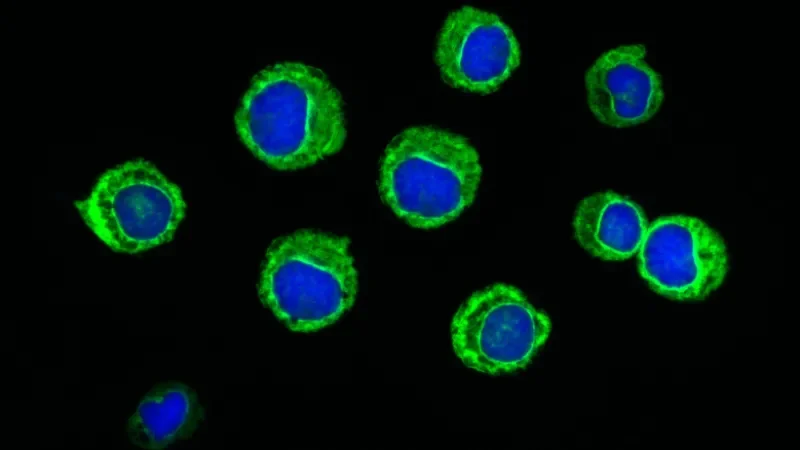
New JAX research shows mutant blood cells reshape the bone marrow environment in ways that promote disease progression, opening new avenues for prevention.
View more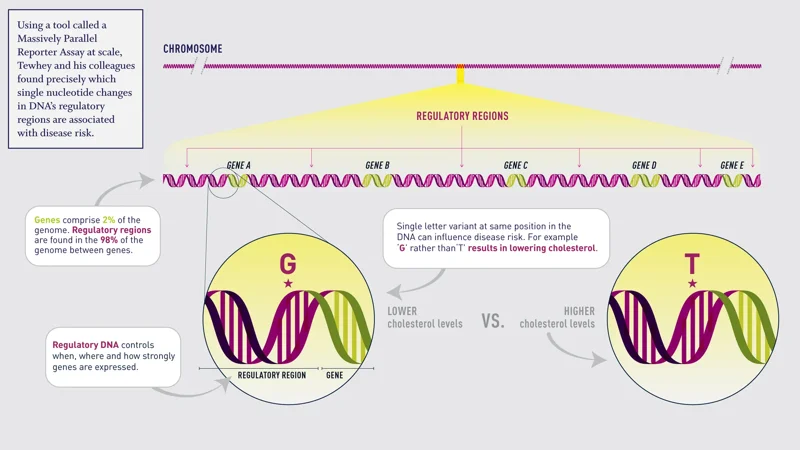
By rapidly testing hundreds of thousands of DNA sequences, scientists have identified specific genetic variations that contribute to blood pressure, cholesterol, blood sugar, and more.
View more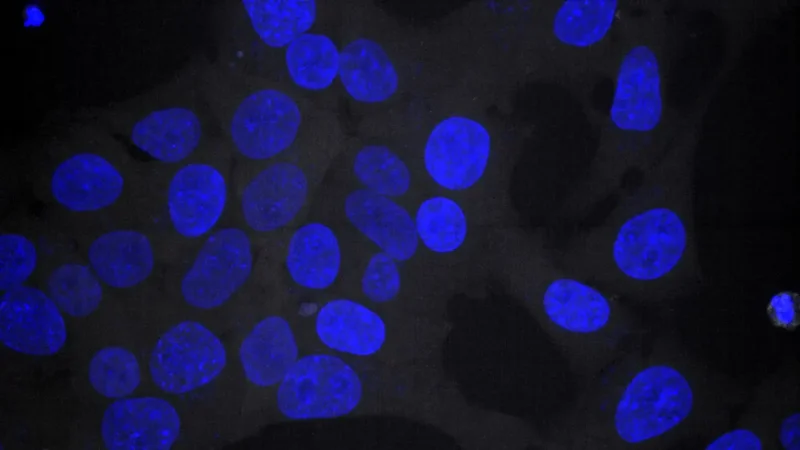
How JAX scientists are using stem cells to build better models, faster insights and smarter treatments.
View moreA new stem cell–based platform developed at JAX is shedding light on one of the biggest mysteries in genetics: why the same disease-causing mutation can affect people in dramatically different ways—from severe symptoms to no symptoms at all. Developed by Professor Martin Pera, the platform uses iPSCs from eight genetically distinct strains of mice. The breakthrough allows scientists to grow brain cells reliably from each strain, a major technical advance that opens the door to studying many other disease-linked genes in a more realistic and scalable way.
Support JAX research
Your gift fuels discoveries that reveal the fundamental biology of development, regeneration and repair—laying the foundation for future medical breakthroughs.

The Jackson Laboratory’s acquisition of the New York Stem Cell Foundation unites complementary strengths across mouse, cell and computational models.
View more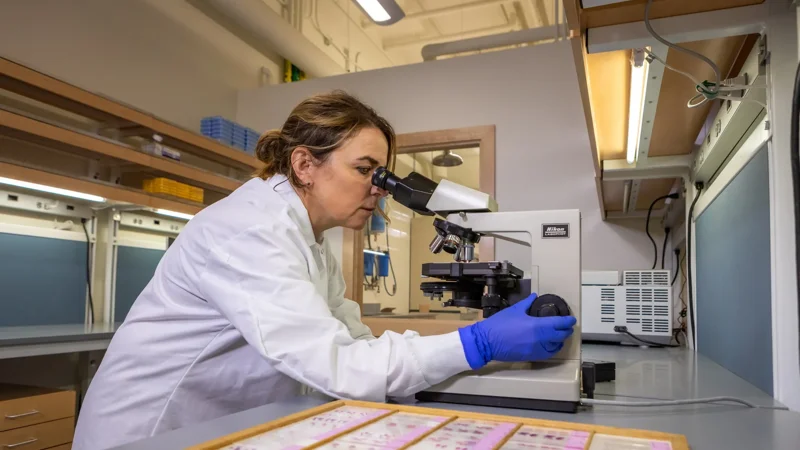
As your premier rare disease research partner, the RDTC serves those with rare disease by providing an efficient path from diagnosis to therapy.

The JAX Center for Aging Research's long-term goal is to build a better understanding of the molecular mechanisms at work in lifespan and health span.
View moreStromal cell senescence augments haematopoietic cell fitness in clonal haematopoiesis. Nature Cell Biology (2026)
Functional dissection of complex trait variants at single-nucleotide resolution. Nature (2026).
Complex genetic variation in nearly complete human genomes. Nature (2025).
Leveraging tissue-resident memory T cells for non-invasive immune monitoring via microneedle skin patches. Nature Biomedical Engineering (2026).
Elevated mitochondrial membrane potential is a therapeutic vulnerability in Dnmt3a-mutant clonal hematopoiesis. Nature Communications (2025).
Transcripts with high distal heritability mediate genetic effects on complex metabolic traits. Nature Communications (2025).
Epigenetic reactivation of the tumor suppressor ZBTB7A by KDM4 inhibition in human acute myeloid leukemia. Science Translational Medicine (2026).
Progressive correction of auditory hair cell orientation in the absence of core planar cell polarity and GPR156 signaling. Development (2026).
Deep single-cell decoding of human pancreatic islets reveals T2D β-cell gene expression defects. EMBO J (2026).
Modest increase in the de novo single nucleotide mutation rate in house mice born by assisted reproduction. Genome Research (2025).
HAND1, partially mediated through ape-specific LTR binding, is essential for human extra-embryonic mesenchyme derivation from iPSCs. Cell Reports (2025).
Evaluating the feasibility of gene replacement strategies to treat MTRFR deficiency. Disease Models & Mechanisms (2025).
JAX research extends far beyond any single disease area. Just a few of the diseases and disorders being researched at JAX are:
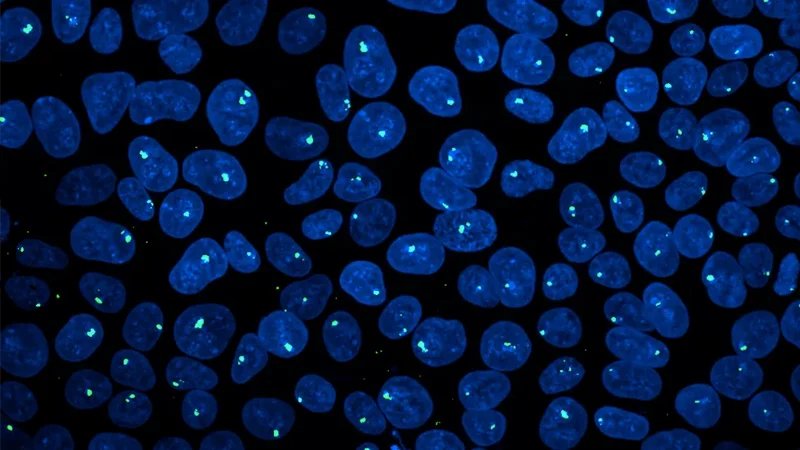
This 2-course Learning Path starts with fundamentals of stem cells, reprogramming, and iPSC quality, then moves to applications for disease modeling, drug discovery, and cell replacement therapy.

List of courses, conferences, webinars and workshops at The Jackson Laboratory.
View more