
Mouse Models that Bridge the Gap in Immunotherapy Discovery
By Brian Soper, PhD, Sr. Scientific Engagement Manager, The Jackson Laboratory
Blog Post | August 21, 2026
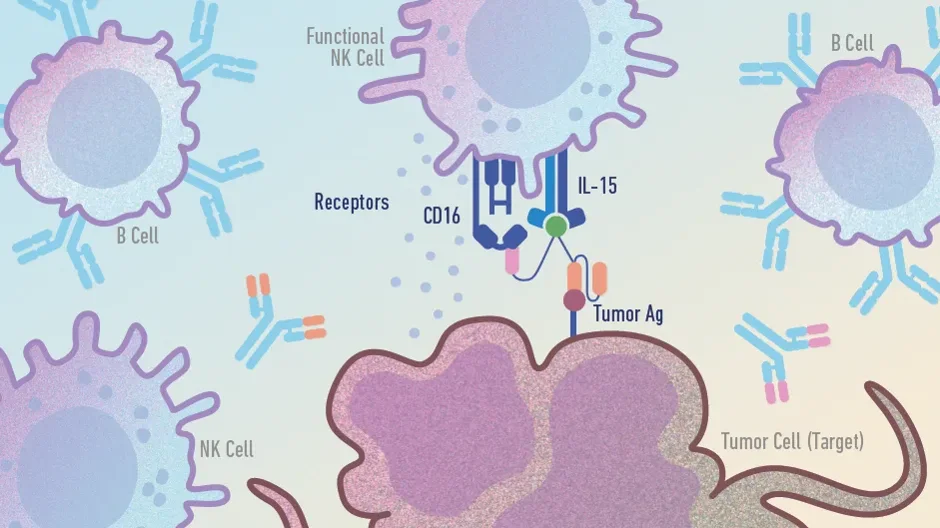
Immunotherapy is an effective way to fight cancer using the body’s own immune system. From basic research to drug discovery, in vivo modeling has become the cornerstone of immunotherapy development, but many models have failed to accurately replicate the human immune system, which is needed to translate therapies into the clinic.
In this article, we will expand on frequent questions we receive about the latest immuno-oncology platforms to model the tumor microenvironment (TME) and enable a more clinically relevant, translatable view on therapeutic interactions and efficacy.
Where do immunotherapies fail to translate from preclinical studies to clinical success?
Many new therapies show extraordinary activity when tested in vitro, under defined conditions, and where human cellular components are included using the researchers’ best estimate of the conditions found in vivo. However, the true in vivo condition includes many variables that cannot easily be modeled in a culture dish. These include other cell types that would normally be present and have an immunosuppressive impact that may counteract the mechanism of action of the therapy. The complexities of the microenvironment at the tumor site as well as systemic biology are all factors that influence the bioavailability of the therapeutic candidate. Furthermore, robust immune cell activation when tumor burden is high causes the release of cytokines that can lead to systemic toxicities that, in the most severe cases, include immune effector cell-associated neurotoxicity syndrome. Both bioavailability and toxicities can vary significantly from patient to patient, making in vivo analysis crucial before moving into clinical trials.
How are humanized mouse models helping close that clinical translational gap?
JAX has recently released a new platform, NSG®-SGM3-IL15-MHC I/II DKO (S15-DKO) that expresses multiple human growth factors and is deficient in expression of mouse MHC class I and II to allow support of a wider range of human immune cells following PBMC engraftment while also greatly diminishing xenogeneic graft-versus-host disease. The S15-DKO enables engraftment of mature human immune cells that developed in a fully human environment. JAX also offers the NSG-FLT3L-IL15 platform used to engraft human cord blood derived hematopoietic stem cells (HSC) and this enables the stable development of an even more broad array of immune populations, establishing a more complete immune system in the host. Once the human immune engraftment is established in either of these platforms, the mice can be further humanized by co-engraftment of a human tumor, either a blood cancer or a solid tumor. These platforms enable better modeling of the complexities of the human tumor microenvironment and provide the full systemic model needed to understand the therapies’ absorption, distribution, metabolism, and elimination in addition to therapeutic efficacy. Preclinical studies can be designed to include CD34+ HSC- or PBMC-engrafted mice from multiple donors to assist in capturing donor-to-donor differences in therapeutic efficacy as well as safety.
What is the Onco-Hu® platform, and how is it used to generate clinical efficacy and safety data?
This platform provides a more complete system for modeling the complexities of human-to-human cellular interactions that are not easily predicted and thus not created in the culture dish. This includes a holistic evaluation of the consequences of associated toxicities to understand if they are transitory or lead to more significant organ and tissue damage. Study design can include multiple donors to capture human diversity typical of a clinical study. The data sets generated include tumor efficacy and durability of response, cytokine release for understanding mechanism of action and safety, and clinical assessments of individual recipients. These can include assessments of blood chemistry as well as tissues for biochemical and histological analysis, all in support of investigational new drug (IND) filing.
What types of immune cells can be studied using humanized mice?
Immune humanized mice enable analysis of a wide range of human immune cells and their function. The choice of mouse model host along with the engrafted cell type (HSC vs PBMC) will determine what immune cells are present in the system. Human T cells are a strong focus area and have been modulated using checkpoint inhibitors, bispecific T-cell engagers, bispecifics, and trispecifics. These T cells are now being modified in vivo with viral or lipid nanoparticles to deliver genetic payloads for CAR T generation. Similar efforts are focused on NK and γδ T cells. Researchers are also developing methods to block immunosuppression by myeloid suppressor cells and/or including the adoptive transfer of ex vivo manipulated cells, including CAR T cells, NK cells, macrophages, or dendritic cells. In addition to modulation of mature immune cells, researchers are now examining methods of targeted in vivo genetic modulation of HSC.
What new advances in preclinical modeling are likely to have the greatest impact on immuno-oncology research?
As with any animal model of human disease, these platforms can have limitations. While neutrophils can be established in certain host platforms, the overall numbers and proportion of these important cells are low and do not accurately model what is found in the human population. Similarly, while many of these platforms develop or support B cells, the ability of these cells to undergo robust class switching and IgG production is limited. The new JAX S15-DKO model is an important advancement in that it enables support of mature human memory B cells capable of IgG production, raising the potential for improved modeling of human autoimmune disease.
The importance of B cell functionality is also reflected in the need by the scientific community for a platform capable of predicting large molecule treatment-induced immunogenicity, another leading cause of therapeutic drug failure in the clinic. At JAX, extensive research and development efforts are currently focused on improving B cell maturation and function in our models. Having a platform with full B cell functionality will have a very significant impact on immuno-oncology both for immunogenicity and cancer vaccine development.
Related Blogs:
New JAX NSG portfolio strains support development of human NK cells in oncology models
Immune Cell Humanized Mouse Models: PBMC Engrafted Mice