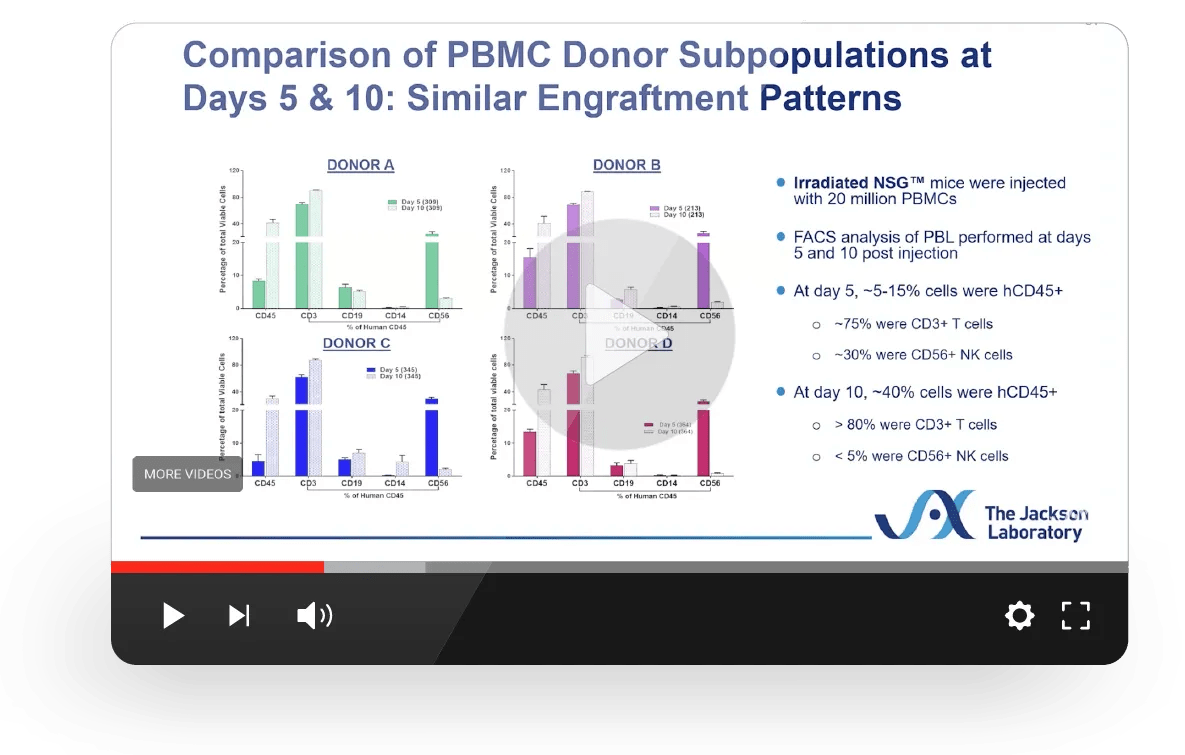
PBMC Humanized mice feature pre-characterized human peripheral blood mononuclear cells (PBMCs) engrafted into immunodeficient mice. Choose from variants that support short term characterization of human T cell function or longer-term immuno-oncology studies.
Choose JAX PBMC cell humanized mice for:
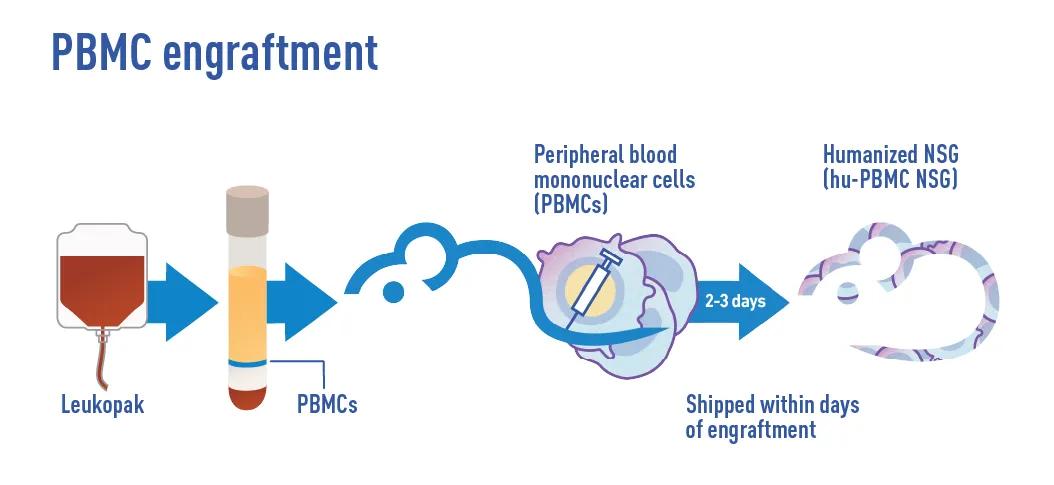
Female mice are injected with human peripheral blood mononuclear cells (hu-PBMCs). Mice are shipped the same week of engraftment. Engraftment (principally CD45 and CD3 T cells) can increase over time.

Made to Order
Study-ready cohorts are made to order and shipped same week of engraftment.

Pre-characterized Donors
Minimize uncertainty with benchmark data from pre-characterized donors.

Leaders in Humanized Mice
Accelerate your breakthroughs with the most reliable source of biologically relevant models.
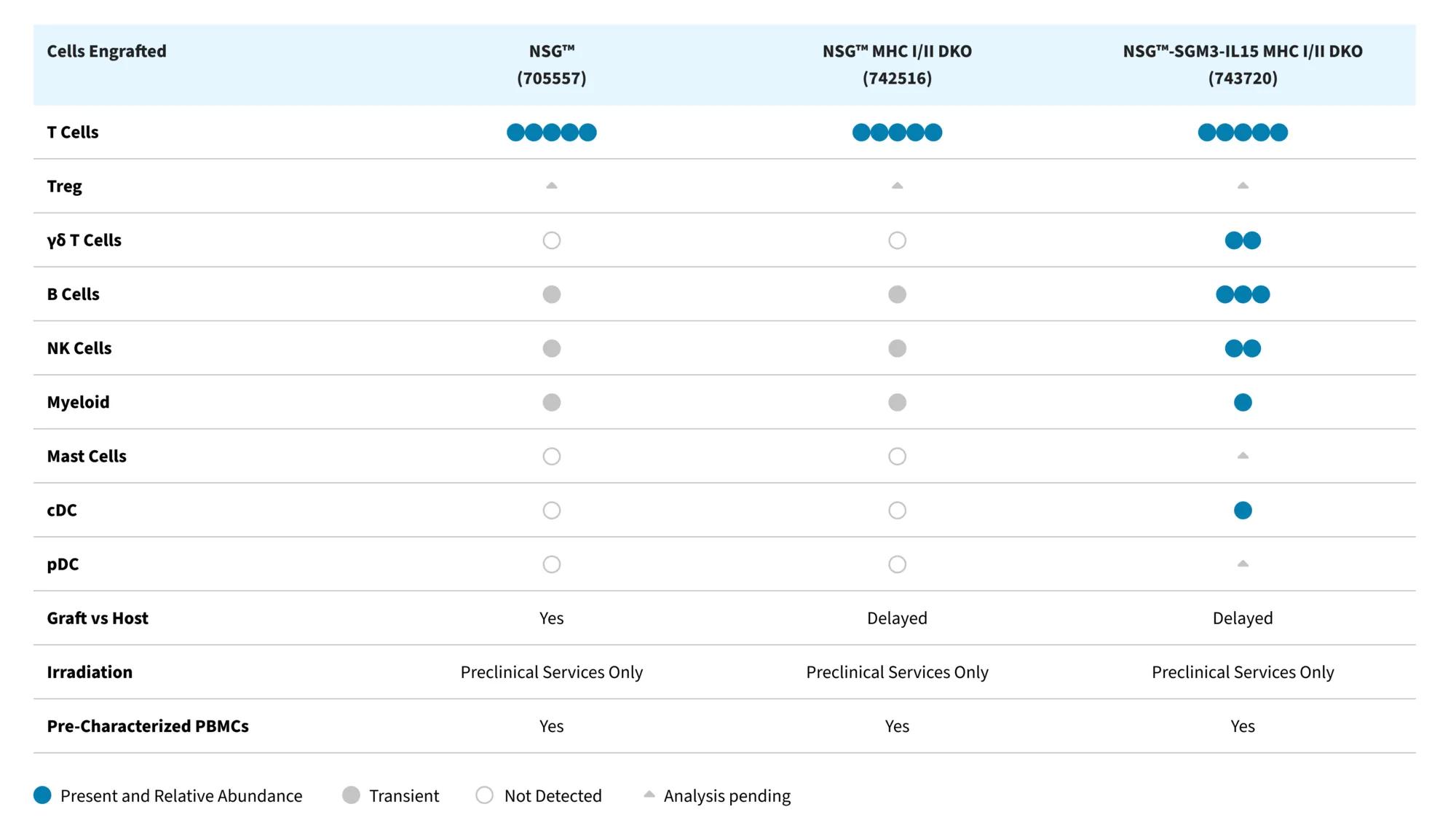
Expression of distinct human genes support different mature cell populations. Use the table below to choose the appropriate model for your studies.
| Strain Name | Human Gene Expression | Benefits |
|---|---|---|
| NEW STRAIN PBMC Hu NSG™-SGM3-IL15-MHC I/II DKO Stock No. 743720 Hu NSG S15-DKO Data Naïve Strain Data Sheet | KITL (SCF), IL3, GM-CSF, IL15 |
|
| PBMC Hu-NSG™ Stock No. 745557 Naïve Strain Data Sheet | N/A |
|
| PBMC Hu-NSG™ MHC I/II DKO Stock No. 742516 Naïve Strain Data Sheet | N/A |
|
Study-ready cohorts of hu-PBMC humanized mice are provided upon request, either for shipment to your institution or for enrollment in customized drug efficacy studies executed by our In Vivo Services scientists.
We distribute NSG™ mice under an agreement with the NIH. NSG™ mice are available to non-profit research institutions under an MTA. Companies and for profit entities require a license prior to shipping, learn more about the JAX Leap Licensing program. Many companies already have a license that includes engrafted NSG™ mice. To confirm that your company is covered or for new license inquiries, please contact:
The Jackson Laboratory
Technology Transfer Office
610 Main Street
Bar Harbor, Maine 04609
+1 207-288-6470
Email [email protected]
PBMC-engrafted humanized mice are an established platform for short term testing of immunosuppressive drug testing. MHC I/II DKO models offer the additional advantage of enabling long-term studies without the negative effects of GvHD, while retaining robust T cell activation and functionality. But there can still be variability within your studies that comes from donor-dependent differences in immune function and lifespan. When analyzing donor-specific toxicity (cytokine release) or tumor response, a key challenge is often the inherent variability in each patient's immune system—donors differ significantly in cytokine release levels, with some showing high release and others low. Tumor burden also varies by donor and does not always correlate with the severity of cytokine release syndrome (CRS), which can further complicate interpretation of results.
With JAX PBMC-engrafted humanized mice, you can choose from pre-characterized PBMCs donor populations to suit your study, along with the added advantage of being able to reserve specific donor PBMCs to ensure more consistent and reproducible study results.
Immune cell engraftment is very dynamic and donor dependent. Reserve pre-characterized donors to:
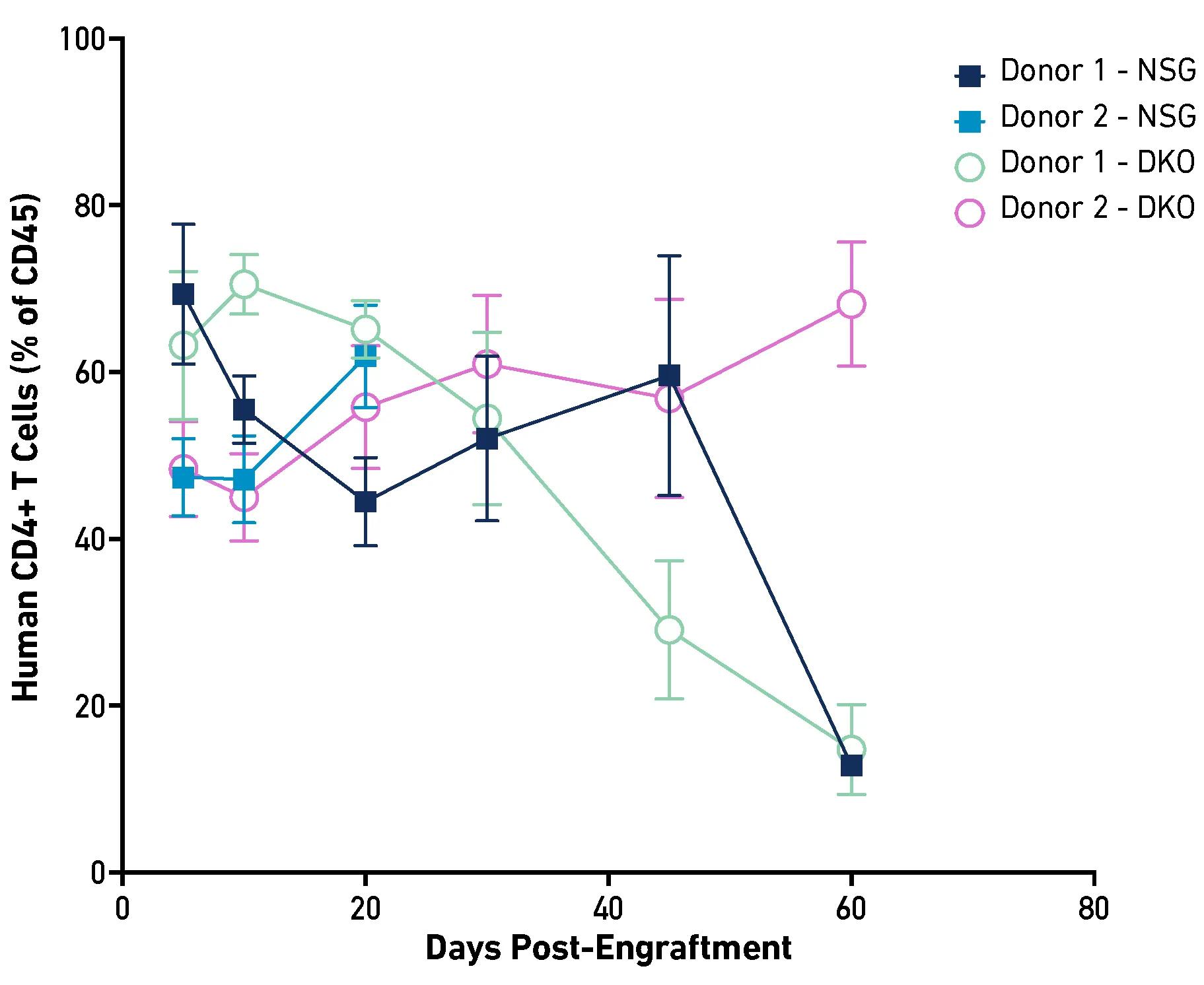
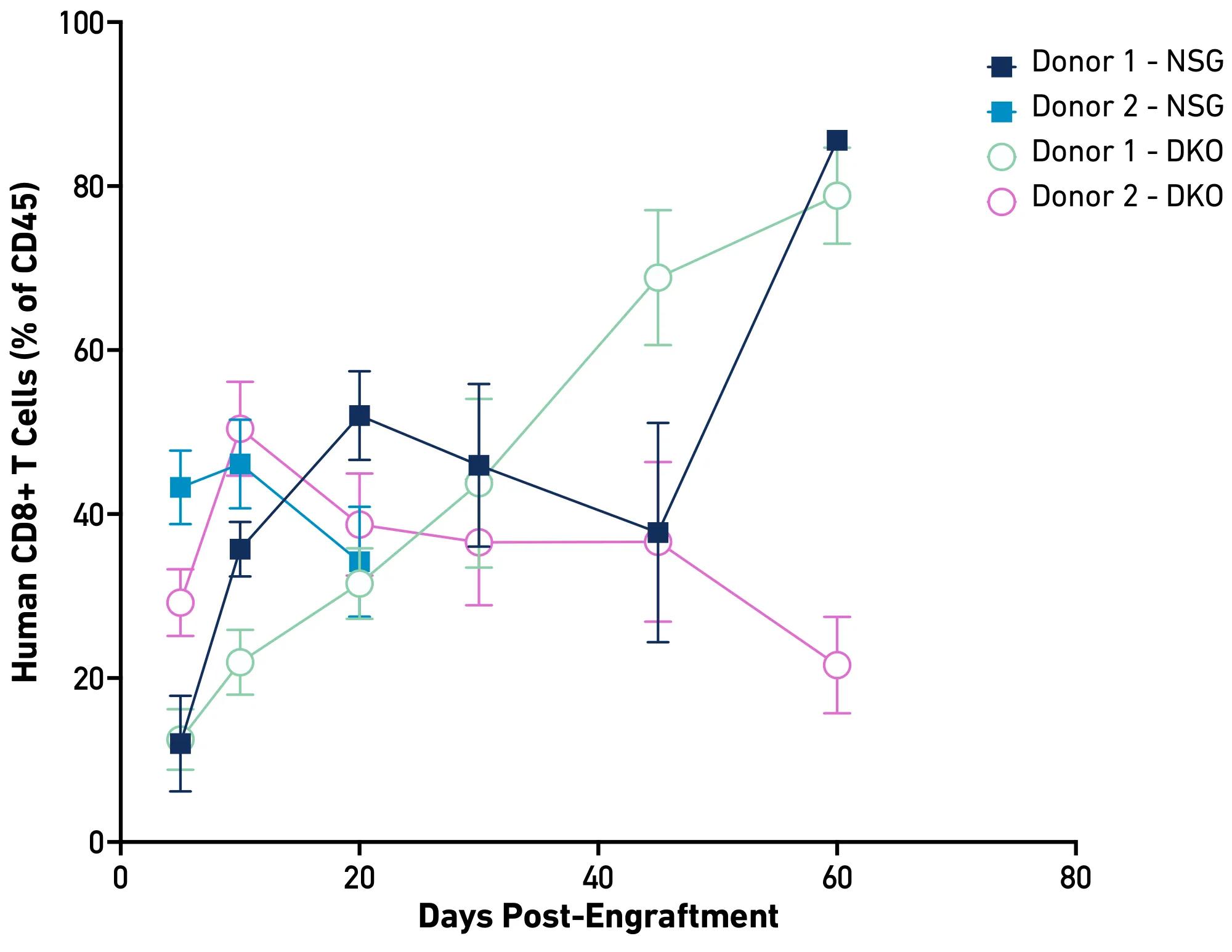
CD4+ and CD8+ human T cell population trajectories over time in PBMC-engrafted NSG and PBMC Hu-NSG™ MHC I/II DKO models using two PBMC donors. Early donor-dependent T cell compositions are observed, while subsequent changes in subset abundance over time differ across models and individual mice.
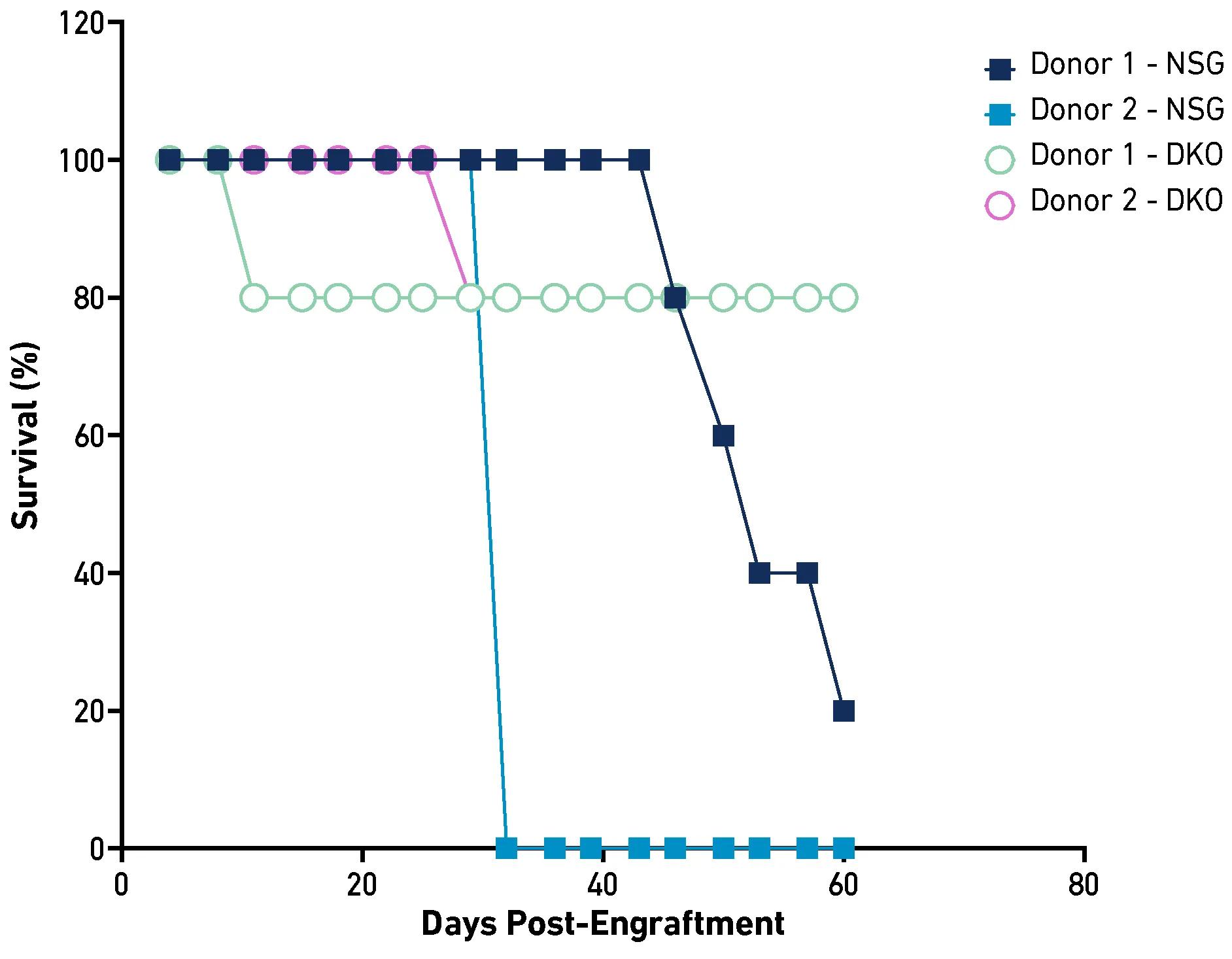
Survival curves demonstrating superior tolerance of human PBMC engraftment in the double knockout (PBMC Hu-NSG™ MHC I/II DKO) model
Get relevant in vivo data for your therapeutic candidates when you leverage JAX humanized mouse models engrafted with pre-characterized PBMCs from our donor collection. JAX offers you the ability to reserve pre-characterized donor lots, where engraftment performance, cytokine profiles, and activation responses are already characterized to reduce biological variability, minimize study uncertainty, and increase reproducibility across experiments.
Move forward with confidence and consistency for key data measures, including engraftment kinetics, overall survival, onset and severity of GvHD-like responses, and the magnitude of immune stimulation that can vary substantially across PBMC donors.
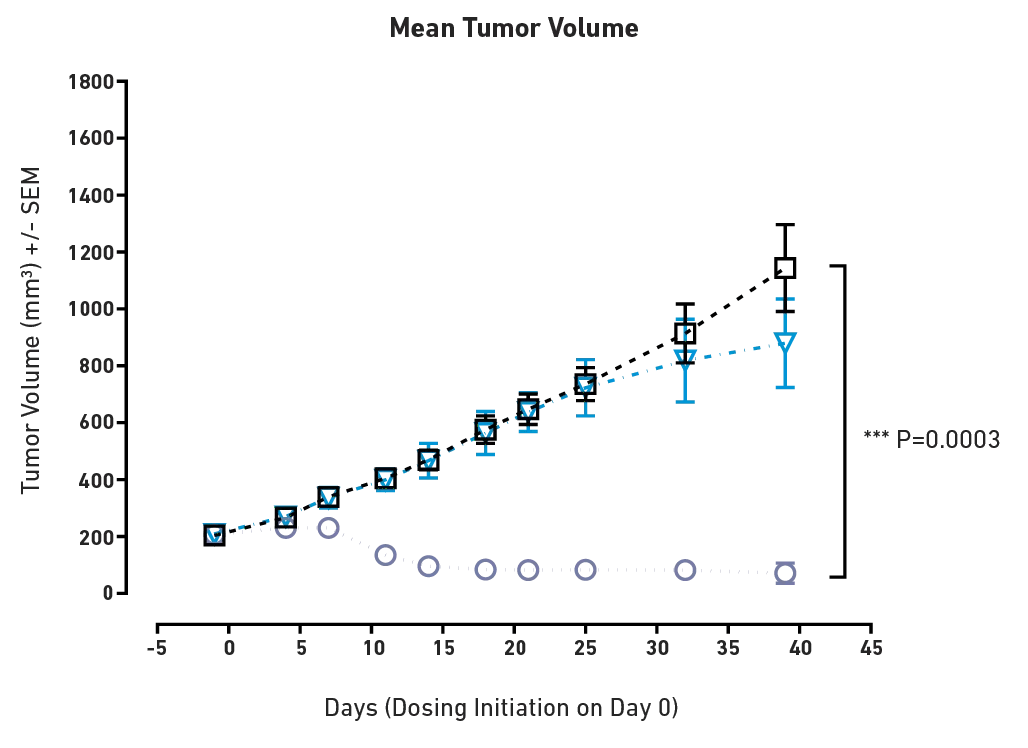
Time course of tumor volume post treatment with PBS (square), EGFR-CD3 bispecific Ab n=11 (circle) and Cetuximab n=5 (triangle)
View this webinar to learn about differences between PBMC and CD34+ stem cell engraftment, considerations when choosing a model and the use of these models in immuno-oncology, autoimmune, and infectious disease research.
*NOTE: NSG is a registered trademark in the USA and other countries.