
The Jackson Laboratory’s Bill Skarnes wins top international prize in transgenic science
Article | March 3, 2026

(Farmington, Conn. – March 3, 2026) – The Jackson Laboratory (JAX) is proud to announce that Professor Bill Skarnes has been selected as the 17th recipient of the International Society for Transgenic Technologies (ISTT) Prize, one of the highest honors in the field. The award recognizes a career spent creating the foundational technologies researchers around the world rely on to understand genes and disease.
Across more than three decades, Skarnes has helped transform how scientists manipulate the genome — first in mice and then in human stem cells — enabling experiments that were once impossible. His work has accelerated discoveries across cancer, neurodegenerative disorders and rare diseases.
High-throughput mouse genetics
The ISTT Prize Committee cites Skarnes’ leadership in guiding major international collaborations that established a large-scale system for producing genetically engineered mouse models, including the International Knockout Mouse Consortium (IKMC), the European Conditional Mouse Mutagenesis Program (EUCOMM) and the Knockout Mouse Project (KOMP) initiatives.
During his tenure at the Wellcome Sanger Institute, Skarnes led teams that developed high-throughput methods capable of introducing thousands of precise genetic changes into mouse stem cells models. Those advances allowed researchers, often for the first time, to systematically switch off individual genes and study their roles in development, physiology, and disease.
The principles and cell resources established through that work remain central to the International Mouse Phenotyping Consortium’s mission to determine the function of every gene in the mouse genome.
“The Jackson Laboratory is deeply proud of Professor Skarnes. He has been a true pioneer and has created a lasting legacy of research models and knowledge used by scientists every day, across the globe to answer meaningful questions,” said Mary Dickinson, executive vice president and chief scientific officer at JAX. “Bill’s passion for developing the highest quality research tools has been an asset to the scientific community and his conviction to quality has been unwavering. He is exceptionally talented and committed, and we are pleased to see him honored.”
Pivoting to human biology
Since joining JAX in 2016, Skarnes has brought that same large-scale, collaborative mindset to human biology. Using CRISPR and induced pluripotent stem cells (iPSCs), his laboratory engineers precise, disease-relevant genetic changes into standardized human cell lines that can be shared widely and studied reproducibly. The approach allows scientists to model human diseases in a controlled, genetically accurate system that complements insights from mouse genetics. Induced pluripotent stem cells are derived from adult human cells and “reprogrammed” back into an earlier developmental state. These rejuvenated cells can then differentiate into nearly any cell type, providing a powerful way to model human diseases in a controlled, genetically accurate system.
Through the iPSC Neurodegeneration Initiative (iNDI), established in 2019 by the National Institutes of Health, Skarnes and collaborators have led the way in producing a library of dementia-associated genetic variants in a common reference line, creating a powerful comparative framework for the field. These engineered cell lines are openly available to the scientific community and a catalog can be accessed via a web portal launched by JAX. His lab also contributes to models for Parkinson’s disease and ALS and plays a leadership role in the Molecular Phenotypes of Null Alleles in Cells (MorPhiC) consortium, a national initiative to determine the function of every protein-coding gene in human cells.
“Bill has spent his career leading meaningful scientific discovery in cellular research. Through that work he has also contributed to the scientific community by creating shared scientific tools that help discoveries happen faster, and far beyond his own lab,” said Mitch Kennedy, executive vice president of JAX and president of JAX® Mice, Clinical and Research Services (JMCRS). “He measures success not by citations or headlines, but by how widely his research and the tools he develops are used to accelerate our understanding of biology. In that sense, his legacy is not a single finding, but a gold-standard toolbox for discovery that continues to propel the field forward.”
A legacy of enabling others
Across mouse models, iPSC engineering, neurodegeneration research, and genome‑wide functional studies, a common theme runs through Skarnes’ work: building tools that enable others. His lab has modeled hundreds of patient‑derived stem cell genetic variants, created thousands of engineered cell lines, and made these resources available to scientists worldwide.
“We are really at the beginning of this journey to use human iPSC cells to understand human disease and biology,” Skarnes said. “There’s still a lot to learn, but JAX has been at the forefront of genomics for its entire history, and I believe there are many exciting discoveries ahead. Once the tools are standardized and shared, discovery becomes a collective effort.”
Skarnes will receive the ISTT Prize and deliver a lecture this September at the Society’s annual meeting in Leiden.
About The Jackson Laboratory
The Jackson Laboratory (JAX) is an independent, nonprofit biomedical research institution with a National Cancer Institute-designated Cancer Center. JAX leverages a unique combination of research, education, and resources to achieve its bold mission: to discover precise genomic solutions for disease and empower the global biomedical community in the shared quest to improve human health. Established in Bar Harbor, Maine in 1929, JAX is a global organization with nearly 3,000 employees worldwide and campuses and facilities in Maine, Connecticut, California, Florida, New York, and Japan. For more information, please visit www.jax.org.
JAX media contact: Roberto Molar, [email protected], 202-765-5144
Learn more
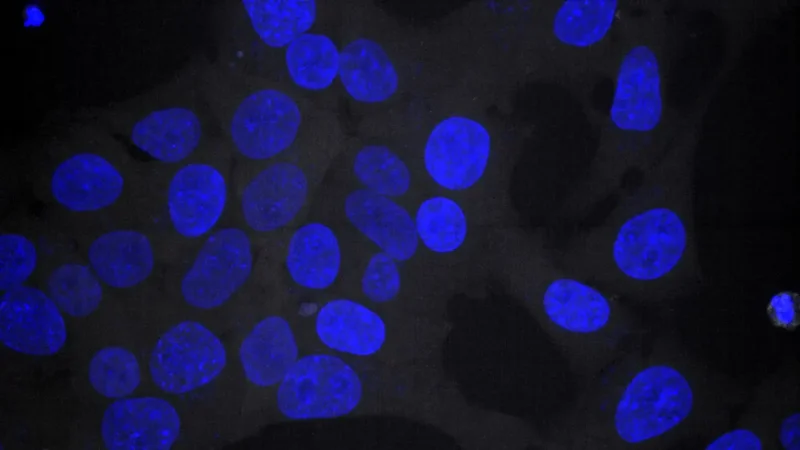
Modeling disease cell by cell
How JAX scientists are using stem cells to build better models, faster insights and smarter treatments.
View more
Establishing cell lines to improve iPSC research
Bill Skarnes and team established and characterized a stable iPSC line, KOLF2.1J, to act as a high-quality baseline platform for modeling human disease. This line is part of the catalog of human iPSCs at JAX.
View more