
A new model for late-onset Alzheimer’s
Article | June 24, 2026
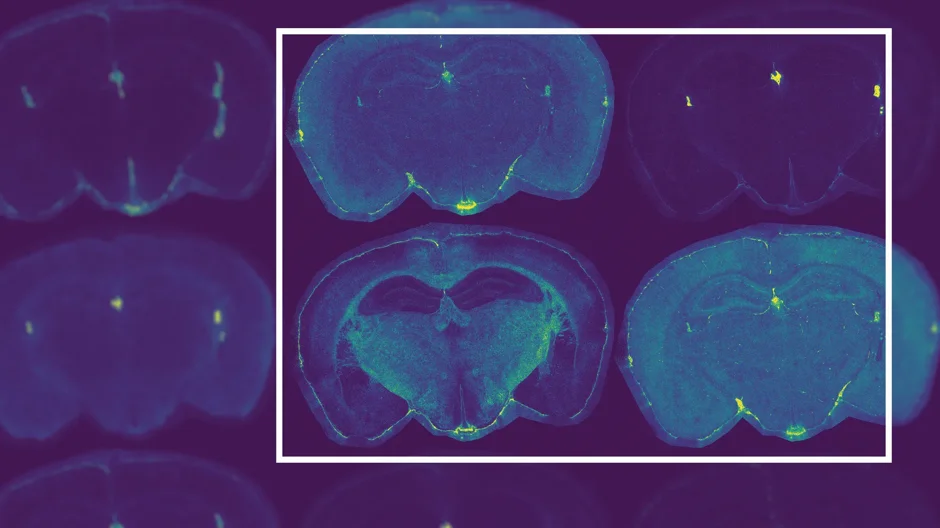
Every three seconds, someone develops Alzheimer’s disease. Over 90% of diagnosed cases occur in adults over 65 and are classified as late-onset (LOAD), yet most of the models used in Alzheimer’s research focus on the rare familial form of the disease. Like trying to navigate a city with the wrong map, this mismatch has slowed progress toward effective therapies for the millions affected by the disease.
To drive new momentum in Alzheimer’s research, JAX is part of the National Institute of Aging-funded Model Organism Development and Evaluation for Late-onset Alzheimer’s Disease (MODEL-AD) Consortium. Together with our partners, we’re developing and distributing the next-generation of research models that reflect the complex biology of late-onset Alzheimer’s disease.
The consortium leverages clinical datasets to identify genes, pathways and biomarkers associated with the disease, then translates those findings into mouse models that mirror LOAD pathology.
To date, JAX has developed more than 60 human disease‑relevant models. Each undergoes molecular, pathological and behavioral characterization to align with specific stages of LOAD. These data are available through an interactive resource that helps scientists select the right model, improving drug screening and accelerating the search for therapies.
“The MODEL-AD consortium is creating a powerful resource for Alzheimer’s researchers: more translationally relevant animal models for testing potential therapies,” said Senior Research Scientist Mike Sasner, who co-leads MODEL‑AD at JAX. “This effort is only possible due to our unique expertise in the development, characterization and distribution of mouse models.”
At JAX, we believe that advances in human health happen when scientists collaborate using the right tools. In a commitment to open science, every dataset and analytical tool created through MODEL‑AD is freely accessible to scientists worldwide.
This work moves us closer to a future where Alzheimer’s disease moves from a life‑changing diagnosis to something preventable, treatable, and, ultimately, curable.
Featured in Search
Search magazine is a publication from The Jackson Laboratory focused on research discovering and human health.
Learn more
Aging & neuro: Understanding the aging mind
In many ways, our brains define who we are — holding our memories, guiding how we move and shaping how we respond to the world.
View more
Search Magazine
Periodic magazine focused on research discoveries and human health. Published by The Jackson Laboratory.
View more