
Cerebral palsy might be a collection of symptoms, not its own disease
By JAX Communications
Article | September 3, 2026

Only a fraction of the hundreds of genes previously associated with cerebral palsy (CP) are strongly linked to this condition, according to a new study of data from more than 5,000 people led by researchers from The Jackson Laboratory (JAX).
The findings suggest CP may be better described as a collection of symptoms that can occur in many different conditions because of genetic variants and environmental factors—not a single disease with genetic causes. The study appears today in the American Journal of Human Genetics.
“There has been a lack of consensus on the definition of cerebral palsy and on the role of genetics in disease pathogenesis, leading to substantial variability in whether a child is diagnosed with CP,” said JAX Professor Peter Robinson, a corresponding author on the study. Robinson has a joint appointment at The Jackson Laboratory for Genomic Medicine in Farmington, Conn. and the Berlin Institute of Health at Charité. “We have developed a paradigm that considers CP to be a phenotypic trait rather than a precise disease diagnosis. A better understanding of specific genetic variants has the potential to improve our understanding of the biology of the disease.”
Cerebral palsy is the most common motor disability in children, with up to 10,000 babies diagnosed in the United States every year. Unlike many other neuromotor diseases found in children, CP is nonprogressive, meaning that it does not worsen over time. With rehabilitation and physical therapy, many patients can see improvements in their symptoms. While it has largely been linked to prematurity, temporary loss of oxygen to the brain, or other events at birth, research over the past decade has suggested that genetic factors contribute to CP in many children.
Reexamining more than 500 genes linked to cerebral palsy
The researchers examined genetic evidence from 21 previously published studies involving 5,440 people diagnosed with CP. Collectively, those studies reported potentially causal variants in a total of 515 genes. However, the new analysis found a statistically significant association with CP for only 89 of those 515 genes.
“We decided to do this study because there has been no accepted statistical method to determine if a disease-associated gene is truly linked to CP,” said first author Adam Arterbery, biocurator in the Robinson Lab at JAX. “We discovered it was extremely difficult to find statistical evidence of causality for many of the genetic variants previously linked to CP.”
The team also conducted whole-genome sequencing on 460 children from 453 families who had been diagnosed with CP and treated at Shriners Children’s hospitals around the U.S. Genetic variants classified as pathogenic or likely pathogenic were identified in 70 families, involving 60 different genes. Only 16 of those 60 genes overlapped with genes that showed statistically significant evidence of association in the authors’ analysis of previously published studies.
The analysis does not rule out a true association of the remaining genes with CP, the authors said. Rather, it shows that sufficient evidence does not exist to establish a statistically significant association. Further research will focus on building larger patient cohorts, conducting prospective studies of clinical utility and cost-effectiveness, and improving the accessibility of genomic and clinical data.
“This framework could improve interpretation of genomic testing, help identify children who may warrant closer CP surveillance or specialist referral, and potentially identify genetic conditions requiring disease-specific management,” said Robinson. “But clinical utility and patient benefit will absolutely need validation before these findings can be applied to patient care.”
This work was supported by a grant from Shriners Children’s (Shriners Children’s Clinical Research Grant #70904). Additional support was provided by the National Institutes of Health (NIH)/Eunice Kennedy Shriver National Institute of Child Health and Human Development (NICHD; HD103805-02) and the National Human Genome Research Institute (NHGRI; 5U24HG011449). Peter Robinson was supported by the Alexander von Humboldt Foundation.
JAX media contact: Patrick Skahill, 860-839-3309, [email protected].
Learn more about The Jackson Laboratory.
Citation: Arterbery, et al. A phenotypic paradigm for cerebral palsy genetic. The American Journal of Human Genetics (2026). DOI: 10.1016/j.ajhg.2026.08.007
A version of this story was first published online at by Cell Press.
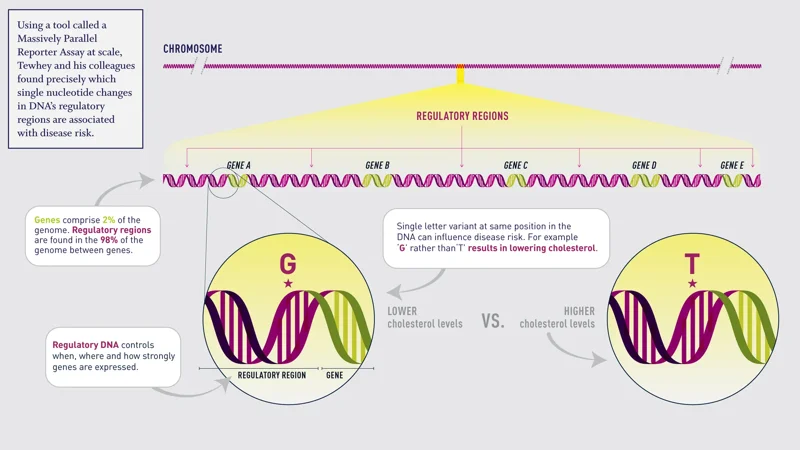
Scientists sharpen genetic maps to help pinpoint DNA changes that influence human health traits and disease risk
By rapidly testing hundreds of thousands of DNA sequences, scientists have identified specific genetic variations that contribute to blood pressure, cholesterol, blood sugar, and more.
View more
The Robinson Lab
Develops algorithms and software for the analysis of exome and genome sequences.
View more