
JAX celebrates a decade of patient impact through the Maine Cancer Genomics Initiative
By Lisa Nichols
Article | October 23, 2026

Ten years ago, The Jackson Laboratory launched the Maine Cancer Genomics Initiative (MCGI) framed by a simple yet powerful belief: everyone deserves access to the best cancer care, no matter where they live. A celebration held in Portland, Maine last week convened over 200 guests to honor the initiative’s ongoing real-world impact on patient care.
“When people are sick, they want to be at home,” said Chuck Hewett, retired JAX vice president and trustee emeritus who helped spearhead MCGI. “That’s why we wanted to bring world-class cancer care to Maine—to make it possible for our oncologists to use the most-up to-date strategies for treating this horrible disease.”
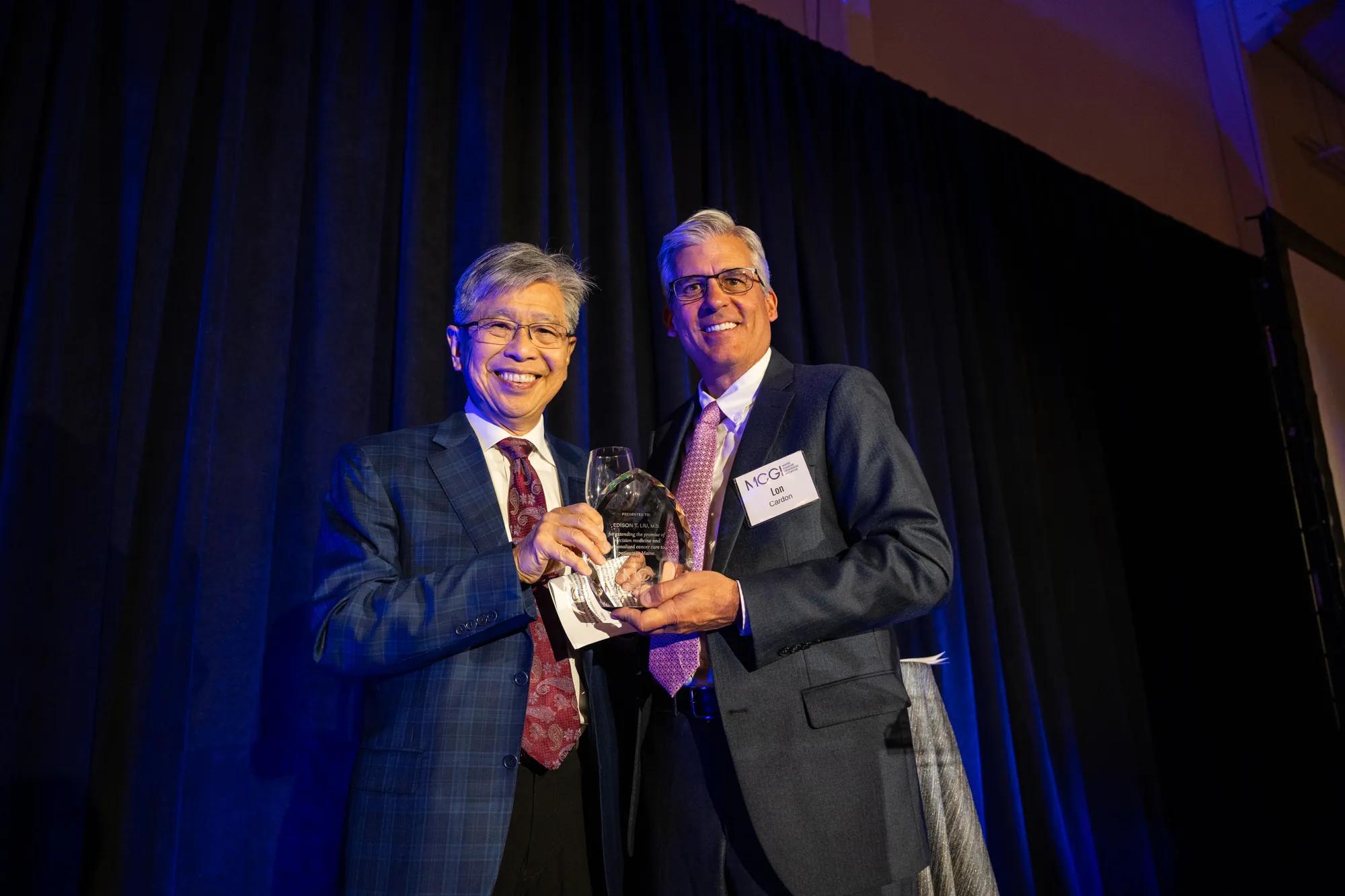
Along with honoring Hewett and JAX President Emeritus Edison T. Liu for their crucial role in shaping MCGI, the event also recognized Greg Powell and the Harold Alfond Foundation’s generosity in funding and supporting the initiative throughout its first decade.
“We look for projects that bring people together, deploy the power of teamwork, have great leadership, and promise transformational impact,” said Powell, Alfond’s executive chairman. “The Maine Cancer Genomics Initiative has succeeded beyond measurement on all fronts.”
Patients and physicians at the forefront of care
Chief Medical Officer Jens Rueter praised the grit and effort of his team in the early days of building a community around the model, from marking oncology practices on a hand-drawn map and road tripping around Maine to visit them to holding one of MCGI’s first statewide conferences in the middle of a snowstorm.
“We knew this was a good idea and that we needed to do it together,” said Rueter, a practicing oncologist who serves as MCGI’s director. “That's how you get collaborations to happen—you go from place to place and you figure out what works for people. That has been one of the key areas of success for us.”
MCGI’s central component is a genomic tumor board, where a team of experts reviews patient cases, identifies targeted treatment approaches, and recommends the most appropriate course of action—including access to more than 7,000 clinical trials underway in the U.S. alone. With 4,000 patients enrolled and 500 genomic tumor boards convened to date, the model is no longer simply a vision—it works in real time, resulting in more accurate diagnoses, personalized treatment options, and time given back to patients to spend with the ones they love.
The evening included perspectives from Dr. Christine Lu-Emerson, a neuro-oncologist with Maine Health, and MCGI patient Roddy Ehrlenbach. When Ehrlenbach received a Stage 3 colon cancer diagnosis in June 2020, his surgeon advocated for an MCGI genomic tumor board review. He underwent genomic testing that ultimately led to a diagnosis of Lynch Syndrome—a genetic condition that raises risk for colon cancer. Ehrlenbach’s oncologist used this information to form a treatment plan that included six months of preventative chemotherapy. He has been cancer-free since 2021.
“Your support represents more than research, testing, or technology,” Ehrlenbach said. “It represents real people facing frightening diagnoses, families looking for answers, and patients who deserve to receive care informed by the best information available. I am one of those patients, and standing here today cancer-free, I can tell you that this work truly matters.”
MCGI has achieved 100% participation from Maine oncology practices, giving clinicians the tools to create a treatment plan based on genomic tests—and to build trust with patients by articulating why the results inform the treatment. Lu-Emerson described reviewing a genomic test that caused her to “scrap the plan” she had designed for a patient in favor of one targeted for rarer cancer cases.
Four years later, that patient, too, is cancer-free. And after a decade of work, MCGI continues to turn discoveries into actions that directly benefit patients.
“The true measure of progress in cancer medicine is only relevant if we can translate those discoveries into patient care,” Rueter said. “My hope is that ten years from now, we'll have brought even more discoveries, more treatments, and more hope to patients in need.”
Learn more
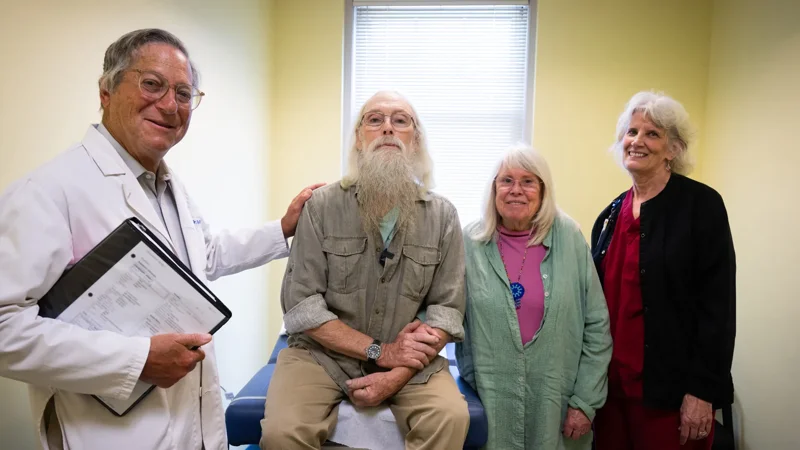
Henry: An MCGI story
Diagnosed with stage four prostate cancer, Henry Grandgent expected a future of long hospital drives and distant specialists. Instead, the Maine Cancer Genomics Initiative (MCGI) brought world-class cancer care to his island community.
View more
Personalized oncology without compromise: MCGI celebrates a decade of hope
Ten years ago, a bold idea took root in Maine: Geography should never determine the quality of cancer care.
View more