
Q&A | Understanding the mechanisms behind the biology of aging
Article | July 7, 2026
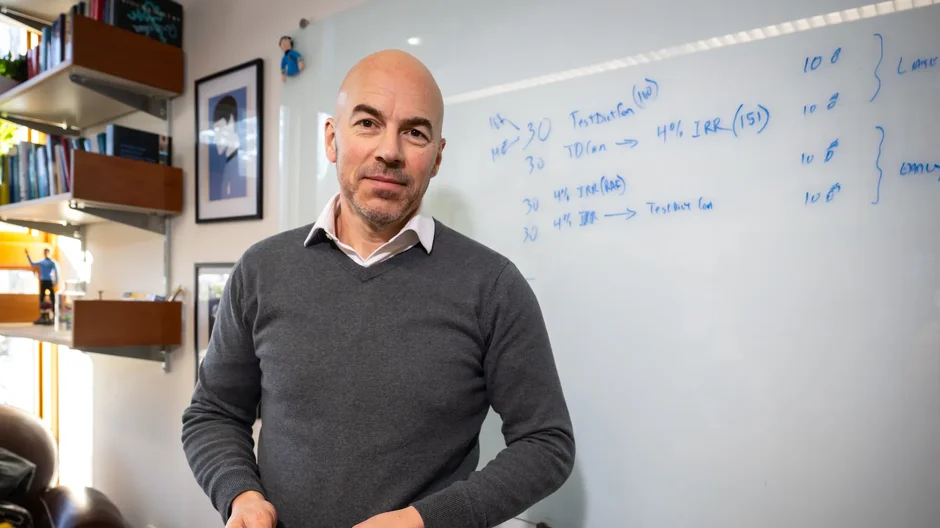
As longer lifespans meet age-related disease, understanding the mechanisms behind the biology of aging is more important than ever. JAX Professor and Evnin Family Chair Ron Korstanje is at the forefront of this work. Here, he talks about how aging itself can be understood not simply as decline, but as a biological process that can be studied, mapped and transformed.
Why is aging such a compelling area to study?
Simply: People want to live longer and stay in good health. It’s not that people want to live forever, but they want to be able to live independently and in good health until very late in life. And there are people who do that now. The question for us is: What makes them able to do that?
Declining health is modifiable, not inevitable. Things like genetic manipulation, chemical interventions and caloric restriction all have shown an impact on aging in animal models — but why? Why does caloric restriction have such a big effect on aging? Why do some compounds work in some cases and not others? Why do we see effects in male mice and not female mice? We don’t know. That’s what makes it such an important and compelling thing to study.
How is JAX uniquely positioned as a leader in the field of aging research?
JAX has a large concentration of aging-related research programs. We are home to several major NIH-funded initiatives, including the Interventions Testing Program (ITP), which has been running for more than 22 years, one of the Nathan Shock Centers of Excellence for the Basic Biology of Aging for more than 16 years, and both a mouse and human Senescence Tissue Mapping Center. Very few institutions have that level of sustained investment and infrastructure focused on aging.
We have the ability to do this research at scale using genetically diverse populations.
What makes us even more distinctive is how aging research is integrated across JAX more broadly. The JAX Cancer Center is deeply focused on the interaction between aging and cancer and we have a large concentration of Alzheimer’s and neurodegenerative disease research. When you bring all of that together, JAX truly functions as a hub for precision geroscience research.
Why do scale and genetic diversity matter so much in aging research?
Aging research has to be done at scale. If you want to know whether a compound truly affects healthspan or lifespan, you need large populations. That kind of large-scale, long-term experimentation is something very few institutions in the world can do and it’s something JAX is built for.
Many aging studies rely on a single inbred mouse strain. There are many examples where treatments appear effective in that one strain but, when tested in other mice, the effect disappears. It turns out those benefits were strain‑specific, not universal biology.
At JAX, we use genetically diverse populations that more accurately reflect real biological variation. That allows us to distinguish between results that are truly meaningful and results that only work in a narrow genetic context.
Scale and diversity together are what make our findings reliable, reproducible and translatable. Without both, aging research risks producing conclusions that don’t hold up in the real world.
You’ve referred to JAX’s aging research as “precision geroscience,” but what does that really mean?
Precision geroscience means recognizing that aging is not the same in every individual. Genetics, environment and life history all shape how people age and how they respond to interventions. Some treatments may work extremely well for some individuals and not at all for others. Biology is far more complex than a one-size-fits-all solution.
Where do you think the field of aging research is headed in the next five to 10 years?
For me, success in the field is an overall better understanding of aging and the biology behind it. We want to know the underlying “why” so that we can design interventions based on biological knowledge, instead of testing interventions that we don’t really know in advance if they’re going to work or not.
If we had a better knowledge of the biology of aging, we might be better at identifying which interventions to test, because we would have a better sense of what in these compounds is actually making us live longer and why.
Featured in Search
Search magazine is a publication from The Jackson Laboratory focused on research discovering and human health.
Learn more

The Korstanje Lab at The Jackson Laboratory
The Korstanje Lab studies the genetics and biology of aging and aging-related cancer, using diverse mouse models to reveal mechanisms and identify ways to improve healthspan.
View more
Search Magazine
Periodic magazine focused on research discoveries and human health. Published by The Jackson Laboratory.
View more