
Looking for light: Cell therapies for age-related macular degeneration
Article | February 5, 2026
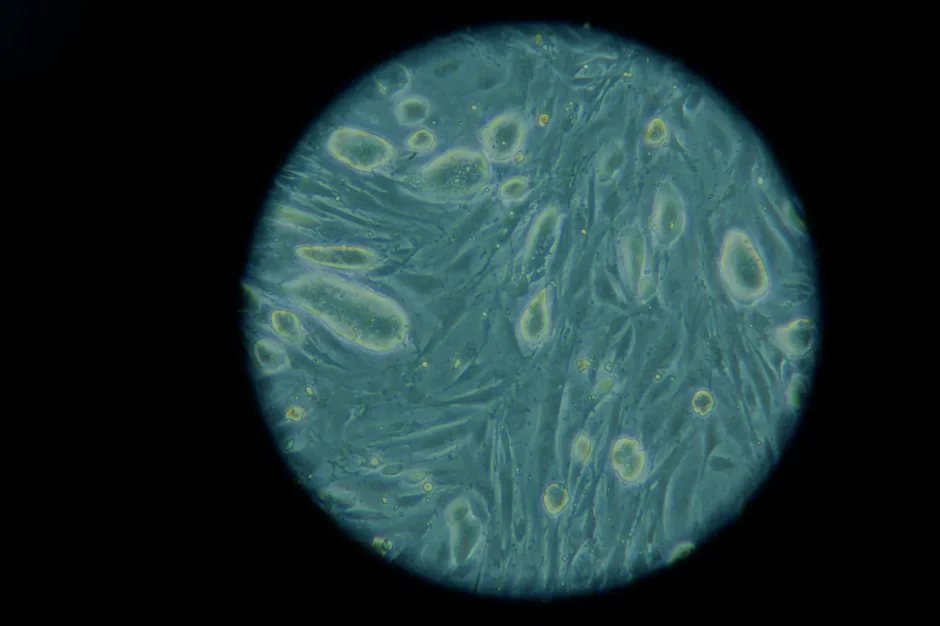
About 80% of patients with AMD have the “dry” form of the disease for which no effective treatments are currently available.
Lead scientist Martin Pera is working to change the odds.
AMD is caused by the progressive deterioration of a tissue known as the retinal pigment epithelium (RPE), which plays a critical role in nourishing the eye’s photo receptors, or light-sensing cells. As the RPE deteriorates, it loses its ability to provide nourishment, leading to photoreceptor death and vision loss.
The current experimental therapy for AMD involves replacing the damaged RPE with healthy cells grafted from human pluripotent stem cells, or lab-grown cells that can be directed to develop into any cell type. Early clinical trials underway in the United States, Japan, the United Kingdom and Israel have demonstrated the safety of this approach and have shown that the grafted cells can remain intact in patients for more than a year.
Pera and his team are developing a new approach to AMD treatment that builds on the current therapy by engineering grafted cells that restore both lost RPE and photoreceptors, ultimately reversing vision loss in patients with AMD. Pera’s approach is rooted in known principles of regenerative biology observed in lower vertebrates such as frogs and newts. These animals can regenerate light-sensing cells and other vision components even with their entire retina removed. Mammals have lost this regenerative capacity. Pera is exploring what might be possible if we could restore it.
“The current therapies for AMD replace the RPE, but not the light-sensing photoreceptors themselves,” he said. “The grafts may not reverse vision loss that has already occurred and are unlikely to be helpful in treating other retinal disorders. This new cell therapy strategy addresses those limitations.”
Pera’s project addresses two questions that could provide a solution for replacing the lost photoreceptors and ultimately reversing vision loss:
- Can RPE cells be reprogrammed into light-sensing photoreceptor cells? JAX researchers routinely turn stem cells into RPE cells to investigate the genetic causes of AMD and can also build stem cell lines that contain an “on/off switch” for the eye’s master regulatory genes. Once researchers create the RPE cells from stem cells, they will test these master regulatory genes to see which ones convert the RPE into light-sensing cells.
- Can we discover new RPE stem cells? JAX vision researchers recently discovered a type of cell in mouse RPE that has properties similar to a stem cell, which suggests it could be directed to form other types of cells. Additional testing will explore these cells to determine if they can be directed to form both RPE and light-sensing cells. If the cells can become either, the treatment would hold promise for reversing the vision loss associated with AMD.
Philanthropic support like yours helped launch Pera’s project this year and will continue to be invaluable as his team works to move the project closer to the clinic, improving the treatment options for future patients and families.
Learn more

2025 Donor Impact Report
The year 2025 brought a myriad of moments to celebrate the connections that strengthen us — especially those in our generous community of donors like you.
The Pera Lab
The Pera Lab studies human pluripotent stem cells to explore self-renewal, pluripotency, and genetic factors influencing neural regeneration and repair.
View more