
Brain cells drive endurance gains after exercise
News Release | February 18, 2026
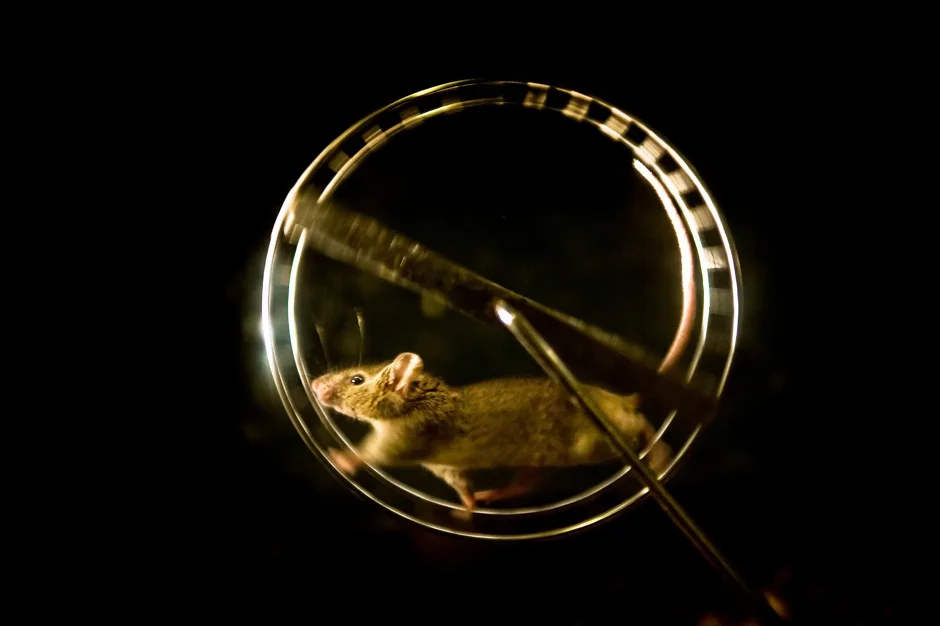
(Bar Harbor, Maine – Feb. 19, 2026) – When you finish a run, your muscles may feel like they did all the work. But researchers at The Jackson Laboratory (JAX) and the University of Pennsylvania (UPenn) have discovered that what happens in your brain after a run may determine whether you gain endurance over time.
Specialized neurons in the brain’s hypothalamus spring into action after a bout of exercise, the team reported in Neuron. Without the activity of these neurons, mice fail to show endurance gains, no matter how hard they sprint on a treadmill. And when the researchers artificially activated the neurons after exercise, the animals gained even more endurance than usual.
“The idea that muscle remodeling requires the output of these brain neurons is a pretty big surprise,” said Erik Bloss, associate professor at JAX and a co-senior author of the new work. “It really challenges conventional thinking about how exercise works.”
Scientists have long known that exercise has long-term effects on the brain, boosting cognition and strengthening connections between neurons. Bloss, in collaboration with J. Nicholas Betley of UPenn, wanted to know the more immediate effects of exercise in the brain.
The researchers tracked the activity of hypothalamus cells in the brains of mice during and after running. That let them home in on a particular cluster of neurons that express a protein called steroidogenic factor-1 (SF1) and become active for about an hour after mice finish running.
“The fact that these neurons are most active post-run was quite intriguing,” said Bloss. “It suggested that they play a role in signaling the body to start the recovery process.”
As mice trained over weeks, more and more SF1 neurons became activated after each exercise session. Experiments conducted at JAX showed that the connections between the SF1 neurons also became stronger and more numerous with each run. Animals that exercised had about twice as many connections between these neurons as animals that did not.
To test whether these neurons impacted the animals’ ability to gain endurance, Bloss and Betley’s groups used optogenetics—a technique that allows precise control of specific neurons using light. When they turned off the SF1 neurons for 15 minutes after each training session, mice stopped improving their endurance, despite following the same rigorous daily running regimen for three weeks. Using other modes of silencing, the muscles of exercising mice failed to show the changes in gene expression that usually follow exercise and are required to remodel muscle tissue with endurance gains.
At the same time, the animals began to fare worse on voluntary run tests.
“If you give a normal mouse access to a running wheel, they will run kilometers at a time,” said Bloss. “When we silence these neurons, they effectively don’t run at all. They hop on briefly but can’t sustain it.”
In a complementary experiment, the team stimulated SF1 neurons for an hour after treadmill sessions. Mice receiving this post-exercise boost showed enhanced endurance gains compared to control animals, running longer distances and reaching higher maximum speeds by the end of the training period.
The findings challenge the traditional view that exercise benefits come solely from muscles adapting over time. Instead, they suggest the brain acts as a master coordinator, orchestrating metabolic changes and muscle remodeling throughout the body. This discovery could eventually lead to strategies to enhance or mimic the effects of physical activity or help people build endurance.
“There's the very real possibility that we can eventually take advantage of this circuit to boost the effects of moderate exercise,” said Bloss. “If we can mimic or enhance exercise-like patterns in the brain, that could be particularly valuable for older adults or people with mobility limitations who can’t engage in intensive physical activity but could still benefit from exercise’s protective effects on the brain and body.”
Other authors include Lauren Lepeak of JAX.
This work was supported by funding from UPenn, the National Institutes of Health (P01 DK 119130, R01 AG 079877, R01 DK 119169, R56 DK 135501, F32 DK 131892, F31 DK 131870), the National Science Foundation (DGE-1845298, DGE-2236662), the National Research Foundation of Korea (2021R1A6A3A14044733), the Rhode Island Institutional Development Award (IDeA) Network of Biomedical Research Excellence, the Rhode Island Foundation (16409_139170), the Providence College Provost’s Fellowship, and Providence College.
About The Jackson Laboratory
The Jackson Laboratory (JAX) is an independent, nonprofit biomedical research institution with a National Cancer Institute-designated Cancer Center. JAX leverages a unique combination of research, education, and resources to achieve its bold mission: to discover precise genomic solutions for disease and empower the global biomedical community in the shared quest to improve human health. Established in Bar Harbor, Maine in 1929, JAX is a global organization with nearly 3,000 employees worldwide and campuses and facilities in Maine, Connecticut, New York, California, Florida, and Japan. For more information, please visit www.jax.org.
JAX media contact: Roberto Molar, [email protected], 202-765-5144
Learn more
The Bloss Lab at JAX
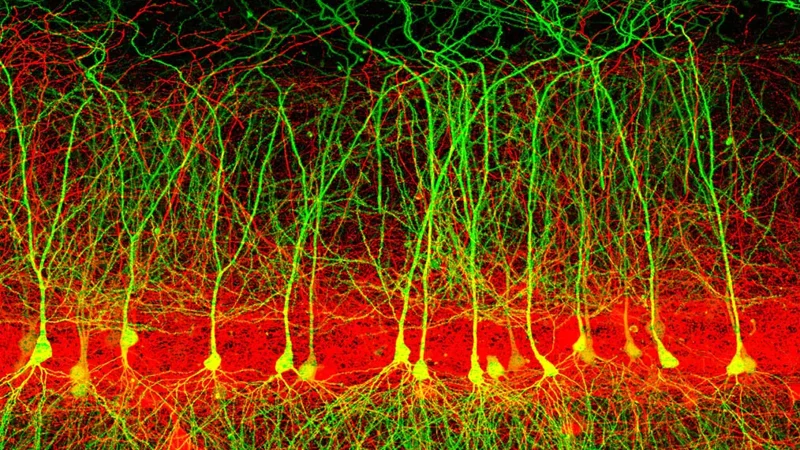
The Bloss Lab leverages high resolution imaging, observation and manipulation of in vivo neural activity, and genetic perturbations in specific neurons to define how neural circuits supports goal-directed behavior.
View more
News and Insights - The Jackson Laboratory
Gain insights into bioscience, technology and the quest to improve human health.
View more