
Skin is our most accessible organ. Could it reveal new clues about aging and frailty?
By Roberto Molar Candanosa
Article | August 31, 2026
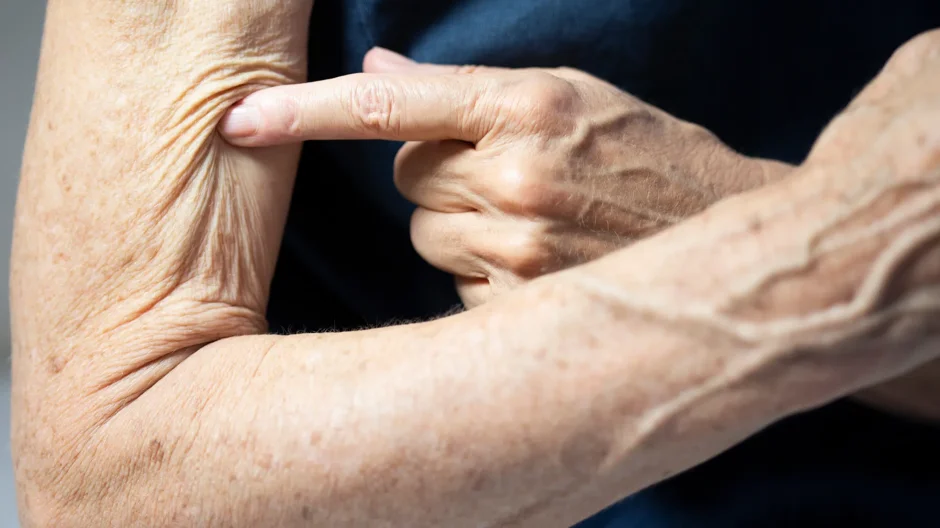
When it comes to aging skin, scientists think of much more than wrinkles. They think of an organ with multitudes of microbes, immune cells, structural proteins, and chemical signals that constantly interact with one another.
One of those scientists is Sasan Jalili, a biomedical engineer and immunologist at The Jackson Laboratory (JAX) who is investigating how to probe the complex biological interactions in skin. The idea, he says, is to gain a better understanding of the physiological decline that comes with aging apart from the number of birthdays someone has had—and to reveal new insights about possible interventions to promote healthy aging.
In an article recently published in Science with Julia Oh, formerly of JAX and now a microbiologist and professor at Duke University, Jalili argues that skin is an accessible ecosystem that scientists may be able to sample repeatedly and relatively easily for clues into the biology of aging.
“The skin microbiome may not only reflect aging, but in some cases may help shape barrier decline, inflammation, immune changes, and repair,” said Jalili, who is also a joint faculty member at UConn School of Medicine. “Once we understand that relationship, we’ll have better strategies to shift it towards repair, or to prevent the chronic inflammation and other changes observed in the aging population.”
Beyond birthdays
As we grow older, our skin becomes drier, slower to heal, and more susceptible to irritation, inflammation, and infection. The abundance of some microbes associated with barrier function and immune regulation tends to decline, and microbes that can become problematic under certain conditions can increase. Aged skin also shows more genes that let microbes survive antibiotics or antiseptics, as well as other organisms associated with inflammation and tissue damage.
“Aged skin immunity is not simply weaker—it’s recalibrated,” Jalili said. “The question is whether microbial changes push this recalibration toward repair or toward chronic inflammation.”
Beyond chronological age, people can look and function very differently. For example, an 80-year-old may remain active, independent, and socially engaged, while another may struggle with mobility, chronic inflammation, infections, or cognitive decline. Scientists refer to this decline in physiological resilience as frailty. And, Jalili said, it appears to have a bigger effect than chronological age on microbiome shifts, with the clearest microbial changes often tracking with frailty rather than age in years.
“It’s mostly observational and correlational, but we still see that two people of the same age can have very different skin microbiomes, and those differences may be linked to differences in inflammation or resilience to pathogens,” Jalili said. “The challenge is to identify which microbial functions actually contribute to the aging biology.”
The most visible aging organ
While many of the body's changes associated with aging occur in organs that are difficult to sample repeatedly, skin offers a unique advantage, Jalili said. In theory, the skin’s microbes, inflammatory signals, immune cells, and other age-related changes could be monitored over time with minimally invasive technologies and little burden on patients. Such technologies could help scientists identify whether biological signs of frailty emerge before clinical decline becomes visible.
“Clinicians are very excited about the possibility that the skin microbiome could be an accessible biomarker of biological aging or frailty, but they also want clear evidence that these measurements can actually change patient care,” Jalili said.
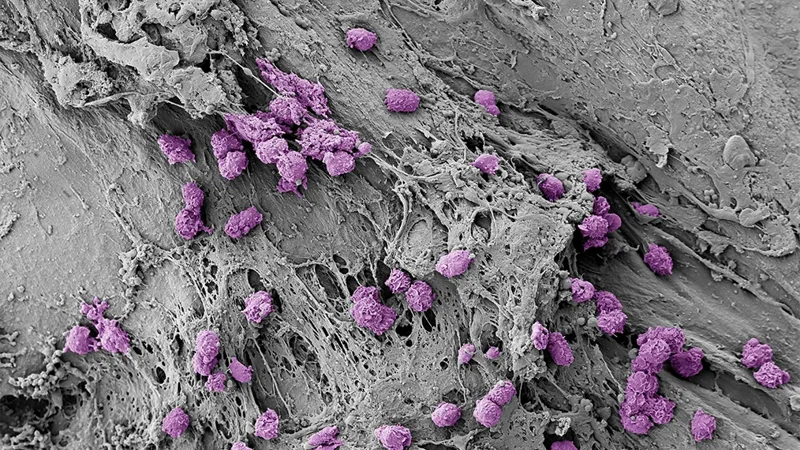
Progress toward that goal is difficult because there are still limited ways to repeatedly to sample the full biology of aging skin over time. While skin swabs can capture microbes living on the surface, they provide only a partial picture. Biopsies can offer deeper insight, but they are invasive and impractical for routine monitoring, especially in older adults.
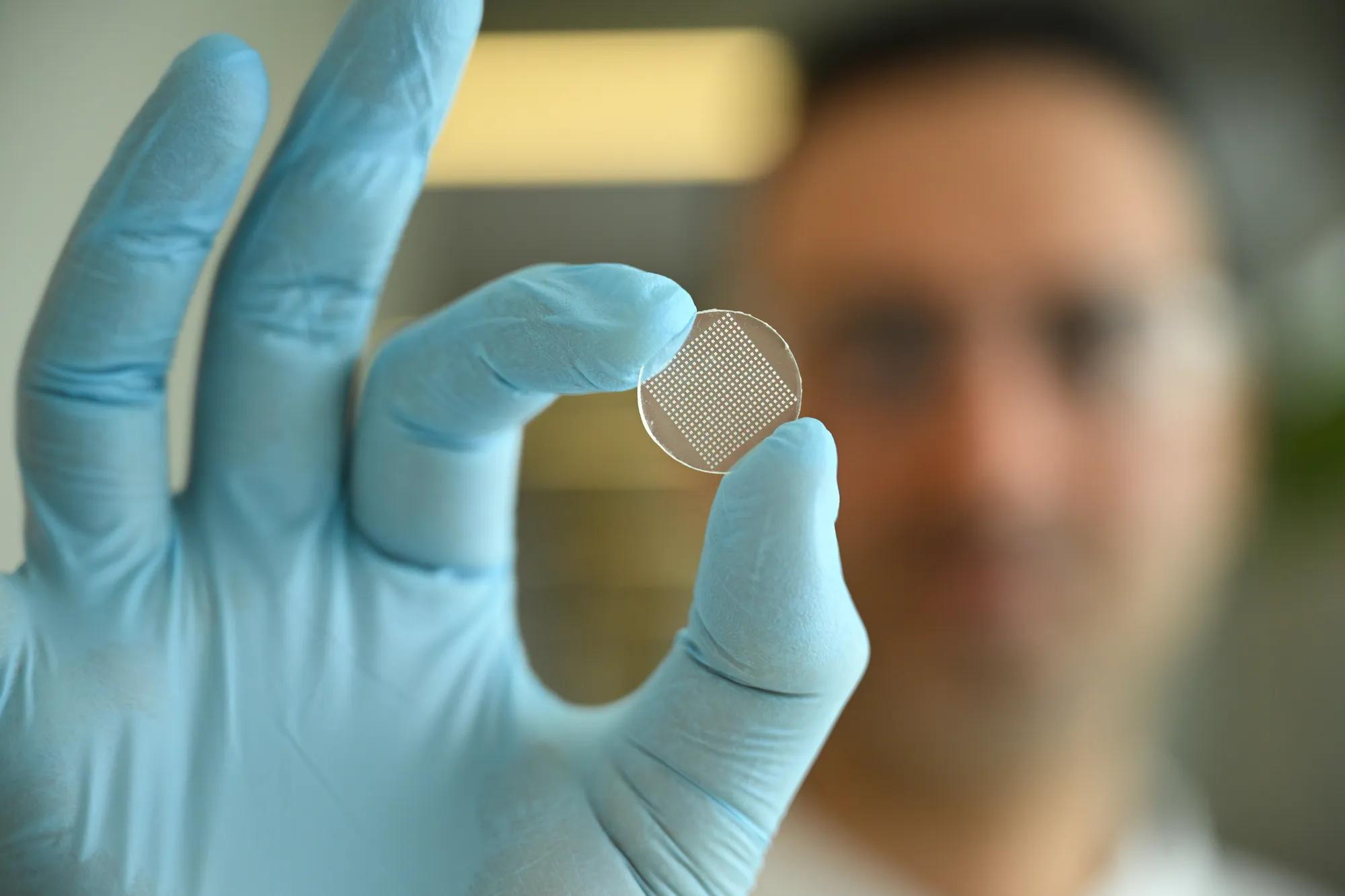
To change that, Jalili is collaborating with clinicians and researchers at the UConn Center on Aging to test a novel microneedle patch for monitoring immune and microbial features of aging skin without the need for traditional biopsies. The work is funded by an NIH grant led by Oh at Duke University.
Designed by Jalili with scientists at the Massachusetts Institute of Technology (MIT), the patch is about the size of a small adhesive bandage. It contains tiny projections that gently access the upper layers of the skin and can painlessly collect information from immune cells residing within skin tissue.
“This opens the door to a new way of monitoring immune responses that’s practical, painless, and clinically feasible,” Jalili said in March, when work on the skin patch was published in Nature Biomedical Engineering.
But the goal is not to reverse aging, Jalili said. It is to understand whether some of those lost functions in aged skin can be restored. And whether the answers ultimately lie in microbes, immune cells, or their interactions, Jalili hopes the skin may provide one of the clearest windows yet into a question that has challenged scientists for decades: why some people remain resilient with age while others become increasingly vulnerable to disease and decline.
“The skin is our most visible aging organ, but it’s also one of our most accessible ecosystems,” Jalili said. “This gives us a unique opportunity to study biological aging in real time.”
CITATION: Jalili, S., Oh, J. Beyond wrinkles. Science (2026). DOI: 10.1126/science.aeh4348
Media Contact: Patrick Skahill, [email protected], 860-839-3309.
Learn more
The Jalili Lab at The Jackson Laboratory
The Jalili Research Group at The Jackson Laboratory (JAX) is focused on interrogating the host immunity, microbiome and their interface using different engineering tools in the context of infectious diseases, autoimmunity and cancer.
View more
Aging
JAX researchers are working to understand the biological mechanisms that allow some individuals to remain healthier longer.
View more