
How JAX’s postdoctoral researchers are helping shape the future of human health
Article | September 18, 2025
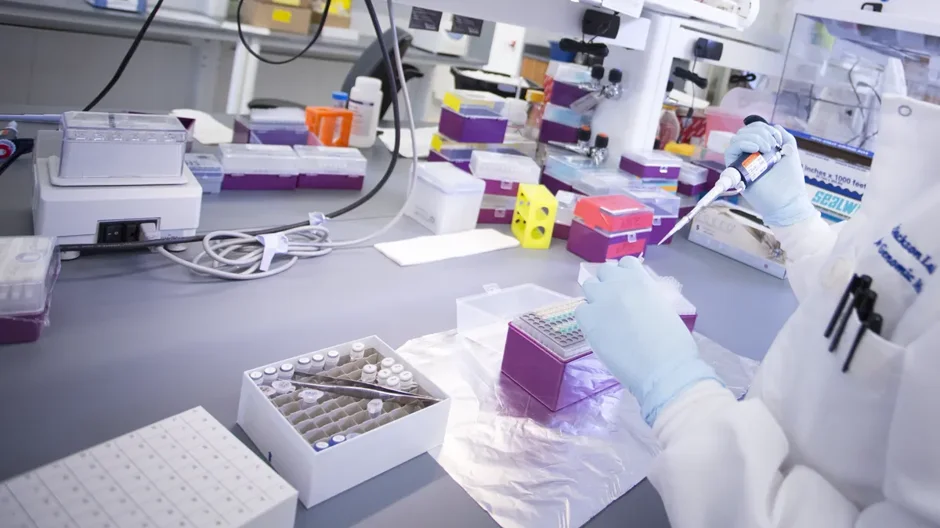
These early-career scientists bring fresh ideas, relentless curiosity and drive to push science forward. This year’s National Postdoc Appreciation Week theme is “Communicating your science and research.” Below, hear from six remarkable early-career scientists at JAX. From immune systems to endometriosis to the inner ear, their work spans disciplines and diseases, but they share a common goal: advancing knowledge to improve human health.
Do infections change our immune systems as we age?
As a postdoc in the Ucar lab, Luke Trinity investigates how aging varies from person to person, especially when they are confronted with chronic inflammation or stress from latent infections.
“I’m excited to use novel computational and genomics techniques that will accelerate collaborative immune aging research to deliver the most impactful results,” said Trinity.
Are the answers to endometriosis pain hidden in how cells are organized?
As a postdoc under Elise Courtois at JAX, Caroline Haney utilizes advanced mapping tools to study cellular interactions in endometriosis, aiming to better understand factors that cause chronic pain and inflammation in the disease.
“Research into the underlying biology of endometriosis not only informs better treatments, but helps advocate and bring awareness for affected patients,” said Haney.
Why do some brains age faster—and can genetics explain why?
As a postdoc in the Carter lab, Yi Juin Liew explores how genetic variation influences brain aging and Alzheimer’s disease risk, uncovering patterns that could inform personalized strategies to prevent and treat age-related brain disorders.
I’m excited by the possibility of predicting early trajectories of brain aging using genetic insights and then turning that knowledge into strategies that preserve memory, independence, and quality of life,” she said.
Do "misread” genetic messages hold the key to early cancer detection?
As a postdoc in the Anczuków lab, Hyeongu Kang investigates how inaccurate RNA splicing may raise cancer risk in older adults, exploring the link between aging and early tumor development to uncover new markers and treatment targets.
“I think prevention is the best therapy. I hope that I can contribute to the discovery of effective, preventive strategies against cancer,” said Kang.
Can we protect the heart from sickle cell disease?
As a postdoc in the Agoro lab, Iyanuoluwani Owolabi studies how sickle cell disease affects heart function, testing new therapies in specialized mouse models to uncover strategies that could help prevent life-threatening cardiovascular complications and improve patient outcomes.
“The potential to translate molecular discoveries into real therapies that improve lives brings together my passion for understanding disease mechanisms with the hope of making a tangible difference in patient care,” said Owolabi
What can the structure of inner ear cells teach us about hearing restoration?
As a postdoc in the Tarchini lab, Suraj Chakravarty studies how cochlear hair cells orient into precise patterns using live imaging of mouse models, providing insights that could advance strategies for restoring hearing after injury or loss.
“The ability to combine mouse models of deafness with advanced live microscopy to explore cochlear hair cells in real-time could reveal new therapeutic targets to treat deafness and improve quality of life,” he said.
Learn more
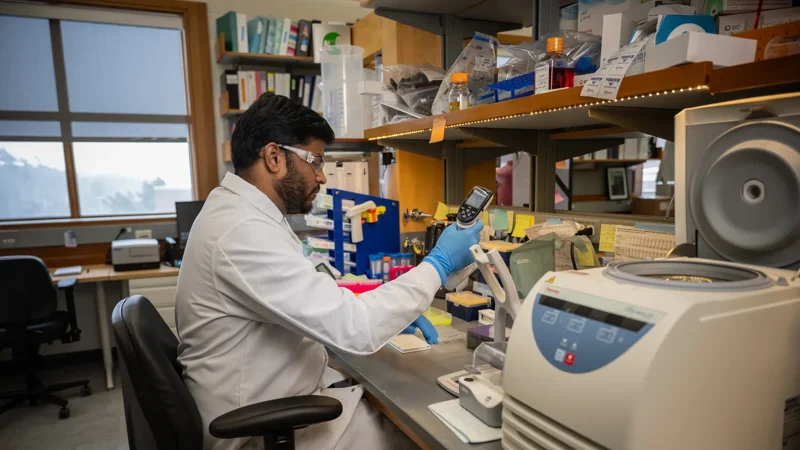
Postdoctoral Research Training
Conduct cutting-edge research on the complex diseases impacting human health as a Postdoctoral Associate at The Jackson Laboratory.
View more
JAX Genomic Education
Developing the next generation of modern biomedical leaders, JAX Genomic Education offers integrated, inclusive and increasingly digital teaching and learning experiences.