
Connecting the dots for cancer biomarkers and precision oncology
Article | November 13, 2025

Every cancer is unique and so is every patient’s cancer journey. Not just their treatments and outcomes, but the cancer itself—right down to the mutations in the cells that make up their tumors . Even two patients of the same age, gender, and with the same type of cancer could respond to treatment differently thanks to the genetic variations in the tumor cells.
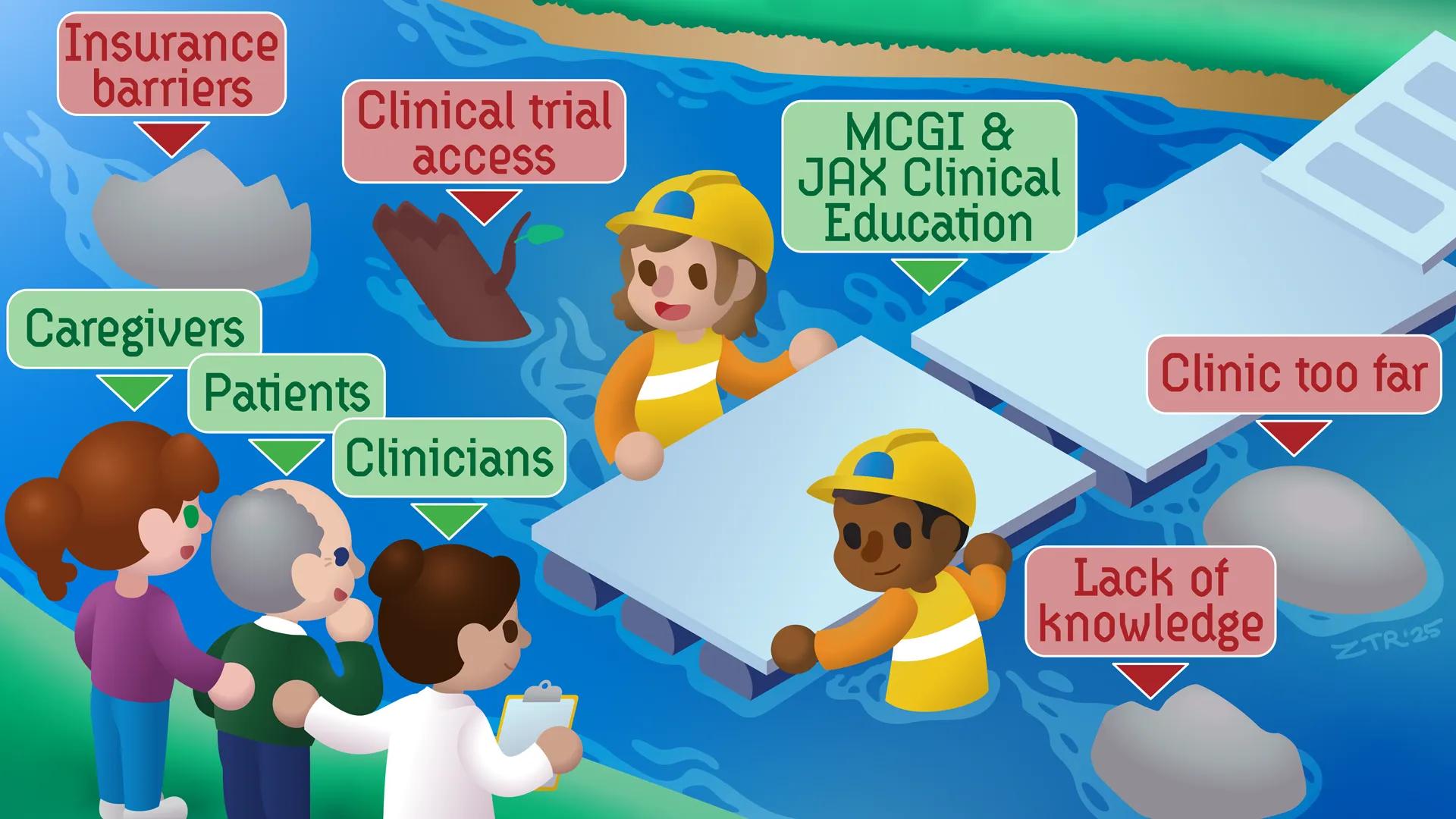
Genetic Counselors from JAX Clinical Education and the Maine Cancer Genomics Initiative (MCGI) are working hard to help clinicians and care teams determine the right path for their patients. By teaching health care providers how to interpret genomic testing and use cancer biomarkers to guide treatment, JAX experts are working to make sure that precision oncology treatments aren’t limited to major research hospitals and are available to patients wherever they receive care.
“JAX sits at a really unique crossroads between what’s happening in the clinic and what’s emerging from research,” said Kate Reed, director of precision oncology education at JAX. Reed is a board-certified genetic counselor. That means, just like the name suggests, that she is trained in both genetics and counseling and part of the force bridging the gap to reach patients after discoveries are made in research.
Cancer biomarkers are a broad term. A biomarker is any finding, such as a DNA or RNA variant or level of protein expression, that helps a provider understand, diagnose, or treat a cancer.
“Biomarker testing can be used at many stages — diagnosis, treatment, monitoring response, and survivorship. It’s a dynamic process,” said Lindsey Kelley, a certified genetic counselor and associate director of MCGI.
Testing for these biomarkers allows clinicians to match patients with precision therapies most likely to work for their specific disease. To apply this knowledge effectively, healthcare providers need access to advanced testing, expert education, and interpretation — a gap that JAX is helping to close.
“We see genetic counselors as the bridge between non-genetics providers and patients — helping both groups understand the genomics behind precision oncology,” said Kalisi Logan, certified genetic counselor and clinical program manager at JAX.
Precision oncology is a rapidly expanding field and the terminology used by labs can be inconsistent. That can be tricky for the community oncologists responsible for patient care.
“We identified a lot of misconceptions among community oncologists who are suddenly facing so much genomic information — it can be overwhelming, so education helps bridge those gaps,” said Reed.
A trusted partner
“JAX is a trusted resource in genomics and research, and we use that trust to bring education and guidance to community oncologists who might not have that background,” said Kelley.
MCGI was founded in 2016 to bring genomic testing and interpretation support to one of the most rural states in the country. When it began, precision oncology was still largely the domain of major academic medical centers, something Maine lacks. For local oncologists, that meant little access to genomic expertise or infrastructure. For patients, it meant potentially having to drive to a major metropolitan area for access to the best care, usually hours away.
By testing the genomic profile of each patient’s tumor for biomarkers, clinicians can identify the treatment most likely to work. Fast forward to nearly a decade later and MCGI has partnerships with every oncology practice in Maine. This ensures patients have access to genomic testing, clinical trials, and individualized therapies no matter where they live. It also ensures that their community oncologists have the knowledge and connections to be able to make the best decisions based on the results of those tests.
“MCGI filled a gap in Maine — there was no academic medical center, and we gave community oncologists access to the education and resources to provide cutting-edge cancer care ,” said Kelley. “Maine patients don’t have to travel to Boston for advanced treatment, their community oncologists now have the skills and support to offer it locally.”
A cornerstone of MCGI’s success are its genomic tumor boards — virtual meetings where oncologists, pathologists, and expert advisors (including researchers and genetic counselors) can discuss real patient cases and test results in real time. These sessions are designed to help clinicians in their network interpret genomic data and explore personalized treatment options for their patients, offering practical, expert-guided support without requiring anyone to leave their practice.
Building a cancer care community
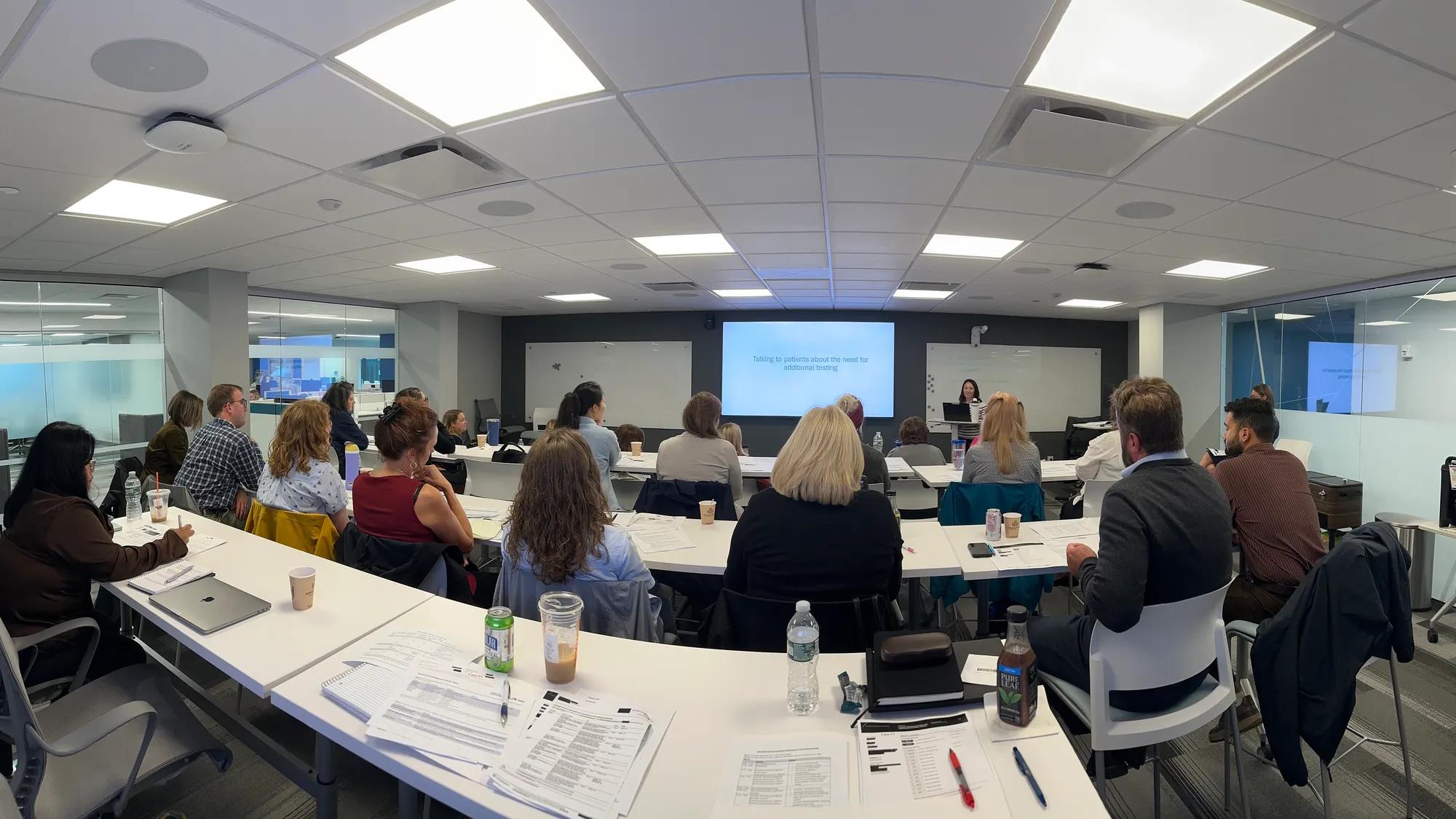
These collaborations do more than improve care — they help build community. Annually, MCGI offers forums that bring together members of Maine’s cancer care community to learn about new developments in the field and to meet each other.
“The JAX forums have been so helpful in bringing together people who don’t always get to collaborate — oncologists, nurses, researchers, and genetic counselors,” said Kathy Gravelin, a clinical research coordinator at the MaineHealth Institute for Research. “They’ve really helped connect the genetics community across Maine.”
Gravelin, who first collaborated with MCGI during a previous role as a board-certified genetic counselor, also at MaineHealth, now helps identify patients that could be good fits for oncology clinical trials. “One thing that we're really trying to do at Maine Health Institute for Research, is open studies that would be helpful for local patients and provide them a way to get access to these trials here,” said Gravelin. “To do that, we also need to have clinicians who are educated in precision medicine.”
Precision oncology is here — and JAX is leading the way
When both patients and oncologists can access and understand biomarkers and precision oncology, the results can be life-changing. A study published in 2024, found that the MCGI patients who received genome-matched treatment were 31% less likely to die within one year compared to those who did not receive matched treatment.
While MCGI is focused in Maine, the team’s genetic counselors have developed free patient education resources available to all cancer patients. The JAX Clinical Education team creates resources such as courses, webinars, and webpages, to help clinicians understand and use precision oncology. By educating more members of the cancer care network on how to interpret complex reports and discuss genomic results with confidence, they're ensuring that breakthroughs in research translate into real-world patient benefit.
“A big misconception is that precision oncology is something of the future — it’s not. It’s happening right now,” said Logan. “We need to raise awareness that this work is happening now, not years from now.”
November 13, 2025 marks both the first Cancer Biomarker Awareness Day and the first Genetic Counselors Appreciation Day. From Maine to the national stage, JAX is shaping cancer care — not just through science, but through education, empathy, and connection.
Kelley said she believes the next chapter of cancer care is within reach. “We envision a future where every person with cancer gets the right testing for them,” she said. “By educating providers and patients, we can ensure no one is left behind — and as we learn more about biomarkers, we’ll see more precise and effective treatments that work better and with fewer side effects for patients everywhere.”
Celebrating 10 Years of MCGI
Built to scale. Empowering care teams. Personalized oncology without compromise.