
Celebrating 20 years of progress for global stem cell research
Article | May 27, 2026
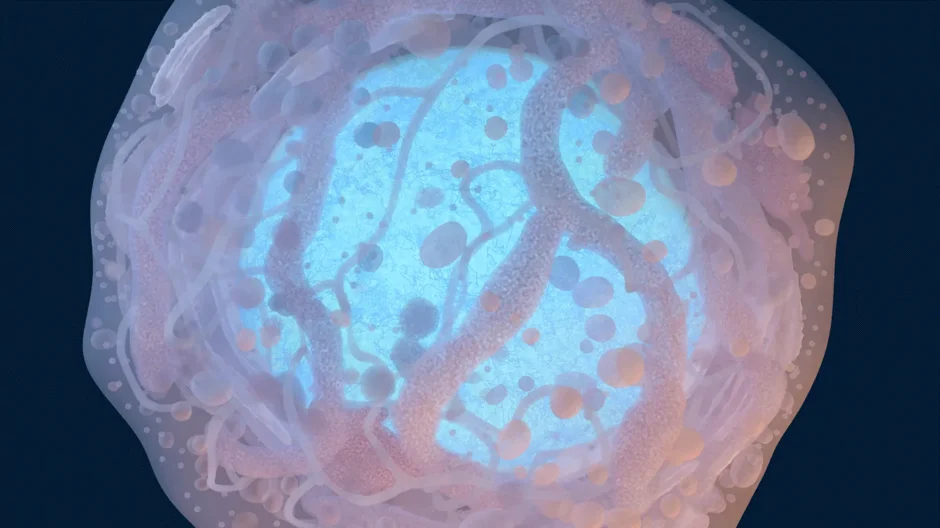
Twenty years ago, a Japanese research team led by Shinya Yamanaka transformed mouse skin cells into a new type of cell: an induced pluripotent stem cell (iPSC), capable of being turned into any cell type in the lab. Their discovery, a winner of the 2012 Nobel Prize in Physiology or Medicine, revolutionized the field of biomedicine and has paved the way for breakthroughs that are beginning to reach the clinic.
Since the first pluripotent stem cell-based trials in the early 2010s, and the landmark first iPSC trial in 2013, more than 100 clinical trials have been initiated as of 2024. These trials are probing the potential of stem cell therapy across a wide range of human health challenges, with over a thousand patients enrolled in studies spanning cardiovascular disease, epilepsy, blindness and Parkinson's disease.
As part of the vibrant global community that coalesced around stem cell science, our researchers are leading a defining moment for the field, one in which advances in cellular engineering, genetics and disease modeling work in tandem to turn biomedical discoveries into life-saving cures for human disease.
From ‘science fiction’ to real science
The idea of a recipe that could turn an adult cell into any other cell type was once “pure science fiction,” said Valentina Fossati, who brought her research on multiple sclerosis to The Jackson Laboratory through its union last fall with The New York Stem Cell Foundation Research Institute.
“The amount of change in just 20 years is astronomical,” said Fossati, who serves as a co-director of the JAX-NYSCF Collaborative. “The fact that you can change the fate of a cell from virtually any individual has opened infinite possibilities for exploring science and regenerative medicine.”
Stem cell research has accelerated through a convergence of tools and technology over the last two decades, including CRISPR gene editing, artificial intelligence, and automation. Yet the long-studied concepts of fundamental biology — our basic understanding of how genes influence health — paved the way for the discoveries to date.
“This field stands on the shoulders of the science that came before it,” said Daniel Paull, scientific director of the JAX-NYSCF Collaborative. “With stem cell research, we took all our existing knowledge of fundamental biology and applied it to cells in a dish. This has helped us understand how to use them most effectively.”
The next 20 years
JAX-NYSCF Collaborative Co-Director Stefan Semrau, who specializes in computational models, imagines that in the next two decades, it will be possible to make any cell type or subtype.
“The very idea that you can turn a blank slate of a cell into any type of cell you want to study is one that I find endlessly fascinating,” Semrau said. “Tools like artificial intelligence have the potential to help us leverage stem cells to solve some of the world’s biggest health challenges — ones that humans haven’t figured out yet.”
The next two decades also hold promise for making cellular therapies more accessible, and for building what Paull calls “a patient-centric vision” for drug development rooted in personalized medicine.
“Imagine a world where the decision about which drug works for you comes not from a huge clinical trial where you are one of thousands,” he said, “but on a trial that compares the present version of yourself to a past version. Treatment based on your profile, not on an average; that is what the next 20 years could hold.”
The JAX-NYSCF Conference: A new era of community
The 20th annual JAX-NYSCF Conference on September 23-24, 2026, will convene renowned stem cell researchers, innovators and industry leaders. As JAX carries forward The New York Stem Cell Foundation’s commitment to advocacy, outreach and community, the conference is an opportunity to engage with cutting-edge science, to learn more about discoveries underway and to network with leaders shaping the future of biomedical research.
Known as a respected, right-sized global forum and a platform for up-and-coming stem cell researchers, the JAX-NYSCF Conference will continue to bring together leaders whose work is helping define the next phase of progress in stem cell science and regenerative medicine. Keynotes speakers include:
- Elaine Fuchs, Ph.D., leader in stem-cell-based regenerative medicine and the Rebecca C. Lancefield Professor at The Rockefeller University
- Rudolf Jaenisch, M.D., Professor of Biology at the Whitehead Institute, Massachusetts Institute of Technology
- Alex Meissner, Ph.D., Professor at the Max Planck Institute for Molecular Genetics
“If you are in the stem cell field, come to meet and network with the leaders,” Fossati said. “If you are simply following the science and want to know more, come to experience two days of the best the field has to offer.”
Learn more
JAX NYSCF Conference | September 23-24, 2026
Bringing together global leaders to advance translational stem cell science. Join us to gain fresh insights into emerging technologies and discover new ways to accelerate your work in translational science alongside academia and industry.
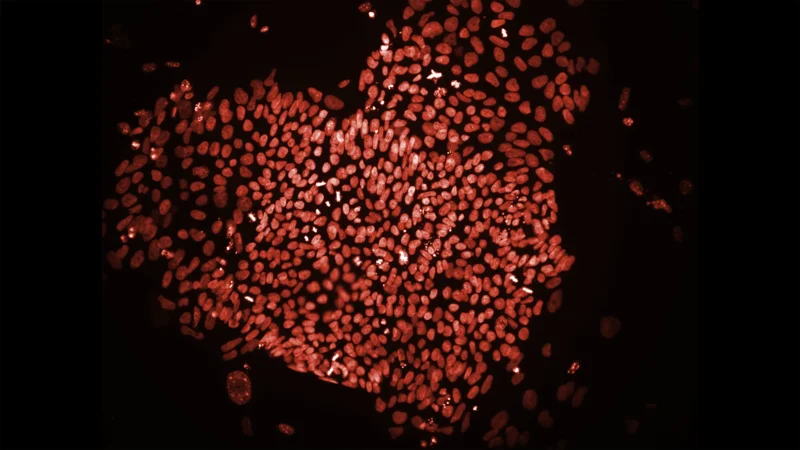
JAX receives an up to $30M contract award to revolutionize drug safety testing with AI-powered “virtual hearts”
New CARDIOVERSE project combines AI, stem cells and genetic variation to predict drug safety before human trials.
View more