
To advance type 2 diabetes research, JAX-NYSCF scientists are making pancreatic organoids at scale
By Roberto Molar Candanosa
Article | July 28, 2026
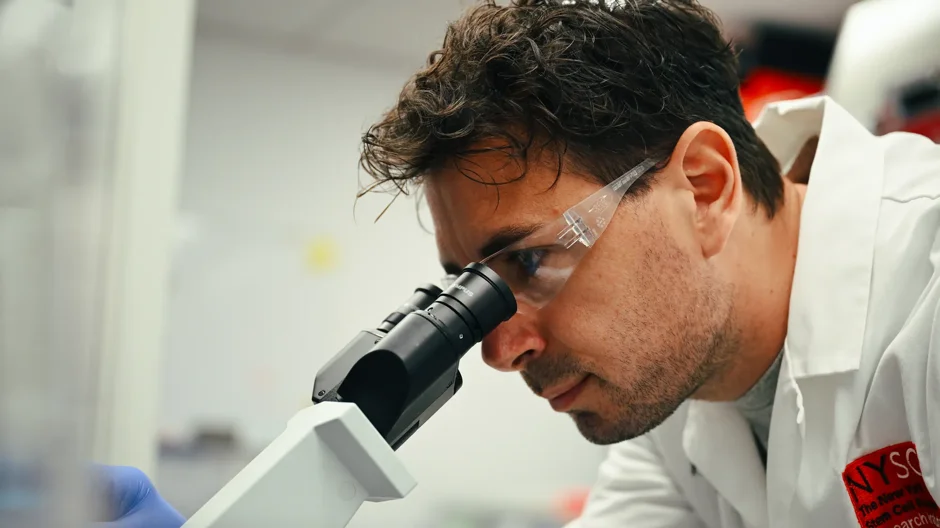
Type 2 diabetes (or T2D) affects more than 500 million people worldwide. Yet scientists still struggle to explain why the disease develops differently from one person to the next.
Part of the challenge is that, like cardiovascular, neurodegenerative, and other complex diseases, T2D is not caused by a single gene or biological pathway. Instead, thousands of genetic variants are associated with disease risk, alongside environmental and lifestyle factors that influence how the disease develops.
In a paper published in Trends in Biotechnology, researchers from the JAX-NYSCF Collaborative describe effective strategies to address those challenges—by using an automated platform to model T2D and other complex diseases with organoids. The technology could help scientists worldwide investigate diabetes and other diseases in ways that were nearly impossible just a few years ago, said Filippo Cipriani, a senior principal scientist who leads the T2D research team through the JAX–NYSCF Collaborative.
One of the platforms biggest advantages is that it allows researchers to watch when healthy cells begin to take on the characteristics of disease, he said.
“When you want to model a disease, you also want to look at the specific stages where the cells start to deviate from the normal or healthy state to a disease trajectory,” Cipriani said. “With induced pluripotent stem cells (or iPSCs), we are able to look not only at the final or advanced stage of disease, but also at the developmental stage.”
The work builds on the NYSCF Global Stem Cell Array®, a robotic platform that enables scientists to generate and study large numbers of patient-derived stem cell lines simultaneously. By combining robotics, imaging, and automated cell culture, the platform allows researchers to generate organoids and investigate how genetic differences influence disease across diverse patient populations while reducing the variability that often comes with labor-intensive cell culture experiments.
“When you want to look specifically at the genetic aspect of Type 2 diabetes, you need to have a very large cohort of lines, because the disease is complex,” Cipriani said. “To be able to derive large cohorts of lines, you need a system in place that can ensure and can guarantee reproducibility, which is a known challenge in the field of organoid research.”
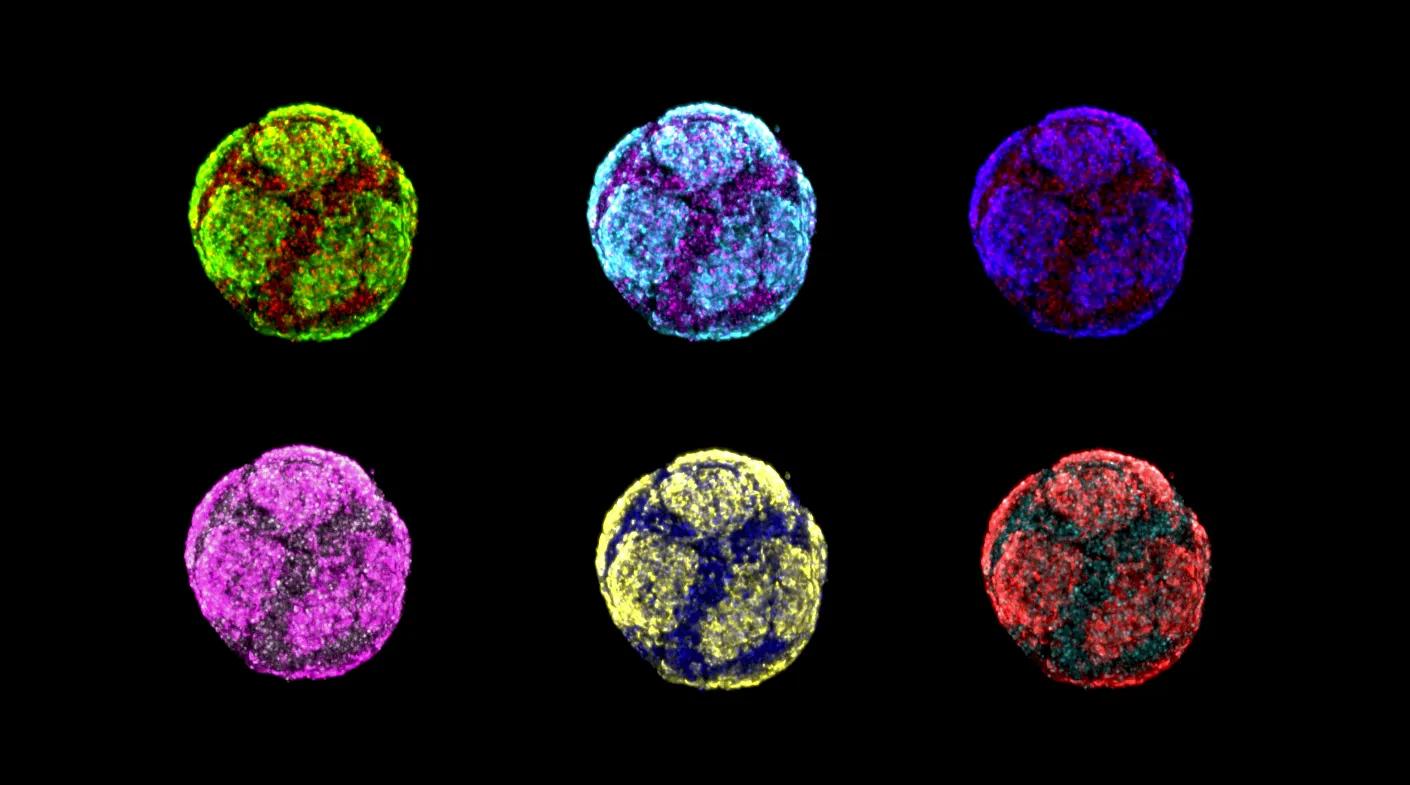
For decades, diabetes researchers have relied heavily on animal models and conventional cell culture systems. Those remain important tools, but they answer different questions. Mouse models allow scientists to study how genes affect an entire organism. Human pancreatic tissue provides direct insight into disease in patients. And traditional cell cultures are useful for controlled experiments and drug screening. While each approach has strengths, large-scale automation of organoids offers another option.
The automation of organoids is particularly valuable for research into complex diseases such as T2D, Cipriani said, as understanding how genetic variation influences the onset of disease will require studying many patient-derived models rather than relying on a small number of representative samples.
“The goal is to study diabetes across hundreds of genetically different individuals,” Cipriani said. “Once you can do that, you can start asking why the disease develops differently from one patient to another and what that means for treatment.”
The JAX-NYSCF team makes disease models with iPSC-derived organoids. For diabetes research, this tissue includes pancreatic organoids that contain insulin-producing cells (Beta Cells). Because they come from individual diabetes patients, the cells preserve important genetic differences between people.
Producing organoids requires weeks of carefully timed differentiation steps, repeated media changes, and constant monitoring. Performing those tasks manually across hundreds of cell lines is virtually impossible, Cipriani said, and can introduce variability between experiments.
Instead, the NYSCF Global Stem Cell Array®, integrates a multi-layer system with robotic liquid handlers, incubators, imaging systems, and software capable of tracking large numbers of samples simultaneously. With this platform, the team can generate organoids from many donors in parallel and follow their development under standardized conditions.
“There are many groups around the world that can make these complex disease organoids,” Cipriani said. “But where we really stand out is in our use of large-scale automation. That’s the strength of our research, because we are uniquely positioned to handle hundreds and hundreds of cell lines in a high-throughput fashion, which is very hard to find in other organizations.”
The effort comes as federal agencies in the United States increasingly encourage the use of human-based research models in approaches that complement or reduce reliance on traditional animal studies. Automated organoid platforms could help researchers meet that demand by generating large numbers of human-derived tissues in a reproducible way. Still, the goal is not to replace existing models for T2D or other complex diseases, Cipriani said. Instead, the team views mice, patient samples, stem-cell-derived organoids, and computational approaches—including those driven by artificial intelligence—as complementary tools.
The team is building a blueprint for disease modeling that can extend beyond diabetes research. They are opening up new lineages, including brain organoids to study complex neurological conditions such as Parkinson’s disease. As they begin incorporating new artificial intelligence tools, they expect to reveal cellular differences that are too difficult to detect with traditional models.
“The idea is to leverage the technology we developed for pancreatic organoids and apply it to the study of other diseases that could benefit from this approach,” Cipriani said.
Other authors are Xingrui Mou, Nathan Dale, and Kiran Ramnarine of JAX-NYSCF.
JAX media contact: Patrick Skahill, [email protected].
Learn more about The Jackson Laboratory.
Citation: Mou X., Dale N., Kiran R., Cipriani F. Automated stem cell-derived organoid platforms for disease modeling. Trends in Biotechnology. (2026). www.cell.com/trends/biotechnology/fulltext/S0167-7799(26)00148-4
Learn more
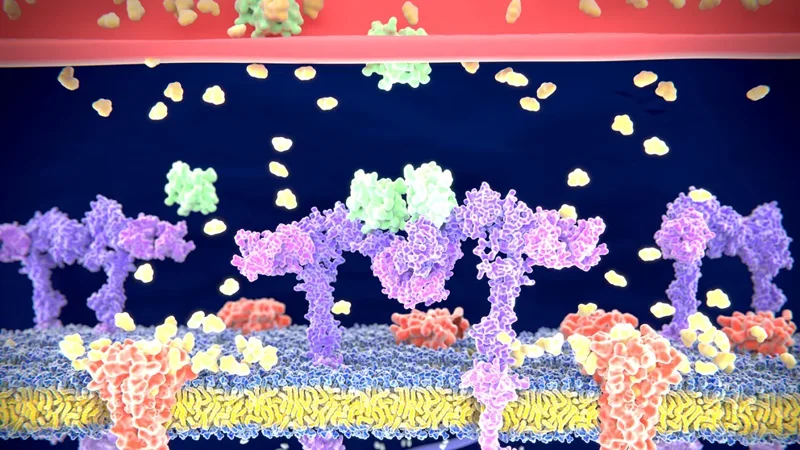
Diabetes (Type 2)
Type 2 diabetes is a chronic metabolic disorder that affects more than 37 million Americans and an estimated 530 million people worldwide.
View more
The Jackson Laboratory secures grant from The Michael J. Fox Foundation to advance Parkinson’s disease research through the JAX–NYSCF Collaborative
New human stem cell platform will expand access to standardized disease models, support Parkinson’s disease research and therapeutic discovery efforts.
View more