
Paigen Fellowship celebrates rising scientific talent at JAX
Article | July 2, 2026
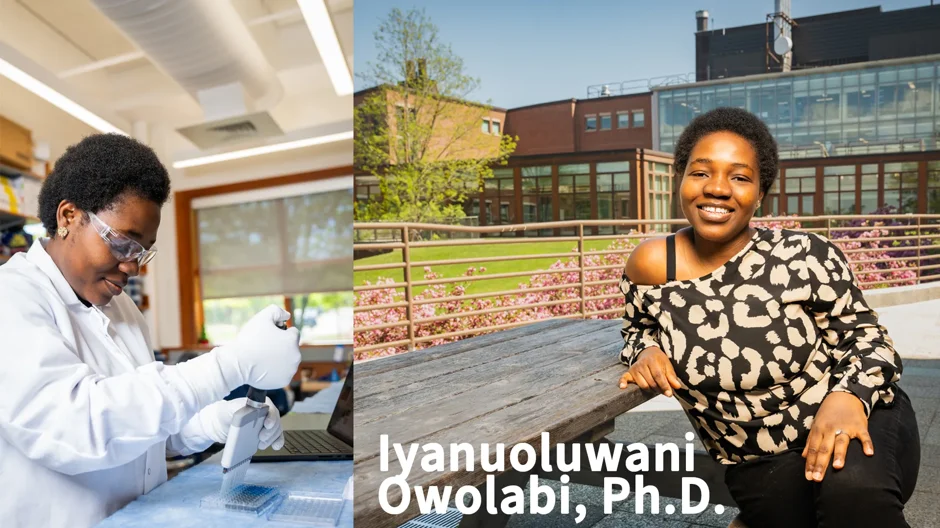
Iyanuoluwani Owolabi, a standout researcher in sickle cell anemia at The Jackson Laboratory and new mom to a five-month-old baby girl, is the recipient of the 2026 Paigen Endowed Fellowship.
Recognizing promising postdoctoral talent at JAX, Owolabi’s fellowship honors the late Kenneth and Beverly Paigen, two prominent figures in JAX’s history who dedicated their careers to educating the next generation of scientists. The award is supported in perpetuity by an endowment established in 2021 by the Paigens’ family and friends.
“I always wanted to pursue a career that would impact human health,” said Owolabi, who initially considered becoming a doctor before pivoting to research. “I am grateful that this fellowship enables me to accelerate my work and grow as a scientist.”
Owolabi is exploring ways to improve cardiac and kidney function for patients with sickle cell anemia, a red blood cell disease that affects 100,000 patients in the United States and more than seven million people around the world.
“Iyanu is a passionate rising-star scientist,” said Assistant Professor Rafio Agoro, who leads the Agoro Lab at JAX. “She brings to our team a tremendous ability to connect the dots between different systems and a commitment to translational research that could broaden the landscape of therapies for sickle cell disease.”
Understanding sickle cell anemia as a multi-organ disease
A normal red blood cell is round, flexible, and contains hemoglobin that carries oxygen from the lungs to the rest of the body. Patients with sickle cell anemia have an inherited genetic mutation that causes their red blood cells to collapse into a crescent or “sickle” shape, making them sticky and stiff in the bloodstream. The sickled cells block the flow of blood and oxygen to the rest of the body, causing debilitating pain and increasing the risk of damage. Put simply, our organs need oxygen. Without it, they start to fail.
“Sickle cell disease is a multi-organ dysfunction,” Owolabi said, “because all our systems are connected. Lack of oxygen creates problems in the heart, the kidneys, and other major organs that complicate and worsen the disease itself.”
To improve outcomes for future patients, Owolabi is working with two potential genetic targets that could help manage heart conditions including dilated cardiomyopathy (an enlarged heart), a common health challenge for those with sickle cell anemia.
Because sickled cells do not retain water well, patients also tend to struggle with dehydration. Owolabi is therefore studying genes in the kidney that regulate magnesium, an essential mineral for hydration, and looking for ways to introduce more of it in models of sickle cell disease.
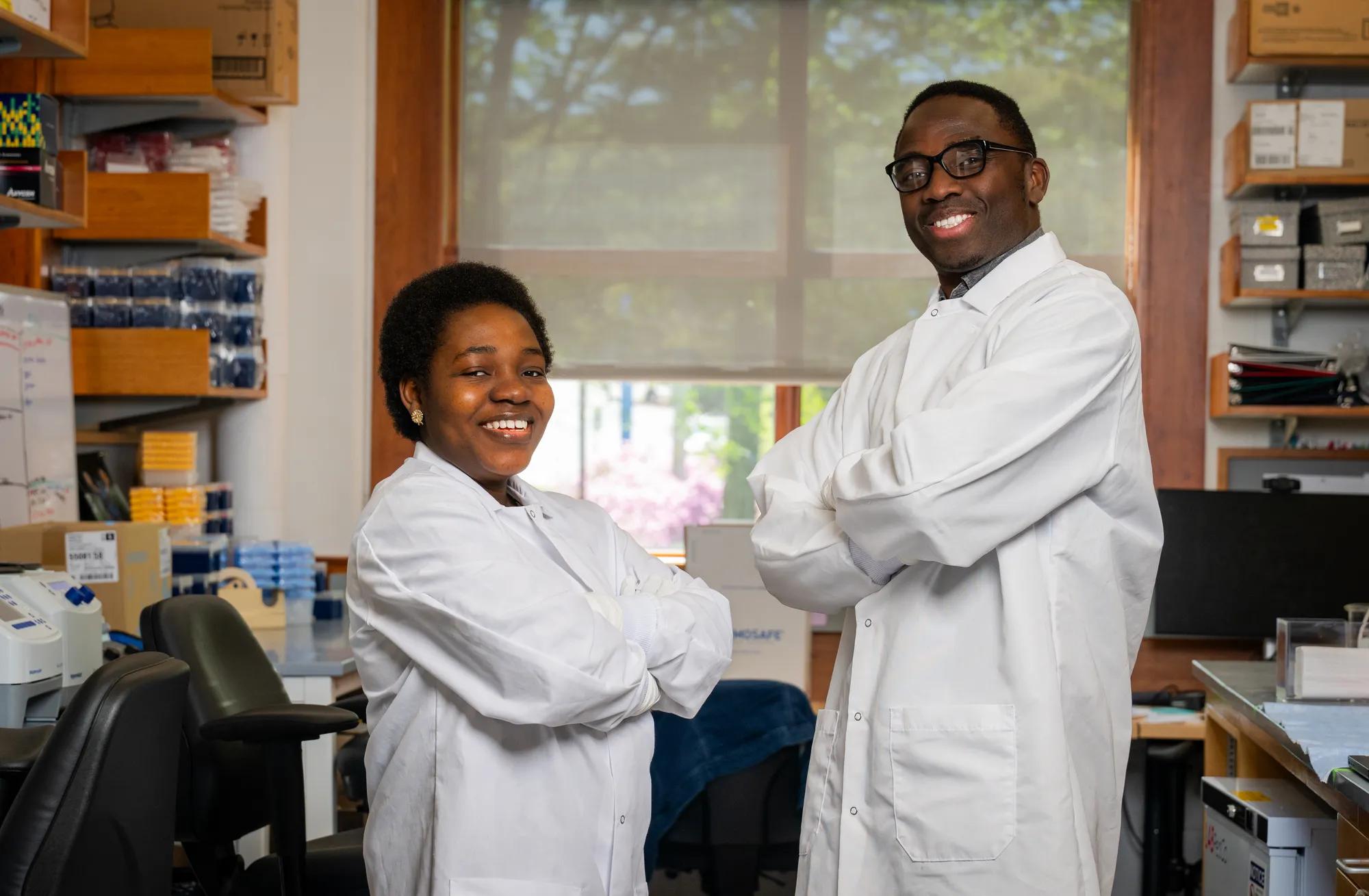
Throughout their day-to-day work in the lab, Owolabi and Agoro embody the supportive, intergenerational mentorship between scientists that defined the Paigens’ legacy at JAX.
“To be a solid scientist, you need someone who has gone ahead of you,” Owolabi said, “someone who can walk you through every step and is available whenever you need help. That is the kind of mentorship I receive from Raf.”
Building toward a therapy for all
Owolabi notes that sickle cell anemia is one of the few rare conditions with FDA-approved gene therapies. The existing therapies, however, are only approved for patients over age 12, leaving a significant population of children without options and risk of multi-organ damage that could disqualify them from receiving treatment in the future.
“In 20 years, I envision that the science of sickle cell disease itself will have improved,” she said, “but I also hope that because of my science, and my research now, those who can’t access the therapies will be able to better manage their disease until an actual cure comes along.”
Learn more
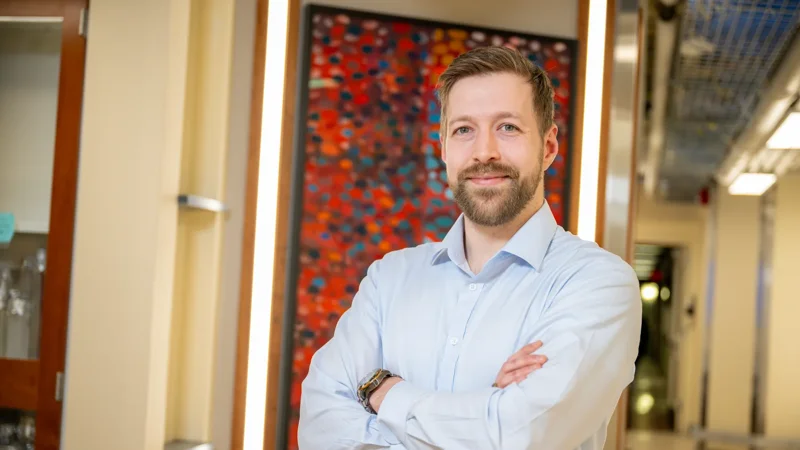
Jake Beierle, Ph.D., receives 2025 Paigen Fellowship
2025 Paigen Fellow Jake Beierle, Ph.D., uses machine learning technology to study migraine intensity and opioid withdrawal.
View more
Postbac, Ph.D. and Postdoctoral Programs at JAX
Exceptional opportunities for research and training in a unique scientific environment
View more