
Why do vaccines work for some, but not others?
Article | January 6, 2026

Sathyabaarathi Ravichandran came to science through computation, but it was human health and the urgency of real-world medical decisions that ultimately shaped her research path. Trained as a bioinformatician, Ravichandran earned an engineering degree in bioinformatics in India, where she initially focused more on data than biology. Now, as a postdoctoral associate in the Ucar Lab at JAX, she’s working at the intersection of computation, immunology, and aging to understand why immune responses vary in older individuals and what that means for vaccine protection.

Vaccines work by imitating an infection to engage the body's natural defenses — basically, tricking your body into thinking it has a mild version of an illness to learn how to defend against it. While many adults mount strong responses to seasonal flu vaccines, about one third of people have either a weak immune response or none at all. That number increases with age. Understanding why some people have a response and some don’t is the central question driving her research.
“We wanted to use systems immunological data to address what makes some older adults respond to the vaccine better than others,” she said.
Since she joined JAX in 2021, Ravichandran’s work has focused on the immune responses of older individuals to different formulations of bacterial pneumococcal and seasonal influenza vaccines. The work integrates systems-level data including gene expression, immune cell profiles, and antibody responses.
One focus of her research is identifying the baseline immune features that are present even before vaccination, which can predict whether someone will respond well to a vaccine — or whether they might respond better to one formulation over another. These insights support the emerging field of precision vaccinology, which aims to tailor vaccine strategies to individual immune profiles rather than relying on a one-size-fits-all approach.
“Our hypothesis is that individuals with healthier immune aging respond better to vaccines, while those with unhealthy immune aging tend to respond poorly,” Ravichandran said. “We use vaccines as an intervention model to understand the features of healthy immune aging.”
Most people don’t think about which version of a vaccine they receive, but vaccines can be concocted with different methods, and those differences matter. A type of vaccine known as a pneumococcal conjugate vaccine links a bacterium’s outer sugary coat to a protein included in the vaccine. This extra protein enables the immune system to build stronger responses compared to unconjugated pneumococcal vaccines.
Ravichandran found that responses to Prevnar, a pneumococcal conjugate vaccine, were associated with higher baseline abundance of natural killer cells and differences in CD4 effector T-cell fractions as well as sex-specific differences, with women showing stronger immune responses than men.
Building on these insights, Ravichandran’s current work increasingly focuses on seasonal flu vaccines, where differences in vaccine responsiveness among older adults remains a major public health challenge. She was recently awarded the Robert E. Leet and Clara Guthrie Patterson Trust Mentored Research Award, which will provide $200,000 over two years to support her investigation into the immune characteristics underlying persistent influenza vaccine non-responsiveness in older adults using longitudinal, multi-omic analyses
Ravichandran sees vaccination as a powerful model for studying healthy immune aging. Because vaccines provide a controlled immune challenge, they offer a window into how well the immune system can respond and adapt over time. Her long-term goal is to identify immune signatures associated with healthy aging versus immune decline, knowledge that could inform not only vaccination strategies but broader approaches to disease prevention in older adults.
“I believe vaccine response could also act as an intervention model. It will help us probe how healthy we are aging from the immune system perspective,” she said. “That's my bigger goal.”
Learn more
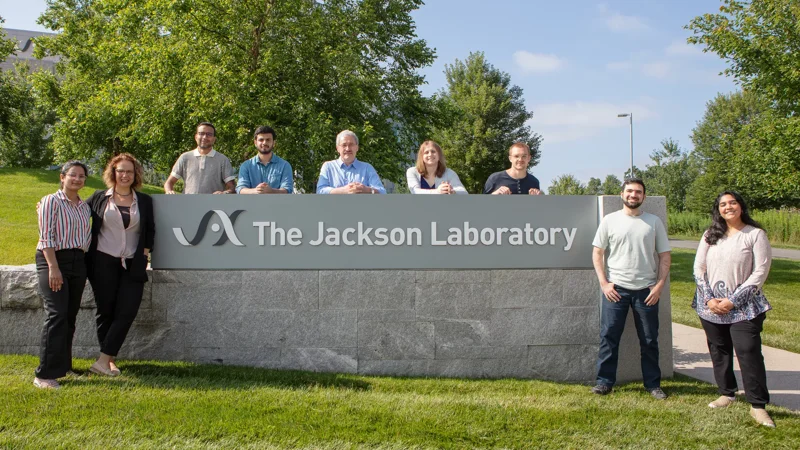
The Ucar Lab at The Jackson Laboratory
Discover The Ucar Lab at JAX, using computational and genomic methods to study epigenetic regulation in aging, immune disorders, and Type-2 Diabetes.
View more
News and Insights - The Jackson Laboratory
Gain insights into bioscience, technology and the quest to improve human health.
View more