
A $4.6 million effort to build standardized stem cell models for Parkinson's disease
By Roberto Molar Candanosa
Article | August 24, 2026
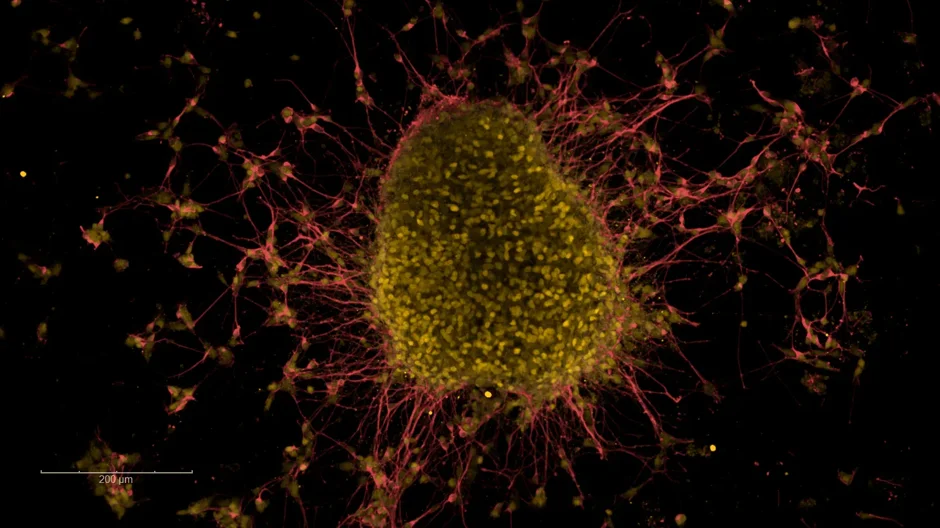
Scientists have identified many genes associated with Parkinson’s disease risk and progression, but understanding how they contribute to the disease remains a major challenge. To help address that gap, The Jackson Laboratory (JAX) and the New York Stem Cell Foundation (NYSCF) have been awarded a $4.6 million grant to develop standardized research tools that will help researchers better understand how genetic factors associated with the disease affect the health and function of brain cells.
The award is an Aligning Science Across Parkinson’s (ASAP) Collaborative Research Network (CRN) Technical Track grant administered by The Michael J. Fox Foundation for Parkinson’s Research (MJFF). It will enable scientists from the JAX-NYSCF Collaborative to develop new human stem cell models to better understand how Parkinson’s disease develops.
By creating and sharing these models, along with supporting datasets and protocols, the team will offer research laboratories worldwide new tools to investigate disease mechanisms, compare results, and identify potential paths toward new therapies.
“Researchers have identified many promising Parkinson’s disease targets, but the lack of standardized tools has made them difficult to study and compare across laboratories,” said Justin McDonough, principal investigator of the project and associate director of the Cellular Engineering service lab at JAX. “Our goal is to create a shared platform of rigorously validated models, data, and protocols that enables scientists to compare biology across targets, reproduce findings across laboratories, and accelerate the discovery of new therapeutic opportunities.”
Using advanced CRISPR gene-editing technology, the researchers will generate more than 20 new human induced pluripotent stem cell (iPSC) lines, lab-grown stem cells that can be used and reproduced by researchers worldwide. The cell lines will expand an existing collection of high-priority Parkinson’s disease models developed at JAX through the iPSC Neurodegenerative Disease Initiative (iNDI). The expanded collection will include models to help researchers study what happens in cells when important genes stop working, how mutations associated with Parkinson’s disease affect cells, and how key proteins contribute to disease processes.
All models will be built from the same widely used human stem cell line to ensure researchers are working from a common starting point. Known as the KOLF2.1J reference iPSC line, this serves as a foundation for disease-modeling initiatives at large scale such as iNDI. Using a standardized platform makes it easier to compare results across studies and laboratories, helping different laboratories obtain consistent results and more confidently distinguish meaningful biological findings from differences caused by the models themselves.
Each model will undergo extensive validation across multiple brain cell types involved in Parkinson’s disease, including neurons, astrocytes, and microglia, as well as organoids that model key aspects of brain biology affected by Parkinson’s disease. The team will apply advanced laboratory techniques to create detailed datasets showing how each model behaves.
Validated cell lines will be made available through the JAX iPSC Repository, while associated protocols and data resources will also be shared through the ASAP network and public repositories. Through this infrastructure, the newly developed Parkinson’s disease models will be broadly accessible to researchers around the world. Together, these efforts aim to create a scalable, community-wide resource.
“The JAX–NYSCF Collaborative brings together expertise that few organizations can offer in a single program,” McDonough said. “Combining JAX’s strengths in genetics and genomics with NYSCF’s advanced stem cell and automation capabilities allows us to create standardized, scalable models that have a broad impact across the Parkinson’s disease research community, supported by JAX’s infrastructure needed for large-scale production, and global distribution.”
Media Contact: Patrick Skahill, [email protected], 860-839-3309
Learn more
The Jackson Laboratory secures grant from The Michael J. Fox Foundation to advance Parkinson’s disease research through the JAX–NYSCF Collaborative
New human stem cell platform will expand access to standardized disease models, support Parkinson’s disease research and therapeutic discovery efforts.
View more
Parkinson's Disease
Parkinson’s disease is a chronic, progressive neurodegenerative disorder that affects more than one million Americans and 10 million people worldwide.
View more