
Students in The Jackson Laboratory’s inaugural Biomedical Data Science in Context program held at the University of New England’s Biddeford, Maine campus.
New training program applies data science skills to biomedical challenges
Article | June 25, 2025
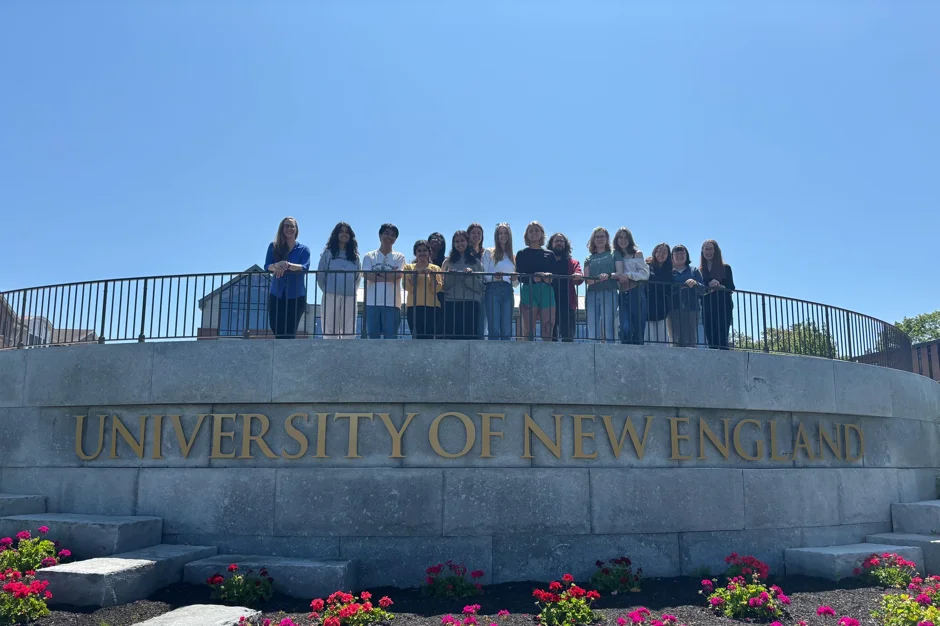
Recognizing a growing demand for data science skills in the field of biomedical research, The Jackson Laboratory held its inaugural two-week Biomedical Data Science in Context (BDSiC) program from May 25-June 7, 2025 at the University of New England’s Biddeford, Maine campus.
“Over the last two decades, we’ve seen a massive expansion of biological data collections that could reshape our approach to human health,” said Danielle Presgraves, who oversaw the pilot program as JAX’s director of data science education. “We’re giving undergraduate students access to those datasets and teaching them how to analyze, interpret and apply the learnings to real-world biomedical challenges.”
The program was made possible by a philanthropic gift from Summer Student Program alumnus Tucker Taft and his wife Phyllis Yale, who have generously supported educational programming at JAX and have a specific interest in data science training.
The BDSiC program launched with a cohort of 13 students representing colleges and universities across the country. The trainees had wide-ranging experience in data science; some had none before arriving at JAX, while others are currently majoring in computer science, bioinformatics and other science fields. A typical day balanced technical skills, such as coding and analysis, with transferable skills such as how to read a scientific paper, effective presentation skills and career advice. There was also time for the students to share new experiences outside of the classroom.
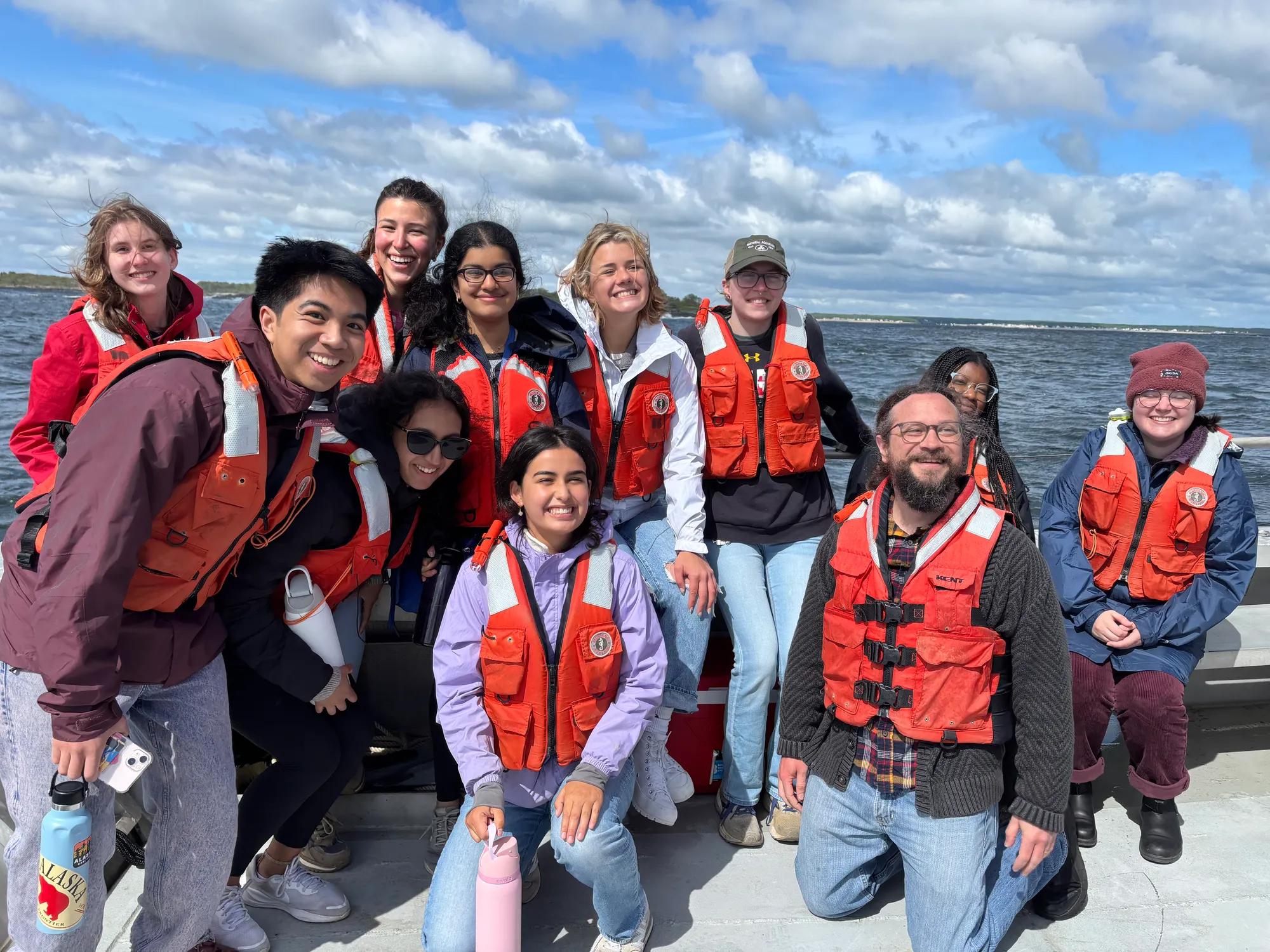
“As a mechanical engineering major, I do not take many computer science classes,” said one of the participants. “Learning Python skills, as well as statistical analysis, was extremely valuable. Using what I’ve learned, next semester I will be working in a bone regeneration lab at UConn.”
In the second half of the program, students worked in pairs to analyze biomedical challenges involving large datasets. The projects were as wide-ranging as the interests of the students themselves, including:
- Assessing risk of human cardiac events, including one team who discovered that the test that identifies a myocardial infarction (heart attack) in women is different than the test for men.
- Patterns of DNA methylation (a process that is crucial for regulating gene expression) associated with Huntington’s disease.
- The parasitic relationship between the “Tree of Heaven” plant and the spotted lanternfly, a highly destructive invasive insect accidentally introduced from Asia to the United States.
The program’s next iteration will take place in January 2026 at the Highseas estate on JAX’s Bar Harbor, Maine campus, with applications opening in early fall 2025. Visit JAX Genomic Education to learn about other exceptional hands-on training programs for scientists at every stage of their careers, offered only at JAX.
Learn more
Education & Learning
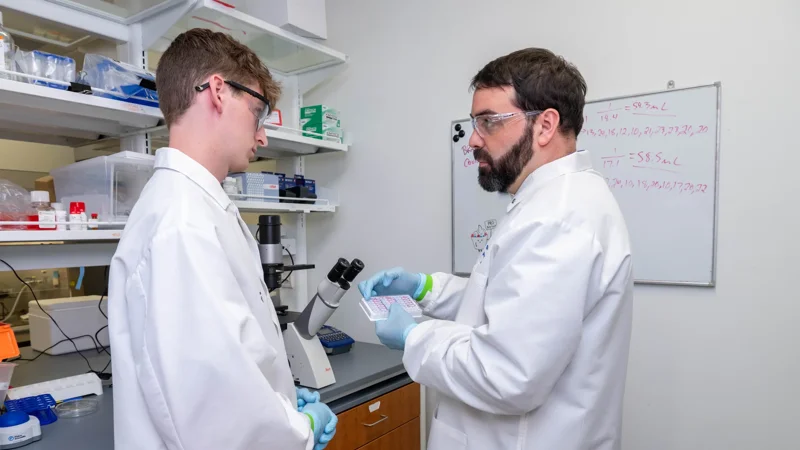
JAX Genomic Education provides experiential programming and hands-on research training in the biomedical sciences. Our holistic approach combines conceptual education with science communication, collaboration, and translational and computational skills training to prepare learners for success in scientific and clinical settings. With programs for high school students, undergraduates, postdoctoral researchers, and more, our in-person, virtual and online education initiatives reach a global audience.
View more
Philanthropy - JAX
Your gift makes it possible for discoveries to happen faster, for novel ideas to be explored and for research to accelerate forward at a scale that delivers life-changing scientific breakthroughs.
View more