
How JAX and MMSA revived the Maine State Science Fair and inspired a generation
Article | June 3, 2025
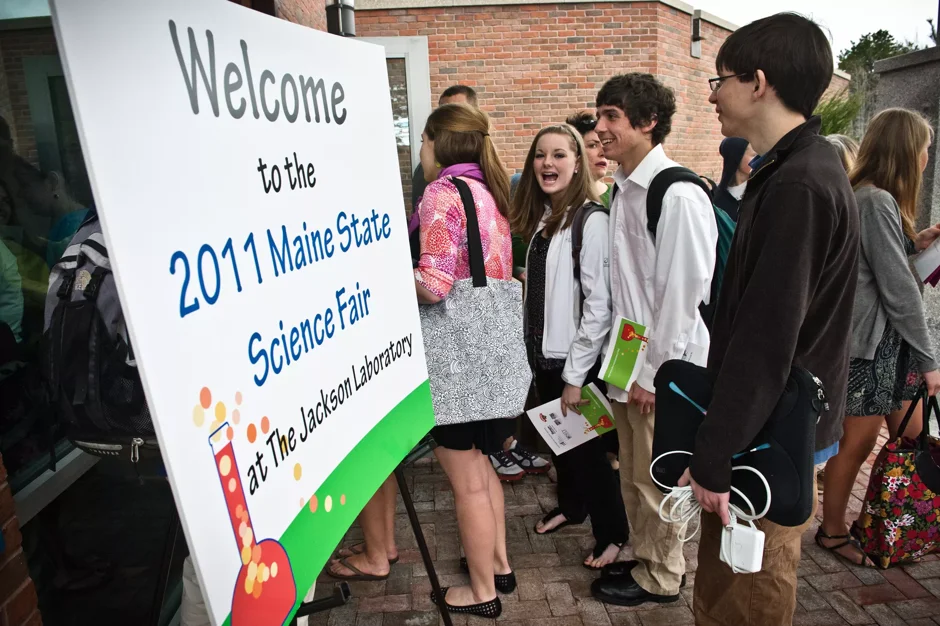
The story begins—like all great science fair projects do—with a problem that needed solving.
In 2010, the annual Maine State Science Fair was in trouble. For more than 60 years, the event had given high school students across the state the chance to showcase imaginative science projects before local judges, with hopes of winning recognition and top prizes. It had long been planned and hosted by another state entity. But that year, facing a lack of funding, the group didn’t see a path forward.
That’s when The Jackson Laboratory (JAX) stepped in. As one of Maine’s leading scientific institutions, it was a natural fit. But leading the Fair was no small feat. At the time, JAX’s Education Department—now a robust team offering programs for high schoolers, undergrads, pre- and postdocs, and beyond—consisted of just a few passionate staffers. The Science Fair, was, and is, a logistics-heavy operation: coordinating with students, recruiting volunteer judges, organizing prizes, and securing scholarships. Plus, Maine teachers needed additional support to develop research and engineering programs with their schools. JAX was energized—but overwhelmed.
Enter the Maine Mathematics and Science Alliance (MMSA), an Augusta-based nonprofit supporting teacher professional development and conducting research in STEM education. MMSA partnered with JAX to co-facilitate the Fair, and the two organizations have been running the show ever since.
A fair like no other
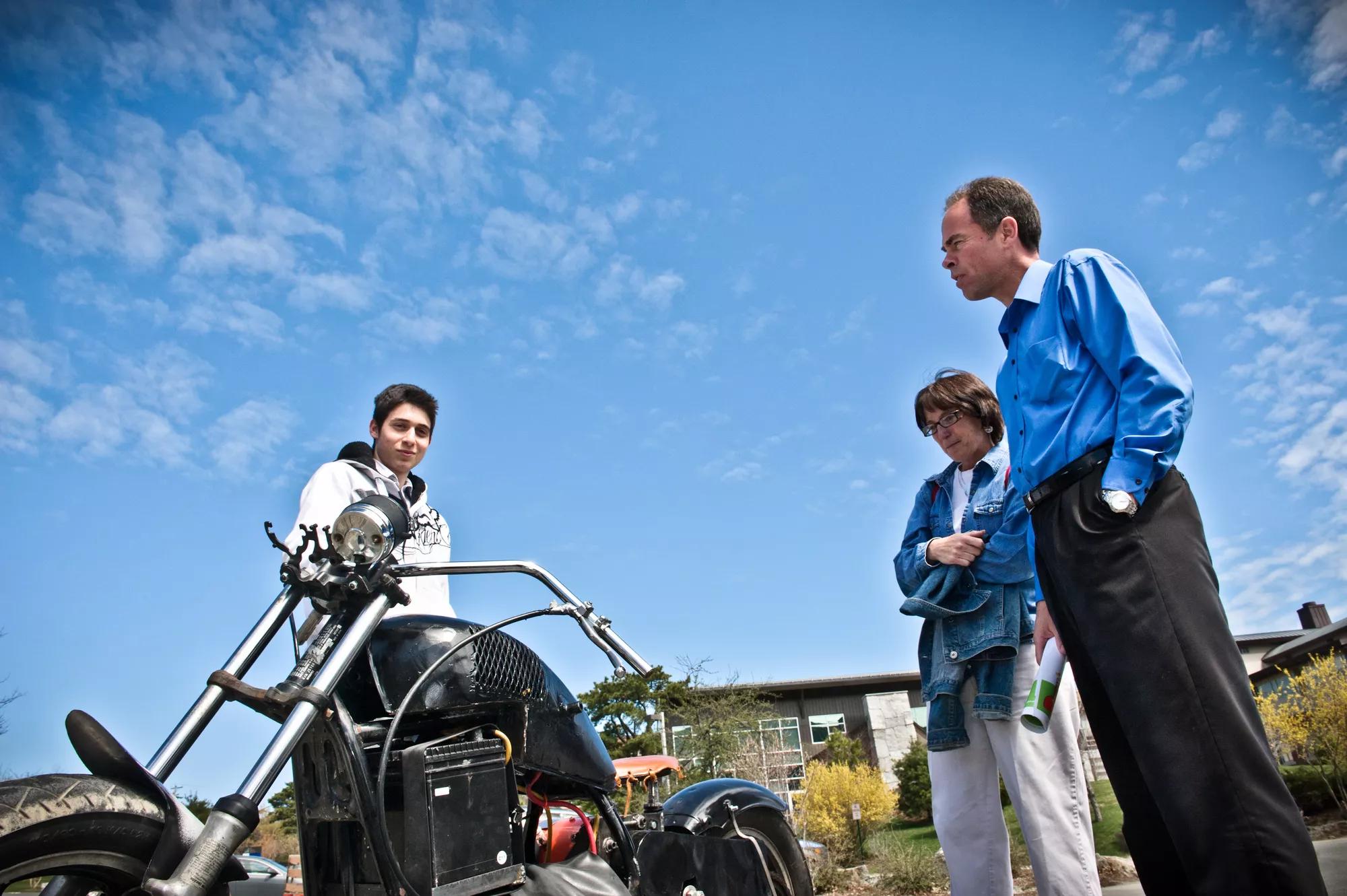
And what a show it’s become.
The students at the Maine State Science Fair produce next-level work—thinking like scientists, gathering data, and tackling real-world problems important to their local communities.
The Fair has worked hard to reach rural school districts, award major prizes (including full-tuition scholarships to The University of Maine), and connect students with scientists, mentors, and role models. Commercial and academic researchers serve as judges, interacting with students and helping envision the many possibilities of a career in science.
“Through building relationships with schools, educators, and students, we really get to know them and their strengths,” said Laura Muller, director of STEM and undergraduate education at JAX. “Many students go on to participate in JAX’s other education programs, like the Summer Student Program, JAX Scholarships, pre- and postdoctoral positions, and new offerings like the Biomedical Data Science in Context program for undergrads, launching this summer.
A launchpad for future scientists
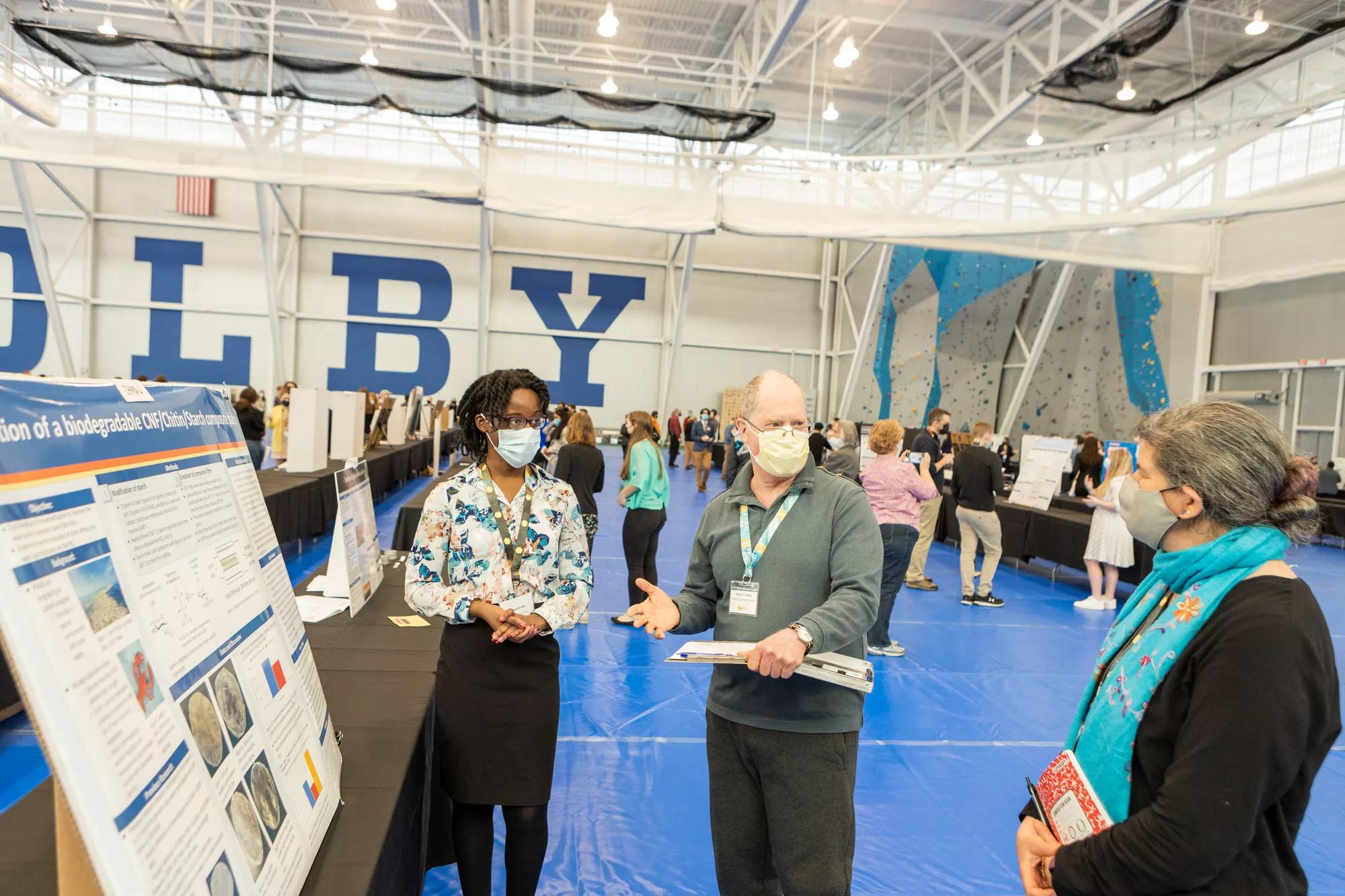
Dan O’Brien competed in the Maine State Science Fair from 2013-16 when he was a student at Bangor High School, and the Regeneron International Science and Engineering Fair (ISEF)—a prestigious event that draws top student scientists from around the world—in 2014, with a project that modeled blood flow in the left ventricle using medical images of the heart.
“Classmates and peers I met at the science fair have gone on to do incredible things in STEM fields: carbon capture, energy trading, kidney disease treatment,” he said. “I believe the Maine State Science Fair was a crucial first step in their careers, which I have no doubt will be successful and beneficial to many.”
O’Brien, who is currently finishing a master’s degree in data science at the Roux Institute in Portland, described the Fair as rigorous and professional – yet accessible to all students. “The event truly inspires a level of community and excitement around science and technology that is not always achieved at local levels.”
Indeed, expanding access has always been a priority for JAX and MMSA. They’ve developed creative approaches over the years—such as having students from larger school districts help train teachers in smaller ones on how to support STEM research. Ongoing teacher development is a mainstay of the Fair’s success, with JAX scientists working directly with teachers to share their own research processes.
One such approach, the Teacher Fellows program, grew out of the recognition that educators put a good deal of time into supporting their students’ work. MMSA provided a summer institute, ongoing support, and stipends commensurate to those received by high school sports coaches. Since its inception in 2016, the program has brought over half of participating students to the Fair.
Barbara Stewart, Science Department Head at Bangor High School, has guided many students through the Fair, even helping to create a dedicated research course at the school for those eager to dig deeper into science.
“The Maine State Science Fair has become a cornerstone of that experience—it gives students a real platform to share their work, connect with experts, and feel that their ideas matter beyond the classroom,” she said.
This year, third-place winner Sofie Rueter of Bangor High School was one of those students. Her project, “Improving the effectivity of nitrate removal in biosand filters using N. ocula,” earned her a spot at ISEF, this year held in Columbus, Ohio.
“Her innovative approach has the potential to help expand access to clean drinking water around the world,” Stewart said. “It’s projects like this that show how student research can lead to meaningful global impact.”
Second place went to “A computer model for efficient offshore wind farm siting in the North Atlantic” by Zelda Anesko of Brunswick High School. First place was, “A data-driven exploration of albumin-creatinine ratio as a biomarker for myocardial infarction risk: a multivariate analysis” by Ryan Werthmann of Falmouth High School.
Bringing the world to Maine—and Maine to the world
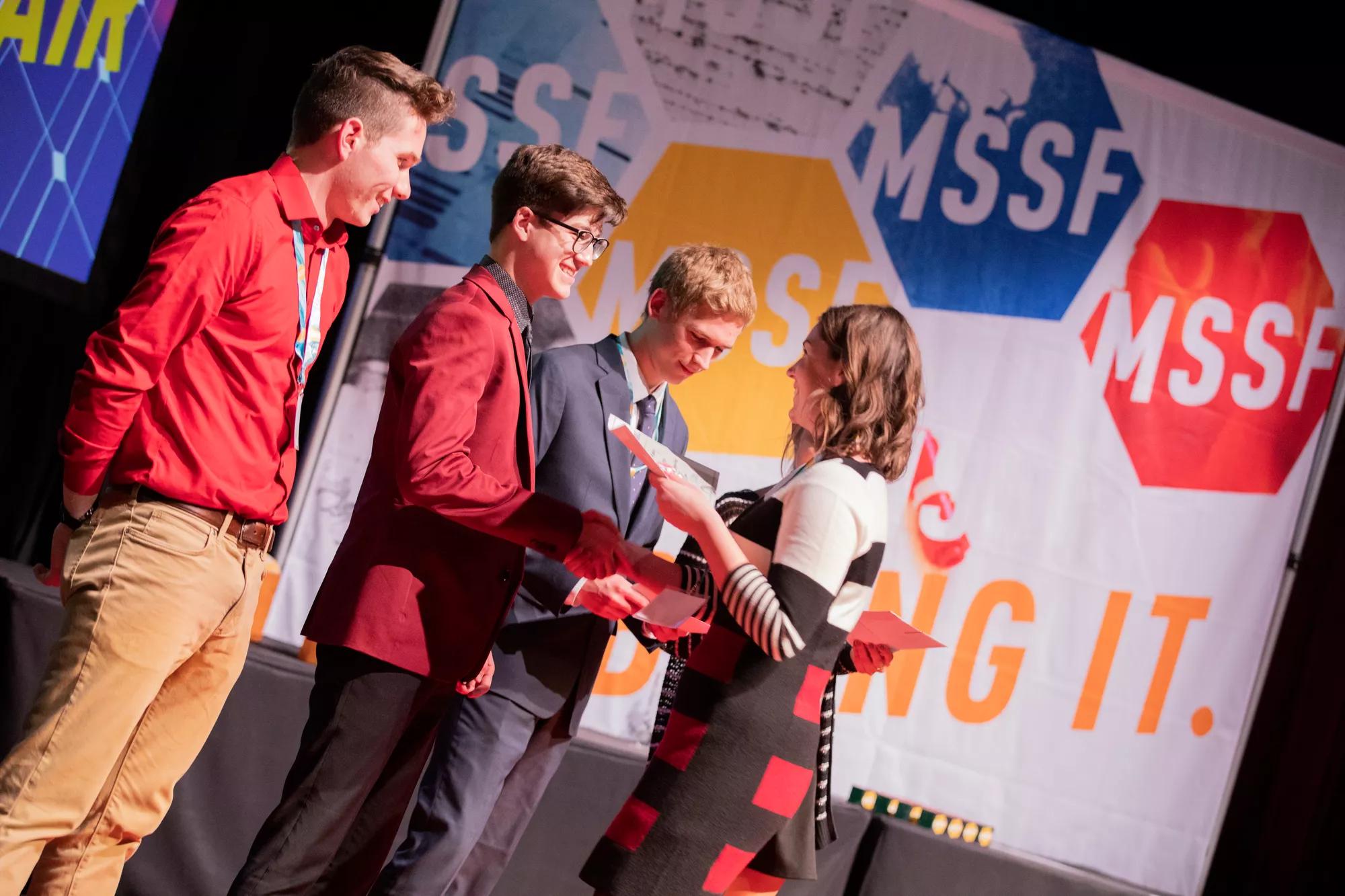
Morgan Sanders, JAX’s Program Manager for Student Affairs for STEM and Undergraduate Education, has helped students through every step—from preparing posters to traveling with winners to ISEF. She’s also played a key role in getting rural schools involved, often by personally reaching out to teachers.
“Maine is such a rural state, comparatively speaking,” she said. That’s what makes this opportunity so special for many of the students who participate.
Sanders herself grew up in a rural part of the Lewiston/Auburn area and later worked there as a substitute teacher.
In 2024, she traveled with Maine’s top winners to Los Angeles for ISEF. For many, it was their first time on the West Coast—or even in a major city. “Some had never been to a city bigger than Boston,” Sanders said.
With more than 70 countries represented, ISEF is a cultural and scientific whirlwind. Beyond competing, the Maine students visited the Santa Monica Pier, the botanical gardens, and the La Brea Tar Pits.
“It was amazing to just let them go and be wide-eyed and have fun with other students,” Sanders said.
That wide-eyed wonder is exactly what educators like Barbara Stewart hope to cultivate.
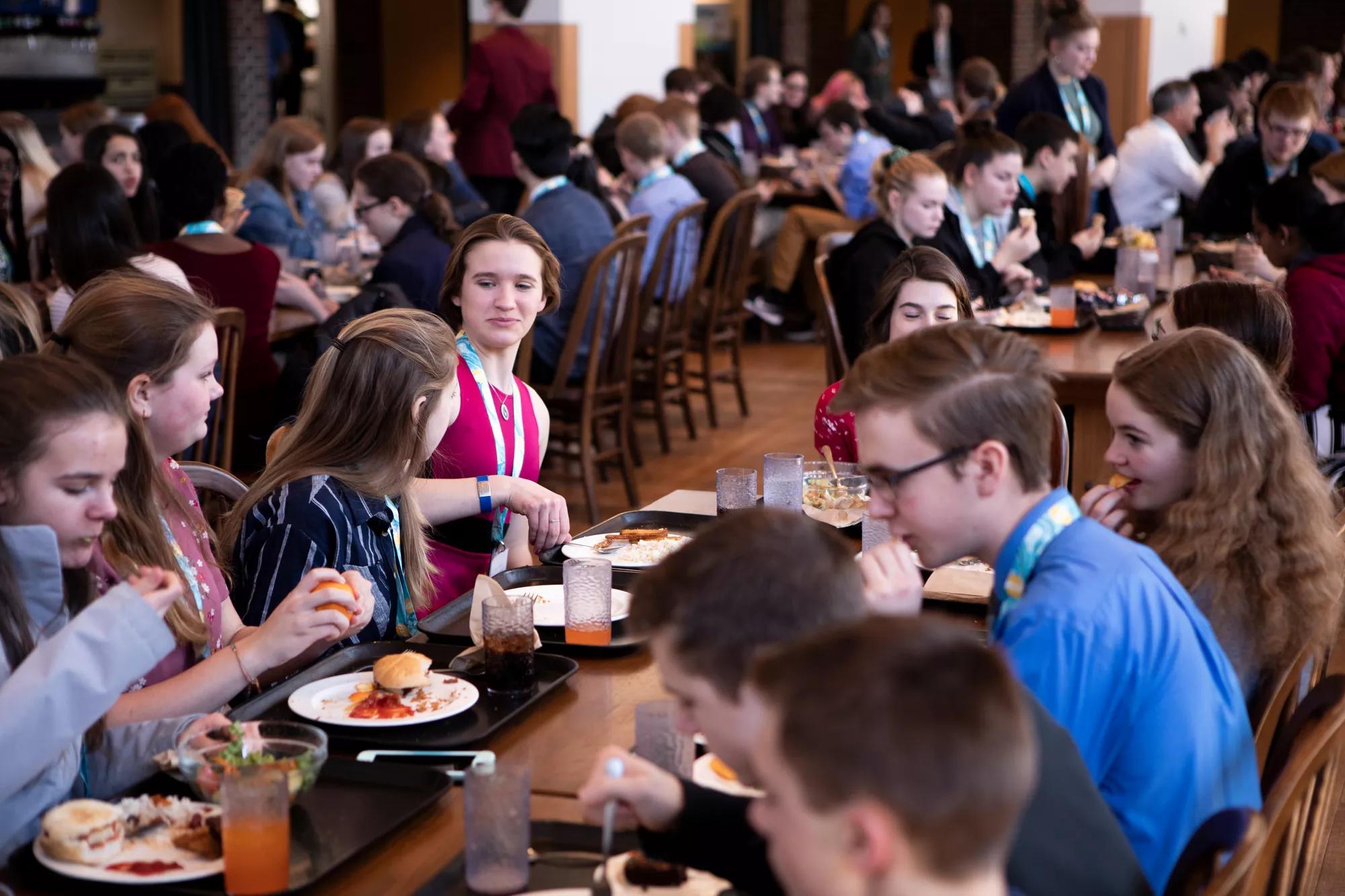
“Watching students grow in confidence and curiosity as they take ownership of their research is incredibly rewarding as a teacher,” she said. “It’s not just about the science—it’s about giving them the skills to think critically, communicate clearly, and solve real-world problems.”
Supporting young scientists on this journey is what the partnership between JAX and MMSA is all about, says Muller.
“JAX and MMSA have the same goals in creating opportunities for these young scientists. Each organization has distinct skills that aid in this process, but we share the same commitment to advancing STEM education in Maine.”