
Forum for Discovery features research into cancer, aging, Alzheimer’s disease
Article | June 18, 2025

The Forum for Discovery, JAX’s annual public event, will spotlight critical human health challenges including cancer, aging, Alzheimer’s disease and other neurodegenerative conditions. The program celebrates the groundbreaking work of our scientists and underscores the impact of philanthropic support in making their research possible. This year’s event is generously sponsored by Bar Harbor Bank & Trust.
Attendees will hear a “State of the Laboratory” address from President Lon Cardon, Ph.D., FMedSci, along with presentations by Jennifer Trowbridge, Ph.D., professor and Dattels Family Chair, and Gareth Howell, Ph.D., professor and Diana Davis Spencer Chair for Glaucoma Research. Together, they have more than 30 years of experience at JAX and share an appreciation for the tools, resources and collaborations that drive their research forward.
Ahead of the event, we spoke with both scientists to learn more about their work and their lives beyond the lab.
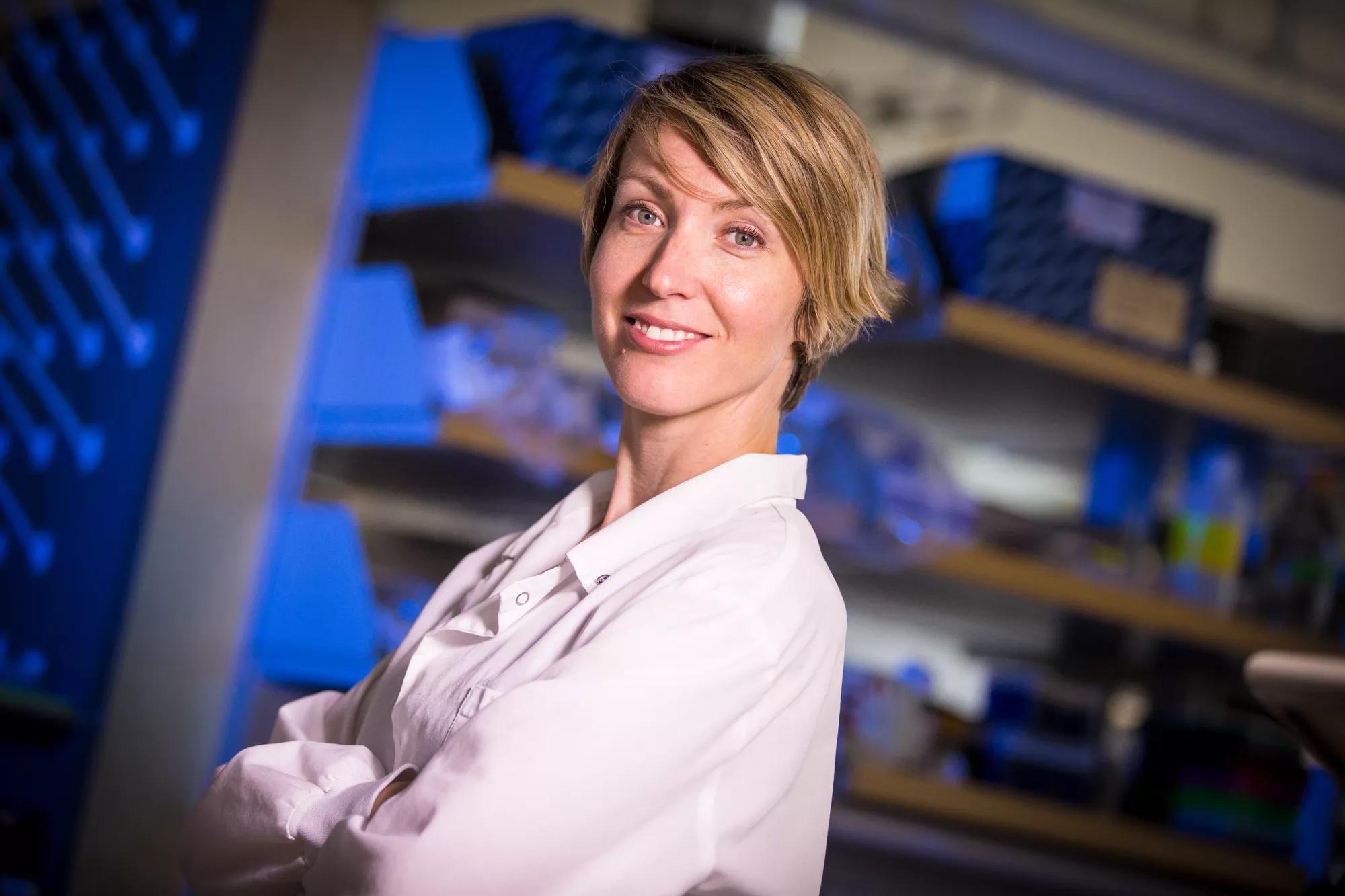
What I’ll share at Forum for Discovery: My lab is dedicated to investigating the mechanisms by which aging contributes to increased disease susceptibility, with a particular emphasis on the hematopoietic system. While our primary focus is on the intersection of aging and blood cancers, our research also has broader implications for other malignancies and age-associated conditions, including neurodegenerative diseases such as Alzheimer’s.
When I joined JAX, my background was in hematopoiesis and stem cell biology, though I had not previously focused on aging. Since then, I’ve had the opportunity to apply that expertise to the critical and still largely unanswered question of why aging contributes to so many health challenges. The deeper we explore this area, the more I’m convinced that blood aging plays a foundational role in systemic aging. Given that blood interacts with every organ, its influence is far-reaching. I see tremendous potential in this field and envision dedicating my career to uncovering its complexities.
Why JAX is the right place to do this work: The scientific infrastructure at JAX is truly unparalleled. Conducting aging research elsewhere is often cost-prohibitive due to the long-term care required for aging models. Although mice age more rapidly than humans, meaningful studies still demand years of housing and maintenance. At JAX, we benefit from access to well-established aging models and a deeply collaborative research community, factors that are essential for driving impactful scientific discovery.
When I’m not in the lab: As a parent of three elementary school-aged children, much of my time outside of work is devoted to family life. I began leading my lab when my oldest was just nine months old, so my journey as a parent has paralleled my professional growth. In addition to my work and family commitments, I’m an avid reader with a deep interest in stories that explore human experiences, whether through fiction or nonfiction.
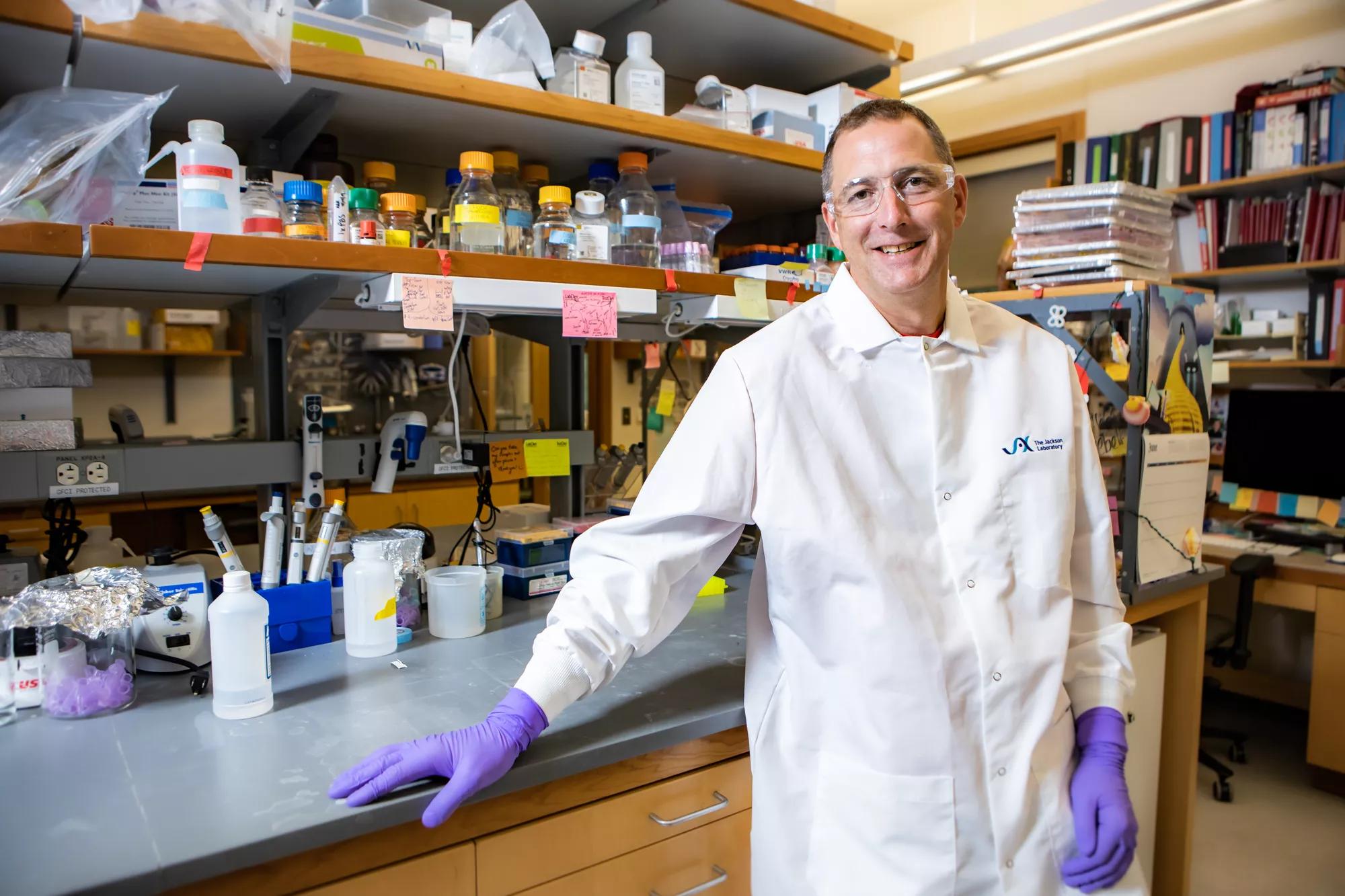
What I’ll share at Forum for Discovery: The Howell lab is uncovering mechanisms driving neurodegenerative disease of the eye and brain. We’re also exploring the retina as a biomarker for Alzheimer’s disease and other forms of dementia to better identify those most at risk, and those going through the earlier stages of these diseases. Retinal imaging is far more convenient than brain imaging, which is particularly important for rural areas like Maine where patients may not have access to larger facilities.
We’re also using genetically diverse mouse strains to look at retinal aging. Aging is a major risk factor for common eye diseases like glaucoma, diabetic retinopathy and age-related macular degeneration. We’re the first research team to profile retinas of different mouse strains and to explore how the retina changes as it ages.
The resources available at JAX allow us to look across genetic contexts, which makes our work much more relevant to human disease. Our research has uncovered new models of retinopathy and retinal degeneration that are similar to age-related eye disease. We can now identify the genes that might be driving the disease, which can lead to potential therapeutic approaches.
Why JAX is the right place to do this work: At JAX, my team can properly study complex diseases that involve interactions between genetics, environment and aging. It’s usually difficult to study all those factors together. JAX is one of the few places where we can do that. And, for someone who enjoys the outdoors as much as I do, it doesn’t hurt that the Laboratory is on an island in the Atlantic Ocean with a national park in the background.
When I’m not in the lab: I’m a big soccer fan and a runner as well. I’ve run many road races on Mount Desert Island including a couple of marathons. My wife and I enjoy swimming and kayaking, and we’ve pretty much covered every inch of Acadia National Park over the last 20 years. We have three wonderful grown children who still keep us busy.