AI-detected patterns are simply observations until they are validated against biological reality. Without a rigorous methodology to confirm that these patterns truly represent the behaviors or physiological events of interest, researchers risk measuring correlations, artifacts, or unrelated signals rather than the intended phenomena. JAX Envision was developed specifically to address this challenge by grounding its digital measures in systematic, scientifically validated methods.
As digital monitoring technologies advance, ensuring their accuracy is critical for meaningful scientific insights. The In Vivo V3 Framework—collaboratively developed by the Digital Medicine Society (DiMe), Digital In Vivo Alliance (DIVA), and the 3Rs Collaborative's (3RsC) Translational Digital Biomarkers (TDB) initiative—provides the robust validation approach for the Envision platform.
This adapted framework comprises three key pillars: verification, analytical validation, and preclinical validation, and forms the foundation for Envision™'s validated digital measures of animal health and physiology.
Why the V3 Framework Matters
In scientific research, data integrity is paramount. The V3 framework represents our comprehensive approach to validating digital biomarkers, providing researchers with a robust methodology that instills confidence in every digital measure.
For an in-depth overview of the V3 framework, we invite you to read our detailed blog post.
Not what you're looking for?
Visit our Resource Hub
Verification establishes the integrity of raw data by confirming the source and correct identification of sensor inputs. For each Envision digital measure, we meticulously:
Verification includes a series of checks throughout data collection. By executing comprehensive checks from study initiation to completion, we guarantee consistent, uncorrupted data collection.
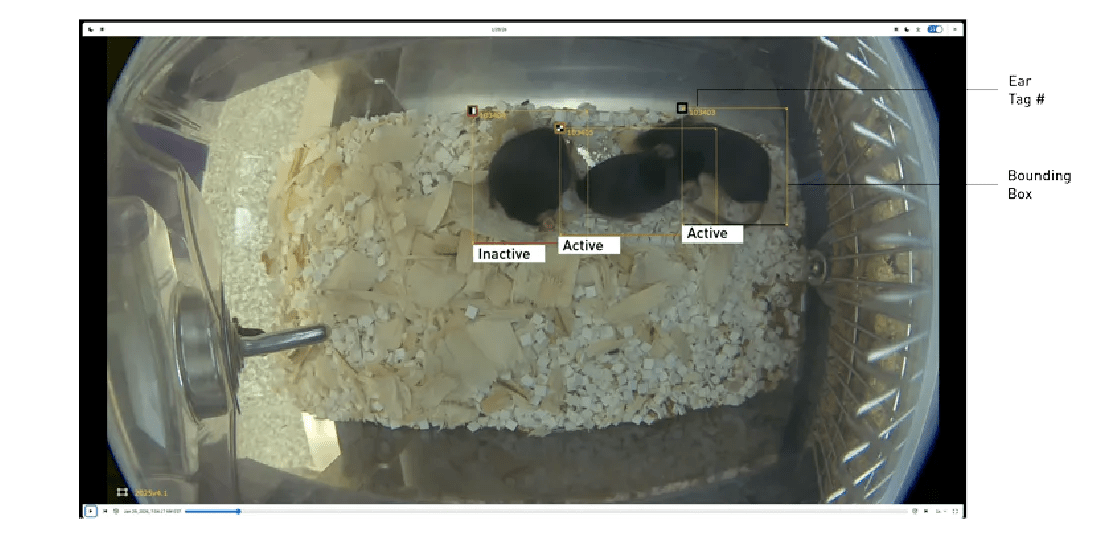
Software displays bounding box with ear tag number for easy identification. Downstream AI/ML processing assigned activity annotation tags for each animal.
In analytical validation, we assess whether the Envision™ algorithm's quantitative metrics accurately represent captured events in real-time, with precise resolution and reliability. At JAX, AI/ML experts and biologists collaboratively:
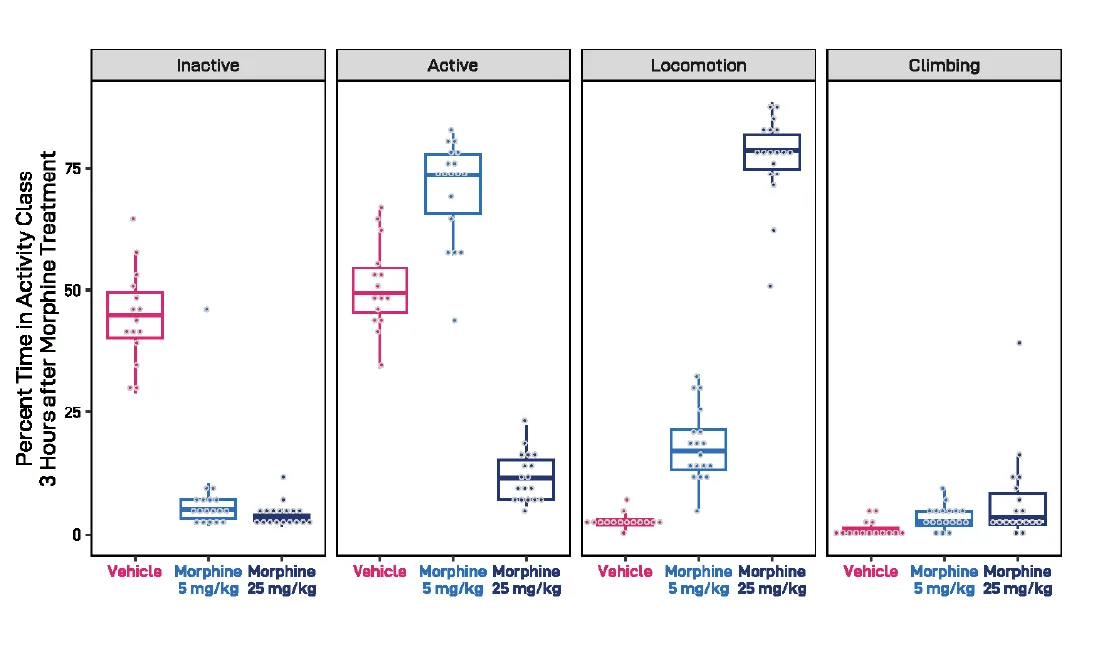
Graph representing measures of activity for time-bound video clip, three hours after control or morphine administration. From "Analytical Validation of Mouse Activity Classification in The JAX Envision Platform."
Clinical validation confirms that our digital measures are not just accurate, but truly meaningful in a biological context. Building on analytical validation, clinical validation determines whether a digital measure meaningfully represents an animal's physiological or behavioral status. This process involves:
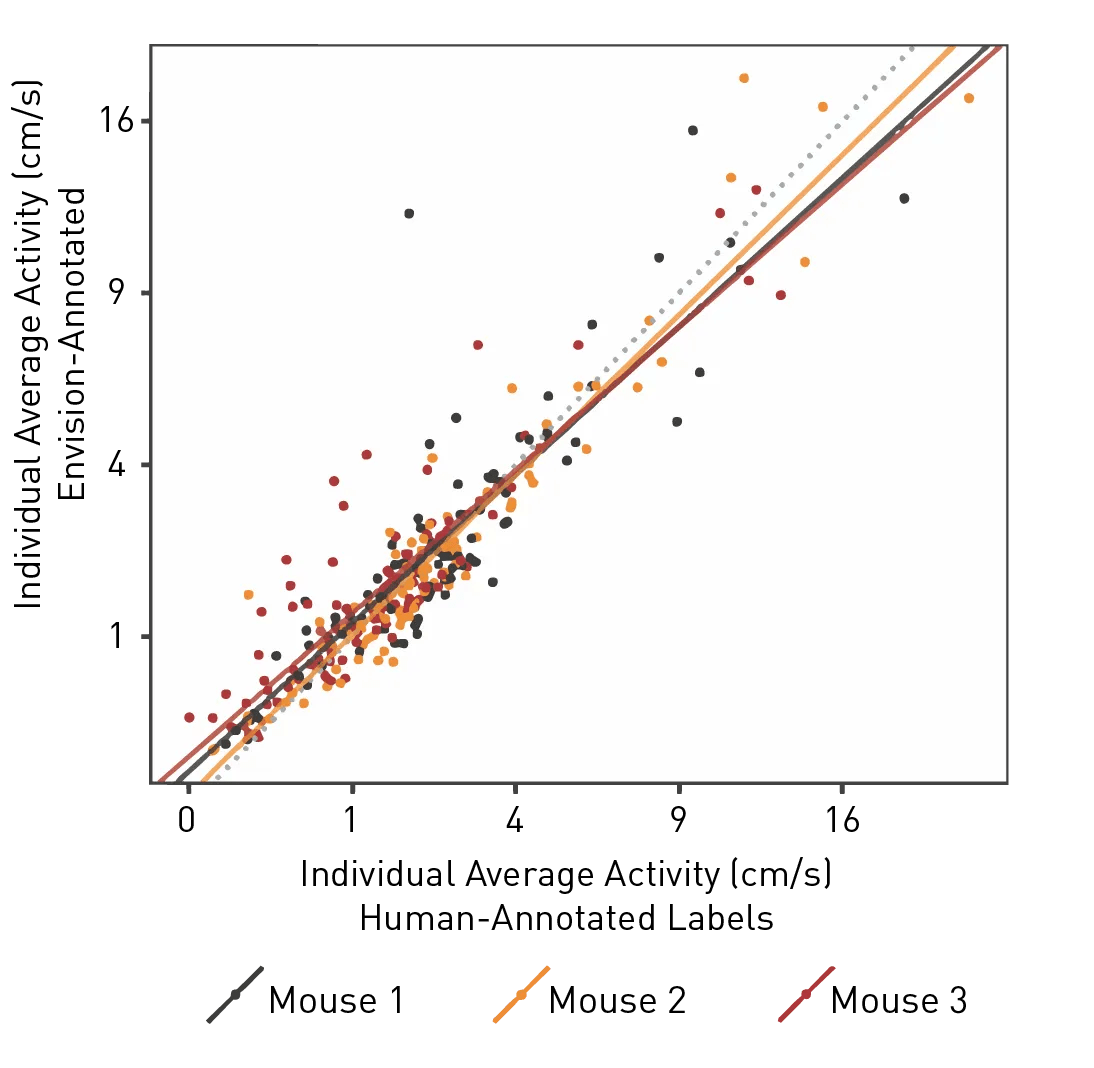
Average activity validation for 1-minute clips of video. Envision values for individual animal average activity metrics strongly correlate with human annotations of the same clips (Pearson's r ranges from 0.875 to 0.954).
By anchoring our digital measures in a systematic and comprehensive validation process, we're not just collecting data—we're revolutionizing how scientific discoveries are made. Envision provides:

This white paper highlights how the JAX Envision platform enables continuous experimental monitoring with highly accurate detection and tracking of individual mice in a cage for weeks to months at a time.

This validation white paper establishes Envision’s activity classifier as a reliable and objective solution for automated mouse behavior classification, enhancing sensitivity, biological relevance, and data interpretability to improve disease monitoring and health assessment.