The Jackson Laboratory

Vascular Contributions to Cognitive Impairment and Dementia (VCID)

Location: Washington University in St. Louis, Missouri

Explore the intricate connections between vascular biology and cognitive impairment

Join us for the Vascular Contributions to Cognitive Impairment and Dementia Workshop, where scientists from diverse fields—vascular biology, neurodegeneration, genetics, and computational biology—will come together to tackle critical challenges in this growing area of research. With a focus on participation by graduate students, postdoctoral fellows, and junior investigators, this conference and integrated workshops will focus on the fundamentals of VCID, the interface between the human condition and preclinical resources, and will provide networking and career development opportunities.

Apr May

28 - 1

2026

About

This interdisciplinary workshop is dedicated to advancing research on vascular contributions to cognitive impairment and dementia, including Alzheimer’s disease and related dementias (ADRDs).

Morning seminars, available in person or virtually, will highlight diverse topics, including glial biology, metabolic dysfunction, peripheral influences and mouse modeling. Afternoon and evening sessions are focused on hands-on workshops and trainee career development activities that include on omic approaches to study VCID, actionable priorities with regard to the creation and use of VCID models, trainee talks on their own research, and grantsmanship skills. Two keynote speakers will anchor the event, with one setting the stage for VCID research and another looking ahead to its future. This workshop is designed to provide the knowledge and skills you need to drive innovation in dementia research.

Why Attend?

  • Engaging Seminars. Experts will introduce both foundational and cutting-edge VCID concepts, as well as broader topics such as human to mouse translation, the value of -omics, the responsible conduct of research and how to establish an inclusive working environment.
  • Poster Sessions & Grant Proposals. Trainees will have the opportunity to present short talks or posters, gain feedback and work closely with experts in the field to develop VCID-related research proposals.
  • Career Development & Collaboration. The conference schedule includes ample career development and networking opportunities designed to foster collaboration and enhance the experience for both early-career and senior investigators.

Submit an abstract by April 3, 2026: Attendees are encouraged to submit an abstract during registration for consideration as a short talk or poster presentation. 

Travel Awards: Although scholarships are not available for this workshop, a limited number of travel awards are available to trainees to support flight and hotel costs. Please apply for a travel award at the time of registration. Travel awards average $1000/trainee and are paid as a reimbursement after the conclusion of the workshop. 

Accommodation Information

We strive to host inclusive, accessible events that enable all individuals, including individuals with disabilities, to engage fully. To request accommodation or for inquiries about accessibility, please contact Erin McDevitt at 207-288-6000 x256659 or [email protected].

Registration

Registration Open

Registration Fee: $500.00

Workshop registration fee includes all workshop materials, supplies, and some meals including daily lunches and two networking dinners.

Credit card payment is required at the time of registration. If you need to pay by check or wire transfer, please contact the event planner for offline registration/payment instructions.

Register Now

Travel Information

Attendees will be responsible for their own travel and lodging arrangements for the duration of this event.

A discounted room block has been secured at the DoubleTree by Hilton - St. Louis Forest Park. The hotel is in walking distance to the workshop venue, and shuttles will be provided for any off-site dinners.

Group Rate: $162/night plus any applicable taxes.

Breakfast is available for purchase.

Reservation cutoff - Tuesday, April 7, 2026.

RESERVE YOUR ROOM HERE

Event Contact

Erin McDevitt

People

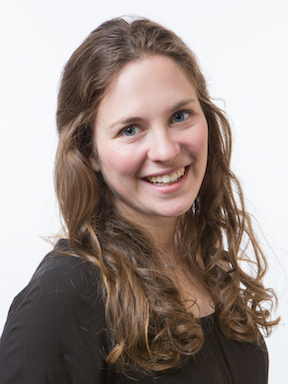
Kate Foley, Ph.D.Kate Foley, Ph.D.Postdoctoral FellowIndiana University School of Medicine
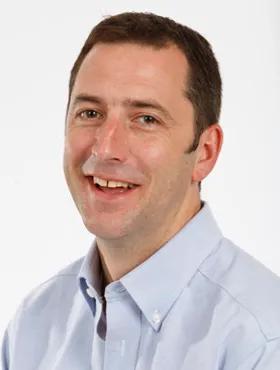
Gareth Howell, Ph.D.Gareth Howell, Ph.D.Professor, Diana Davis Spencer Foundation Chair for Glaucoma ResearchThe Jackson Laboratory
Tetiana  Poliakova, Ph.D.Tetiana Poliakova, Ph.D.The University of British Columbia
Alaina Reagan, Ph.D.Alaina Reagan, Ph.D.Postdoctoral AssociateThe Jackson Laboratory
Julie  Schneider, M.D., M.S.Julie Schneider, M.D., M.S.Professor, Department of PathologyRush University
Cheryl Wellington, Ph.D.Cheryl Wellington, Ph.D.Professor, Pathology and Laboratory MedicineThe University of British Columbia
Donna Wilcock, Ph.D. Donna Wilcock, Ph.D. Barbara and Larry Sharpf Professor of Alzheimer's Disease Research, Professor of NeurologyIndiana University School of Medicine

Other Events You May Be Interested In

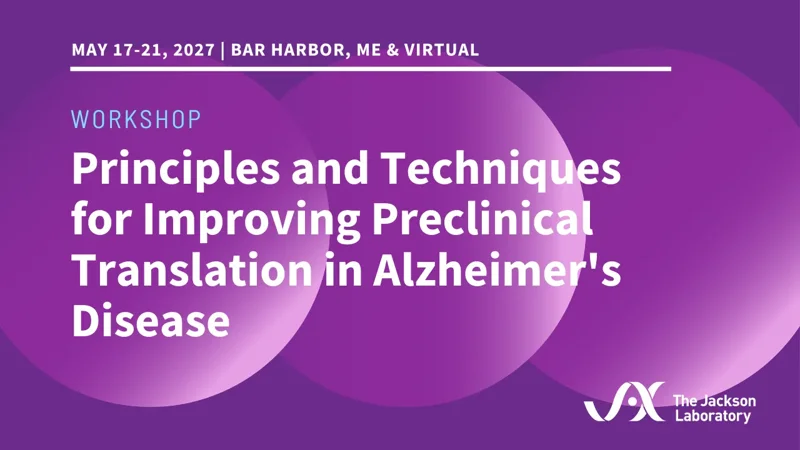
Principles and Techniques for Improving Preclinical Translation in Alzheimer's Disease - Page Tile

Principles and Techniques for Improving Preclinical Translation in Alzheimer's Disease

May 4 – 8, 2026 | Bar Harbor, Maine & Virtual

Leveraging the expertise and resources of the Model Organism Development for Evaluation of Late Onset Alzheimer’s Disease (MODEL-AD) Precision Medicine consortium, this hands-on workshop is an invaluable resource for graduate students, postdoctoral fellows, faculty, and researchers seeking to enhance their research capabilities in Alzheimer’s Disease studies.

Learn more
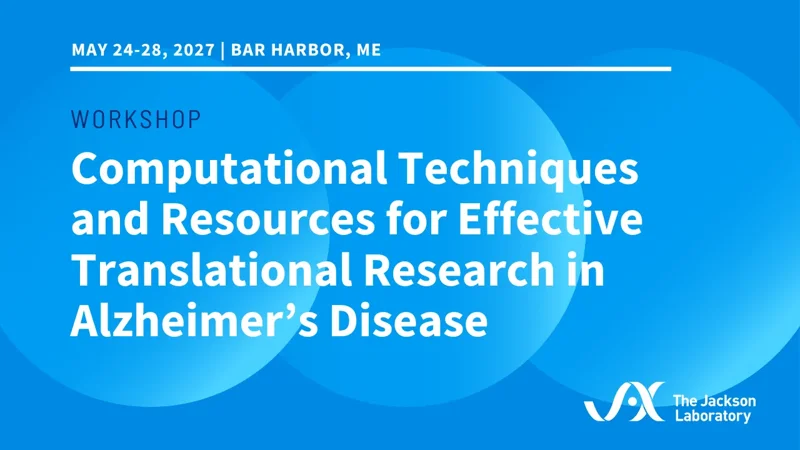
Computational Techniques in Alzheimer's Disease Workshop - Page Tile

Computational Techniques and Resources for Effective Translational Research in Alzheimer's Disease

May 17 – 23, 2026 | Bar Harbor, Maine

This hands-on workshop is designed to accelerate preclinical Alzheimer’s Disease (AD) research by equipping participants with computational techniques and tools to better utilize multi-scale data from model systems and humans. Participants will receive in-depth training and guidance from expert faculty in bioinformatics, genetics, omics technologies and AD research.

Learn more

©2026 The Jackson Laboratory